

Back in 2019, I thought Yakuza: Like A Dragon was one of the most bold games a long-running series could come out with. At that point, the Yakuza series was purely an action/brawler series with seven mainline games and an absolutely iconic protagonist. Deciding to switch heroes and go to a turn based RPG system in an era when many RPGs are going more action heavy was incredibly risky and had to be admired. I had fallen off the Yakuza games at that point but jumped back in at the chance for a fresh start.
Infinite Wealth is now the second game in this “new” series. And it finds itself in an odd place. On one hand, it feels like RGG studios are truly devoted to innovating and pushing this series to its limits. There are tons of improvements to the core gameplay from the last game here, and some of the new minigames could have been standalone games on their own.
On the other hand, the game returns Kazuma Kiryu to the forefront and makes him one of the playable characters, and essentially devotes half the game to a nostalgia tour that won’t mean much to those who weren’t particularly devoted to the original games. Infinite Wealth seems to be at a crossroads of the future and the past. And I left this game more convinced than ever that if RGG continues to look ahead and not behind, it has a chance to become one of my favorite RPG series on the market.
The Main Story Is Alright. The Diaper Kink Stuff is GREAT
Infinite Wealth kicks off its story several years after the events of the last game. After a series of events, our main hero, Ichiban Kasuga, heads off to Hawaii in search of his biological mother. He also ends up meeting up with the aforementioned Kiryu, who is also looking for her. As you can imagine, drama and intrigue abound, and the whole crew gets wrapped up in something much bigger.
I’m not going to get into too much detail to avoid spoilers. But the story in Infinite Wealth is certainly good, but it doesn’t feel like it’s on the level of many past games in the series. I blame a lot of this on the games’ big focus on Kiryu. Kiryu is dying of cancer, and thus, a good chunk of the plot follows him on what is essentially a nostalgia tour of his actions from past games. I imagine superfans of the series will get a kick out of this, but if you are more of a casual Yakuza player, a lot of these big moments in his story just aren’t all that impactful. I found it to be an odd decision to focus so heavily on him when it felt like the series had passed the baton to Kasuga in the last game.
Kasuga’s sections were much better for me, though I think the switches to Kiryu would occasionally hurt the momentum of his plot. While there are certainly big lulls in the story, several of my favorite moments of 2024 happen over the course of this game. The last few chapters, in particular, really cook in the lead up to the final boss fight, with one epic encounter after another. It’s a shame that I hated just about everything that happened after the last boss fight, but this is still a solid outing overall.
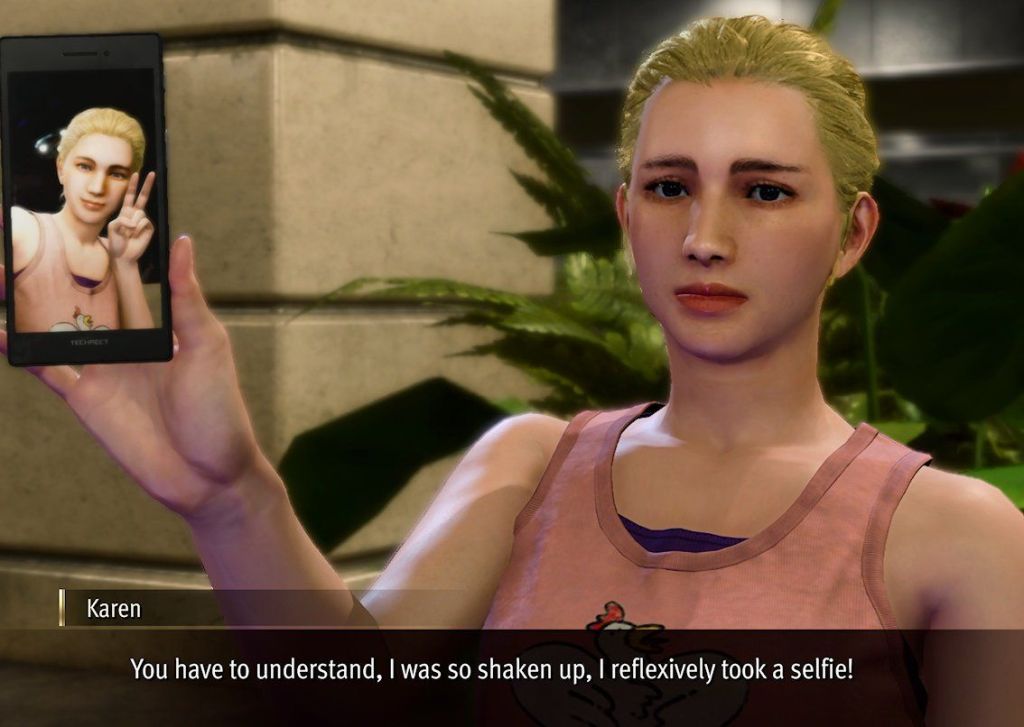
I think Infinite Wealth’s storytelling actually thrives a lot more with the smaller stories it tells. Any Yakuza fan will know that Infinite Wealth is packed with “substories,” which are the side quests in the game. These range from hilarious to emotional, to sometimes all of the above. Perhaps the ultimate example of this is a substory where some dudes who love to wear diapers help make a dying woman’s dreams of seeing snow come true. Yeah, it seems insane, but in the moment, it somehow makes sense, and it means something. There are dozens of these substories throughout the game, and while they range in quality, they almost all bring at least a little fun to the table.
I was also shocked at how invested I was in the “drink links.” These are optional conversations with party members you can unlock as you play, which also helps make those party members stronger in various ways. As you can guess, these usually take place over a few alcoholic beverages. I usually find these kinds of conversations to be somewhat boring exposition dumps in most JRPGs that have something like this. But Infinite Wealth’s had me hooked every time. All of the drink links have some sort of running storyline that helps keep you engaged, so it’s not just some random backstory. It all ends up being connected. The writing seems to perfectly capture the relationships between the main characters and the party members in a way that feels so natural and authentic too (which is also true throughout the game for all of the writing). While I did think the main plot was a bit inconsistent, all of these small stories, and the amount of character development in the game, ended up filling in some of the gaps, and kept me interested during some of the bigger lulls in the plot.
The Combat Is Better… But It Could Be Betterer

I had similarly mixed feelings toward Infinite Wealth’s combat system, which makes huge strides over the last games, but still has some work to do, in my opinion.
Much like the last game, Infinite Wealth wants to capture the chaos and absurdity of the brawls from the Yakuza games, but within a turn based setting. While you select attacks or special attacks like your average turn based game, you can also use the environment in various ways, just like the Yakuza games. If there is a bike next to you when you select an attack, your character will pick that bike up and hit the enemy with it, often doing more damage than a normal attack.
The biggest change from Yakuza: Like A Dragon is the ability to move and team up more with your partners for each attack. Before each attack, you have a ring that you can move within. There are a lot of area of effect attacks in Infinite Wealth, so you can now use this movement to line up your attacks better and hit as many enemies as possible. This is a huge enhancement to combat and gives you way more freedom and strategy.
But there are frustrations there, too. Namely, enemies do not stand still in the game. They will randomly move around as you do, and they move a fair bit. This can get really annoying, as it can take several seconds to go into a menu and select the attack you want and who to attack with it. It seemed like every few battles, an attack that I had ready to go ended up not being worthwhile anymore because enemies moved. The markers on the screen also don’t always make it super clear which enemies will get hit by certain attacks. There were many times when an enemy was within an attack circle I had, but on the edge of it. By the time I attacked, either they moved or just weren’t in the circle as much as I thought and didn’t get hit by the attack. This really gets annoying and hurts some of the strategy elements of the combat.
I also thought the MP balancing in the game was a bit too harsh. There were a lot of points in the game where I felt limited to mostly using basic attacks because I didn’t want to use up my MP. The good attacks just eat up your MP way too fast, which made me feel a bit constrained as to what kind of strategy and what kind of moves I would use in each battle. This especially sucks because if you are fighting an enemy that is a similar level to you, it can take quite a while to take them down. I had one point in the game where I fought a random battle against an enemy one level higher than me, and it took 10 minutes (I was low on MP). This wasn’t even a boss or anything!
The game at least does a good job of making battles feel rewarding, though. I thought the difficulty balancing in this game was pretty good. I did grind a bit, but not too much, and I was able to beat the game without too much hassle. I felt like I encountered just the right amount of struggle that made my hard work feel worth it. There is also a new system in place that lets you automatically win fights against weaker foes, which is a giant time saver. I also love how the game basically lets you buy almost all of the best gear in the game from the moment you start. Seeing my money go up after a battle always felt great because I always knew I could find better equipment at almost any point if I had enough cash. While battling isn’t always perfect in Infinite Wealth, it is certainly always rewarding.
For all my frustrations, though, I still think this is a good battle system. The way you can move to set up attacks, the way you can hit an enemy into a teammate, who will then hit them again, and the way you can get close to an ally to team up for attacks is all super cool. Once again, that trademark Yakuza absurdity adds a lot of personality to everything, too. There are also a lot of fun animations. You can also time certain button presses with your attacks to make them stronger, and you can guard against enemy attacks with a timed button press. All of these factors kept me engaged. While the battle system is probably the number one reason I would get burned out with the game sometimes, once I had a break from it, I usually enjoyed it again for quite a while. This combat has loads of potential, and while I didn’t always love it, I have a lot of confidence that the next game will truly be the one to perfect things.
It’s A Turn Based RPG, But It’s Also An Animal Crossing Game… And A Golf Game… And A Game That Will Not Effectively Teach You How To Play Mahjong

RGG also went out of their way to take their minigames to a new level. In my view, this is easily the best game for minigames in a series that is known for them. Much like past Yakuza games, there are dozens of random distractions in Infinite Wealth around town. These can help power up your character with the games mini achievement system, and they can earn you valuable cash.
Many of these games are brought back from previous games, and these are pretty much all well crafted. The batting cages minigame remains one of my favorites, but I had a great time with the golf game, the “can quest” game, and pretty much any other one. At the very least, they are all fun, quick distractions, and at times, they can feel like true games within the game.
The new “mini” games introduced are the ones that truly earn that distinction of being more than a minigame. Infinite Wealth’s biggest efforts go towards “Dondoko Island” and “Sujimon.” Sujimon has evolved from the last game into a full-blown Pokemon spinoff, except you fight with the dregs of society instead of innocent monsters. The battle system here is surprisingly deep, and I actually think I prefer it to Pokemon’s battle system in a lot of ways.
Dondoko Island is the biggest star of the show. It’s essentially a 12-15 hour Animal Crossing game on its own. Dondoko has a lot more RPG elements than Animal Crossing, which I loved. But it’s not nearly as strong with its aesthetic elements. Despite this, I had an absolute blast with it before I got a little bit tired of it in the home stretch. I feel like almost anyone who truly loves video games can find enjoyment somewhere in Infinite Wealth, as there is such a variety of cool experiences spread out all around it.
On The Path To True Greatness
In the end, the easiest thing I can say about Infinite Wealth is that if you loved Yakuza: Like A Dragon, I’m not sure how you wouldn’t love this game even more. Outside of a story that maybe isn’t always as strong, everything in this game levels up from the last one. The combat is significantly better, the new setting in Hawaii is awesome, and the minigames are on another level.
However, as much progress was made, I still think there is more than can be done. There are a lot of potentially easy fixes that could make the next Like A Dragon game one that gets on the level of Yakuza 0 for me.
Based on everything I’ve seen with this game, I have next to no doubt that RGG Studios will keep pushing, and the next one will very well reach those heights. We aren’t there yet, but we will be. But even then, Infinite Wealth is still a must play for any turn based RPG afficionado.
Score: 8.5/10
 Big Nerd Gaming
Leave a comment