
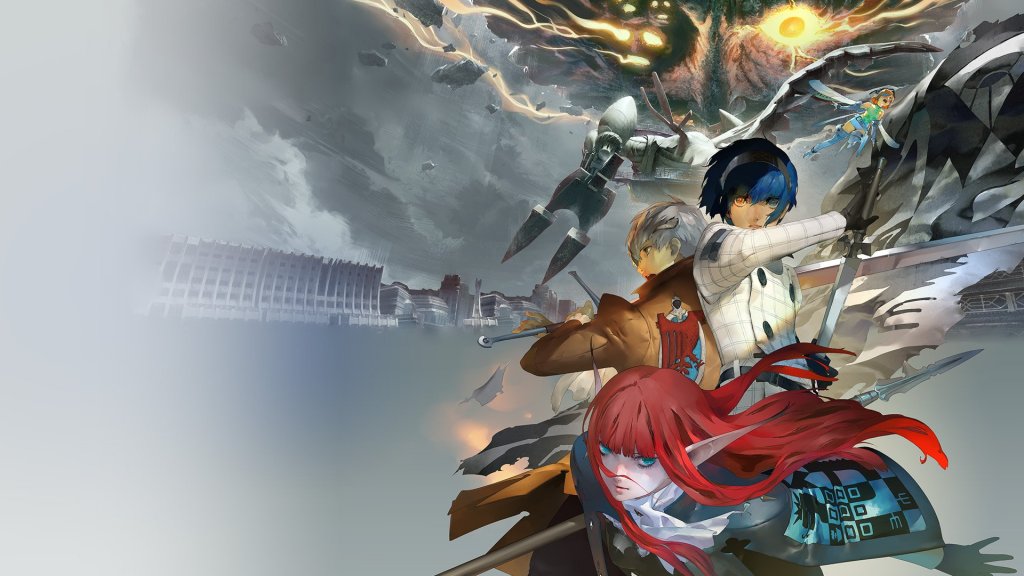
Let me preface this by saying that Persona 5 is likely one of my top 10 games of all time. I played it once when it first came out, and then played Persona 5 Royal when that was released. I hate replaying games, so it should tell you something that I played this 100 hour-ish game twice. The main reason I was pumped for Metaphor: ReFantazio was because of the Persona pedigree.
But admittedly, I was excited for another reason. Based on the trailers, I felt that Metaphor had a chance to be more “epic” than anything Persona could ever do. Getting out of school and into high fantasy battles naturally fits with having bigger and grander moments. And early on, all of my wildest dreams are coming true.
It feels impossible to say this when I view Persona 5 so highly, but Metaphor feels multiple levels above that game. It is better in damn near every way. And I can’t stop thinking about it. I am just amazed at what they have been able to accomplish so far, and I’m only about 30 hours in. Metaphor seems set to at least be in my top two games for this year, and it is definitely looking like an all timer.
Why is it so much better than Persona? In part, because it is a “sequel” of sorts. It’s clear the developers had some great ideas on how to enhance their already successful formula, and they have executed extremely well on that. Getting out of school also seems to have allowed the developer to tell a story that is much deeper and richer than the Persona games. When I’m comparing Metaphor with Persona 5, I honestly don’t even think it’s all that close. Metaphor is better. Here are the five biggest reasons why ranked!
5. The Combat
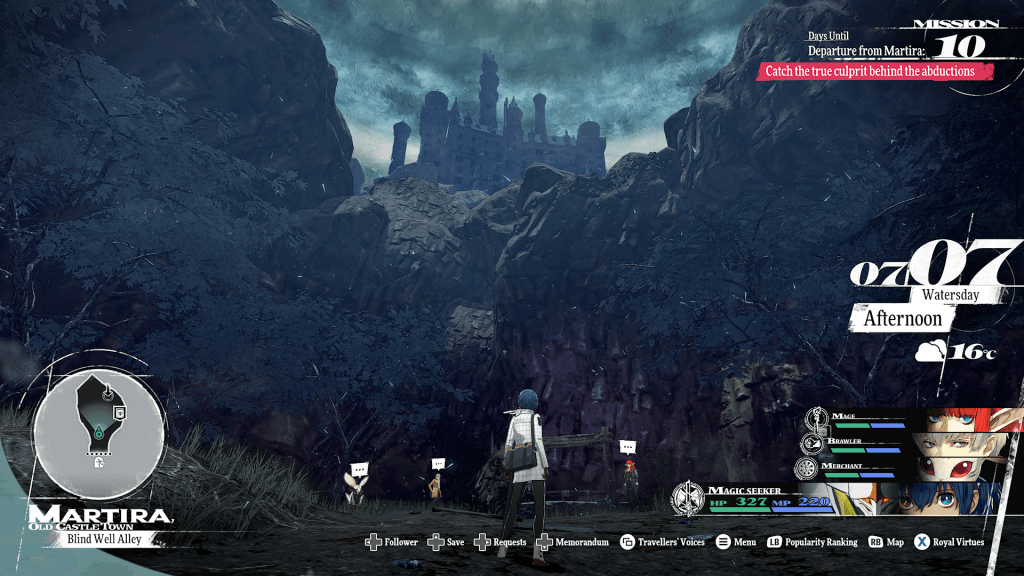
Metaphor: ReFantazio‘s battle system is clearly built upon the back of past Persona games. This is primarily a turn-based system (more on that in a bit). You have three different types of physical attacks you can use and several elements of magic as well . If you discover what types of attacks your enemy is weak against and use that against them, you do more damage and get some other benefits as well.
Metaphor takes this classic formula and makes so many smart changes that really enhance the strategy that comes from each encounter. The biggest change is the new turn icon system. Essentially, you get a “turn” for each party member that you have. So if you have four party members, you get four turns. But the twist is that there are several ways to only use a “half turn.” If you exploit an enemy weakness, you only use a half turn. If you land a critical hit, it’s only a half turn. If you pass, it’s only a half turn. If your character misses their attack, it uses up two of your turns. This system requires you to really plan out your attacks so that you can get the most out of all of your turns. Because of how “passing” works, this is one of the rare systems out there where I actually do pass on my turn occasionally. I’m also guarding at times, something I almost never do in JRPGs. Missing is devastating, so if I’m going to do a risky move that has a chance to miss, I wait until I have only one turn left so I don’t incur that extra turn penalty. The system also lets you move to the front row or back row whenever you want, which adds another strategic element, as there are benefits and downsides to being in either row, as you can imagine.
Essentially, there’s enough systems in place where I feel like I’m thinking a lot more than I ever would in a Persona game. While the Persona battle system is excellent for many reasons, there are just a lot of battles where I’d quickly exploit all my enemy’s weaknesses, and then move on to an “all out attack”. If that all-out attack didn’t work, I’d rinse and repeat. While I’m still essentially trying to do the same things here, there’s more depth to it that forces me to go about things in different ways for different battles.
I also prefer Metaphor’s action elements over the stealth elements in Persona. The flow works a lot better when you are fighting outside of the turn based combat here. You are constantly moving forward, and you can kill a surprising amount of foes before you even get into the turn based combat, unlike Persona 5. Some of this comes down to the fact that I’d rather play a mediocre action game over a mediocre stealth game, but I think Metaphor handles the “outside of battle” stuff way better than Persona 5. Metaphor also retains a lot of the best parts of the classic Persona system. Namely, the pacing. You can do basic attacks with the push of a button, and the game doesn’t dick around with long animations that take forever for almost any of its attacks besides major ones (which are skippable).
So basically, you are getting a lot of the best elements of the Persona battle system, with a myriad of smart tweaks that come together to build a combat system that feels unique, despite retaining a lot of the Persona spirit. This battle system is a huge upgrade over Persona 5 in my view, and it’s one of the best turn based systems on the market.
4. Optional Dungeons
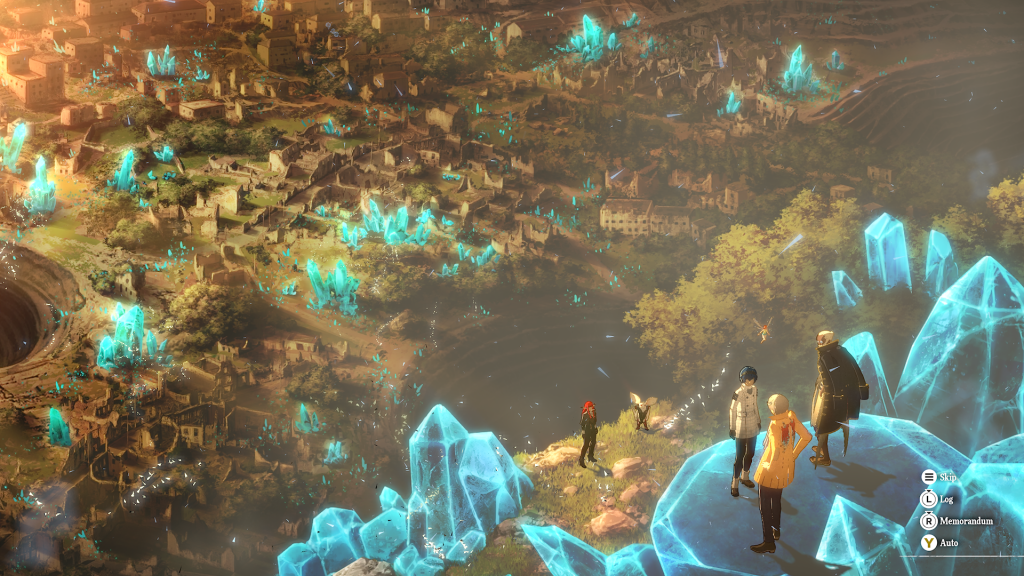
This actually might be the most massive upgrade that Metaphor makes over Persona 5, but it’s not quite as major of an element of the game, which is why it slots in at number four. Metaphor is infinitely better at giving you engaging dungeons to explore when you aren’t doing the main quest. It’s not even close.
Persona 5 has some really well designed main dungeons. But if you want to get some fights outside of that, your only option is “Mementos.” This is a randomly generated dungeon that takes place in a twisted subway system of sorts. It’s very generic and incredibly dull. I really dreaded every foray into Mementos when I played Persona 5, but it was very important to the game in many ways, so I felt obligated to keep diving in.
Metaphor fixes this by simply not having its only optional dungeon be a giant randomly generated thing. Genius! Metaphor seems to have multiple optional dungeons close to each of the major cities you visit. Many of these dungeons have interesting twists, or at least a little side story attached to them as well. When I was not in a main dungeon in Persona 5, I was acutely aware of that. That isn’t the case for Metaphor. Outside of the story stakes, the optional dungeons are at least close in quality to the main dungeons. That is huge, and even the biggest Persona fan in the world can’t contest this one.
3. The Class System/No More Personas

I’m going to be real… I’ve never really cared for the persona system in Persona games. The system gives you lots of flexibility for building up your main character. If you do things right, you can make your main character anything you want him to be in any battle, which is neat. But it’s kind of an annoying process to get there. I hated stopping fights to “talk” to personas in an attempt to catch them. I think this system annoys me in particular because this isn’t like Pokemon, where you can catch a monster and then ride with it for the rest of the game. Almost always, you are going to end up fusing any personas you get to make stronger ones down the road.
The process of fusing personas has always been kind of annoying to me as well. I’m usually fumbling around trying to find one that is within my level range while also trying to keep a diversified array of elements so that I can exploit any weakness. It’s a lot of work, and not the kind that I find particularly fun. All this work is just for your main character, too, as your other characters are just stuck with their starting persona.
Metaphor scraps all of this for a more traditional class system. This is way better for a few reasons. First off, all of your party members can participate in this system. So you can make any character roughly into what you want them to be (they do all have some base stats that might make some classes make more sense, but cross-training is very worthwhile). It’s really rewarding to build up a class, get the stat boost from maxing it out, and then move on to a new one, while taking a few skills from the old class into the new class.
Not only is this system more flexible, but I also find it to be way more fun. I don’t ever feel like I wasted time by leveling up a particular class, as I’m not just going to get rid of it, and I’m spending way less time in menus managing everything here as well. It’s simpler yet deeper in several ways. That’s a huge win for me. Going back to the persona system in a Persona 6 might be tough after experiencing this.
2. Story Themes
Persona certainly touches on some big and important themes. Persona 5, of course, tackled themes like the importance of friendship and connection. It talked about redemption, and it touched on our ideas of freedom. But also, much of the story is contained within a high school setting. Yes, there are big themes, but I wouldn’t say they are omnipresent throughout the game. You spend a lot of time doing regular high school kid stuff and talking to other high schoolers about high school things. While I think the story in Persona 5 is tremendous, it can also settle into a bit of a “villain of the month” type flow as well. Once again, it’s a great story, but I do feel like the high school setting holds the game back from tackling some bigger things consistently.
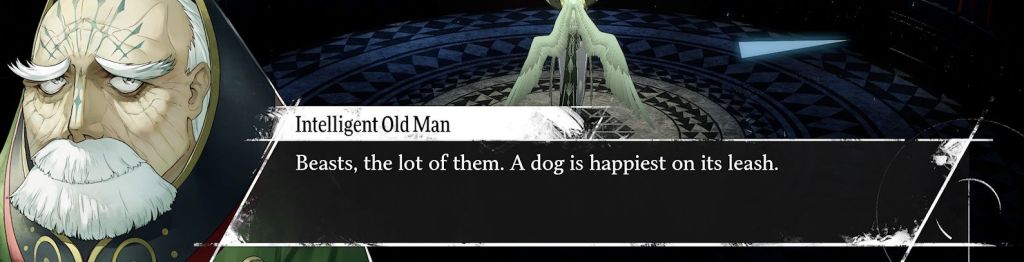
That is not the case in Metaphor. Metaphor goes hard with tackling big topics from damn near the moment it starts, and I love that about it. This world is one where discrimination is rampant. There is also a state religion of sorts, and the whole game takes place during an election for king. This game is going into politics, religion, and discrimination in many big and small ways that have me completely engaged. The game also addresses grief and classic Persona friendship themes. While this isn’t quite as big in the story yet, it also talks about the impact that fiction can have on our lives.
There have been a lot of people saying that they would like to see Persona get out of the school setting, or at the very least, the high school setting and move on to college. Metaphor has done a lot to show that the people who wanted this were absolutely right.
1. The Cast

This one ties in with the story themes, but even more so. I generally find Persona casts to be fine, but I’m rarely all that into any particular character. A big part of this is because the games are about high school kids. Honestly, I don’t think any of them are all that well written. From my experience, Persona characters tend to fit into some relatively standard high school tropes, and while they do have some depth as you get to know them more, it’s never quite on the level that I’d like to see.
Meanwhile, in my early time with Metaphor, I feel like I’m witnessing one of the best casts in JRPG history. Your first companion, Strohl, plays the “bro” role, but he’s fierce and smart, too. Your second companion is a strong and straight-laced character who also has a passion for weird food and popstars. Your third companion is filled with grief and regret but is also wise and occasionally playful. These are nuanced characters that are written on a level that I haven’t seen before from Atlus. They don’t fit neatly into any one box and have found multiple ways to surprise me already in my few dozen hours with the game. While Persona characters have generally been through one trauma or another, I think it’s hard to write high school characters that have the depth and backstory that these characters have.
Many of the changes in Metaphor feel like natural changes any sequel could make. A Persona 6 could easily have this same battle system, a better class system, and better optional dungeons. But the last two features I listed here, the themes and cast, are things that Persona 6 will have a tough time pulling off if it is more of the same.
There are a lot of talented people working on Atlus, and there’s a lot of fans that really like the school setting for one reason or another. I think the school setting fits with the calendar system very neatly, but Metaphor has shown that Persona doesn’t need to necessarily constrain itself. And in fact, if Persona 6 goes back to where it has always gone, I fear that while it will be a great game still, it will never be able to stand up to what Metaphor has done for me so far.
If you enjoyed this post, please consider following me on social media, or checking out The Big Nerd Gaming Podcast!
The Big Nerd Gaming Podcast on Youtube
 Big Nerd Gaming
Leave a comment