
One of my biggest “hot takes” is that game critics do a pretty good job overall. If you look at games that don’t have stupid, made-up controversies around them, the critic and consumer consensus is relatively in line for a lot of games.
But of course, even for a game critic defender like me, disagreements are inevitable. Most of the time, it’s just a matter of taste. I know there are games out there where I’m able to overlook flaws because I really liked certain elements of the game. There are also games with flaws that I find hard to overlook that others were able to. There are other times when I just don’t genuinely understand how certain scores were given out.
This list will highlight my biggest disagreements with game critics so far based on Opencritic scores versus my personal scores. Five of them positive, and five of them negative. Many of these are disagreements I fully understand, and a few I do not. In the end, disagreements and discussions about those disagreements are some of the things I most enjoy when talking about video games online. So, none of it is personal. This is all supposed to be fun! With that said, here is my list.
(Note: I also linked my past reviews for all these games if you want more detailed thoughts)
POSITIVE DISAGREEMENTS

OpenCritic Score: 7.7, My Score: 8.5
This is one where I totally respect and understand how I’m a bit higher than the critic consensus. Rise of the Ronin has some serious flaws with its storytelling and open world in particular. It also has some small annoyances with things like its loot system. This game will also naturally be compared to Ghost of Tsushima, and it really pales in comparison to that game visually.
But in the end, I can easily overlook all of that. Because Rise of the Ronin more than excels at the most important element of its game, the combat. The combat still ranks as my 3rd favorite this year so far. It’s so relentless and intense. The difficulty balancing is excellent AND accessible. Parrying is really fun and responsive, and the game gives you a lot of options on offense with different weapons and styles for those weapons that you can equip. There are slso ranged weapons and a grappling hook. Navigating the open world can be fun in spots, too, if you aren’t trying to clear every single icon on the map. I still think about the thrills this combat gave me, which is why I view this as one of the more underrated games this year.

OpenCritic Score: 8.1, My Score: 9.0
Senua’s Saga: Hellblade II is probably the best game I have ever played from a visual perspective. The fidelity is unbelievable. It’s also combined with some excellent art direction and perhaps the best photo mode ever, too. And look, that isn’t enough on its own to make a video game great, but it certainly doesn’t hurt.
I did have a few problems with Hellblade II. Most notably, I really didn’t care for the re-used puzzle concepts from the first game that just aren’t that interesting. But Hellblade II does modify its combat a fair bit, and I find it to be significantly better, especially if you put it on hard.
Instead of fighting hordes of enemies like in the first game, all of Hellblade II’s fights are one on one. The game’s combat is also fully motion captured. This creates a really unique feeling system that just has a lot of grit and authenticity. Fighting in this game literally feels like a cutscene, but you are actually playing it. It’s pretty amazing. I also loved the game’s parry system, which was a significant upgrade over the first game. It is very tight and responsive. There are also some really cool story elements and a few amazing setpiece moments. Two boss fights in particular really have stuck with me long after I finished the game.
Add it all up, and while I understand why critics were a bit lower than me, I still think this is a game that deserved a bit higher acclaim.
3. Banishers: Ghosts of New Eden

OpenCritic Score: 8.0, My Score: 9.0
I want more games like Banishers: Ghosts of New Eden. I love a good AA game. And I think this is one of the best AA games in modern times.
Critics liked Banishers, but they did hit it for having somewhat lackluster combat and a slightly annoying open world. I get it, but I do think the combat is passable, at least. It’s definitely button-mashy at times, but it is fun to switch between the two characters that you can use. It’s competent, even if it isn’t perfect.
More importantly, Banishers is still up there for one of my favorite stories this year. And it’s not just for the main story. There are something like a few dozen sidestories that were all just as riveting as the main story. It’s a very heartfelt and emotional journey. This is the kind of story experience that only a few games a year reach the level of. And if your gameplay is at least decent, and you can provide a story on the level of this one, I think you deserve to be more in the 9 range than the 8. To me, Banishers story is on a high enough level to deserve that kind of rating.

OpenCritic Score: 7.1, My Score: 8.5
I’ve played several indie narrative games this year. All of the other ones I played had higher ratings than Harold Halibut, but this is easily the game that stuck with me the most out of all of those this year. Critics mostly downgraded this game for its pacing, and I don’t disagree. The early portions of the game can be a bit of a slog sometimes (though, I’d also argue there is a bit of a plot payoff to this), but there was just enough going on to keep me in it. Then, when the game gets more into its second half, I couldn’t put it down until I finished it.
And as great as the second half of the game is, that’s not the only reason why I loved this experience. There is one side quest in particular that is an absolute must-play early on. The game can be surprisingly funny, it has some excellent music choices, some fantastic characters, and of course, the claymation art design is so unique and cool. That art direction alone had me at least a little engaged even in moments where I wasn’t as into the story. They actually do a lot more with the claymation design than I ever could have anticipated when it comes to the various environments the game puts you in.
The ending is also still up there for one of my favorite moments this year. While this is a controversial take with a game like 1000xResist out there, Harold Halibut is my favorite indie narrative game this year, and I’m a little surprised that critics weren’t a bit more into it.

OpenCritic Score: 8.1, My Score: 9.5
It feels crazy to bash critics for giving a game a score in the low 8s. That’s a score that means critics thought the game was great. But I still disagree! I view this game as easily one of the best this year, and I really don’t understand what critics were missing.
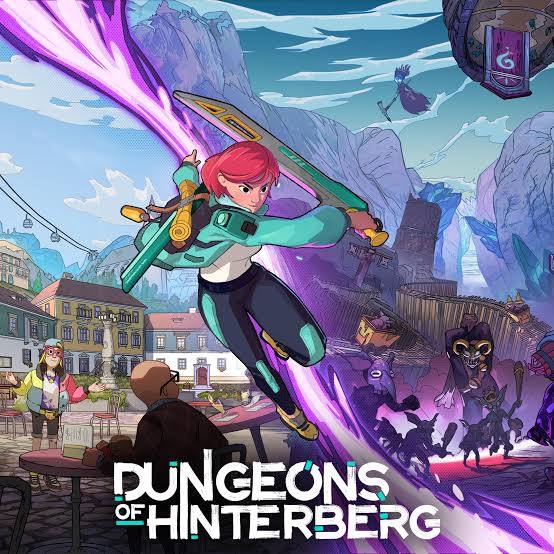
Dungeons of Hinterberg is a Zelda-esque game with a Persona style calendar and social link system. And everything works! The dungeons are the biggest triumph here. I view these as on the level of any Zelda game. They are really creative and varied. They do a lot of cool tricks like throwing different perspectives at you, and the puzzles have that perfect flow of making you think, but rarely stumping you completely. The dungeons are the biggest part of the game, so the fact that they are on the level that they are is a huge deal.
And everything else is pretty great, too! Combat is probably the weakest point of the game, but it’s still pretty fun. You have some really cool skills and magic at your disposal in particular. The social links aren’t Persona levels of good, but they are all enjoyable and interesting. The main story also ends up being really well done. To top it off, the soundtrack and visuals are both excellent, and give the game this perfect vibe that I really enjoyed. Playing Hinterberg made me feel like I was on a vacation that I never wanted to leave. I was sad that it ended. But more than that, I’m sad that I don’t think this game will get the accolades in deserves at years end. This is legitimately one of the best indie games of all time for me, and I wish critics saw it the same way I did.
NEGATIVE DISAGREEMENTS
5. Paper Mario: The Thousand Year Door

OpenCritic Score: 8.9, My Score: 8.0
I had a lot of games in this range, where I was just under a point lower than the OpenCritic consensus. Paper Mario: TTYD just edged out a lot of other competitors. This is the one game on this “negative” list that I genuinely like a lot. The battle system is incredibly polished, and each fight feels like its own little satisfying puzzle. The graphic upgrade is also really well done, and this game is filled with patented Nintendo charm. All of the new characters made for this game are very likable as well.
But the critic rating for this game puts it in a spot where it could genuinely be nominated for Game of the Year, and that honestly baffles me a bit. For as well made as TTYD is, it has one fatal flaw, and that is backtracking. The game loves sending you back and forth multiple times across all of its levels, to the point where it feels like it’s all made to pad the playtime a little bit. It also has an unnecessarily obnoxious sewer area that you have to go into all the time to progress the story and fast travel. There’s just a few too many annoyances that progressively feel worse the longer you play. The game also has little gimmicks tied to each of its chapters. At times, these can be quite fun, and really help keep the game fresh as you go. But a few of these gimmicks just didn’t quite work, and I did not enjoy them much at all.
Paper Mario: TTYD is a strong remake that still shows its age on occasion. It’s a fun Nintendo RPG, but it certainly shouldn’t be even close to the Game of the Year conversation.

OpenCritic Score: 8.2, My Score: 7.0
This is the only other game on the list that I’d say I genuinely like, though I’d consider this one “good” and not “great.” Until Then is a narrative game following high school kids in the Phillipines as they navigate school life and some supernatural occurrences too. This game has one of the better casts of the year, which is genuinely impressive, as having great and nuanced characters that are going to high school is somewhat rare. It also has an awesome art style and some excellent music. There are also some fun storytelling mechanics, like texting and a Facebook equivalent, that both really help with the worldbuilding and character development.
All the ingredients were here for this to be a great game for me. And because of that, I don’t really fault the reviewers for putting this in the low 8s. I understand how someone could like this game more than me. But the nagging flaws built up and slowly sent this score down the more I played. The biggest thing is that this game is just too damn long. It took me close to 20 hours to fully beat, and I felt like 4-5 hours could have been chopped off without even eliminating any scenes. So many of the scenes in this game establish everything they want to, and then just kind of keep going on without adding anything new. The game also makes some decisions with its plot that just didn’t fully work for me in acts 2 and 3. If I played act 1 as a standalone experience, I would have had issues still, but I actually think I would have been a fair bit closer to the critic consensus on this one. But I did play those last two acts, and thus, here we are.
3. Ultros
OpenCritic Score: 8.0, My Score: 6.0
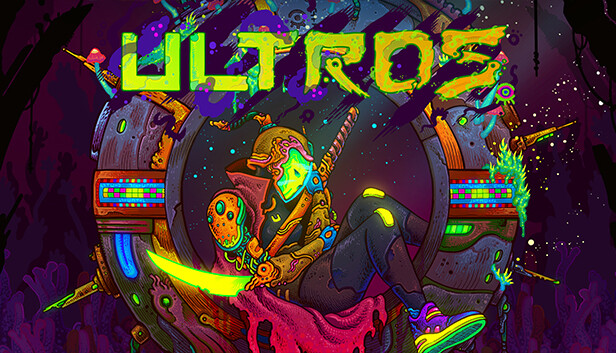
This is the only game on this list that I didn’t finish. I have several other abandoned games this year that I just didn’t quite mesh with, but all of those were abandoned after a few hours. I really tried with Ultros and got well over halfway through it. I’ve played a lot of Metroidvanias this year, and this is the one that I just didn’t “get.”
To give Ultros respect, I will say that it is a very bold game. It has a vibrant art style, it doesn’t explain a lot to you, and it has a very elaborate gardening mechanic that ties into an interesting optional puzzle that you can tackle. I know a few people who absolutely loved this game.
But for me, nothing quite clicked here. The art style got old for me after a while, and it it makes it so it’s easy to lose your character in hectic situations occasionally. The game is actually a bit of a roguelite to go with being a Metroidvania. Almost every time you spawn, you have to re-do the same section to get started again, which I found really annoying. The core platforming and combat are also both very weak. If you want something really weird and different, Ultros might click with you. But it definitely didn’t for me.
OpenCritic Score: 8.2, My Score: 6.0
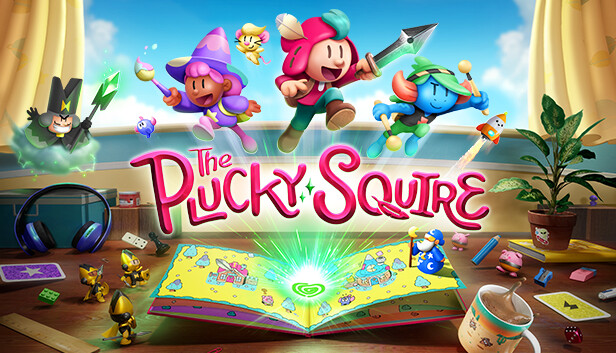
The Plucky Squire is easily the most disappointing game of the year for me. I am genuinely surprised that the Opencritic score is as good as it is for this one. Yes, the production values are really great. This is up there for art direction of the year, and there were a lot of great ideas here.
But the execution is just so barebones on just about everything. The combat, puzzles, and navigation are already incredibly simple. There is next to no challenge with anything. If that was the only problem, I still think I would have liked this game a little bit. But then add in a constant barrage of interruptions damn near every time you progress at all, and it gets incredibly frustrating. While there are a few cool elements, The Plucky Squire is one of the biggest examples of style over substance that I’ve seen, and that is something I’d usually expect game critics to see through more.
OpenCritic Score: 8.8, My Score: 5.5
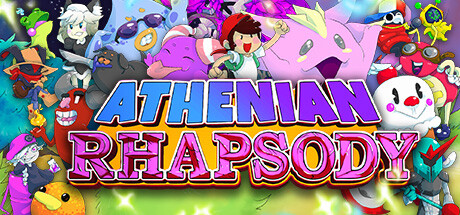
I am truly befuddled at the OpenCritic score for this one. Athenian Rhapsody is a comedy RPG clearly inspired a bit by Undertale and perhaps Earthbound. Early on, I did find myself enjoying the humor here. It’s a bit absurdist, and there is a lot of 4th wall breaking that caught me off guard and was getting some laughs out of me.
But as things went on, the humor started falling flat more and more as I felt like it kept trying to throw the same types of jokes at me over and over. The story is completely directionless, and the combat system is a total mess. The game has this “pacifist” system where you have to choose dialogue options to win over certain foes, but it’s pure luck as to which options will work. If you go pacifist too much, it also makes the game pretty hard, as the game’s combat is surprisingly punishing. And the combat isn’t particularly deep or interesting either. I just don’t get how this has a score on the level of an indie game of the year nominee when so many elements of the game are so odd. The game is only 5ish hours, which is the only reason I was able to barely stumble across the finish line.
 Big Nerd Gaming
Leave a comment