
As I’ve gotten older, something strange has happened. Something I couldn’t have imagined at all when I was a kid or a teen. There are many times when I’ll drink a diet pop (soda for you non-midwestern heathens) over a “regular” one. Regular pop can just feel overly filling and too sugary. Diet pop goes down smoothly and doesn’t leave me feeling overstuffed afterward.
When I played The Legend of Zelda: Tears of the Kingdom last year, I felt a lot like I was drinking a full-on Coca-Cola instead of a Diet Coke. It was delicious, but the more I played, the more I felt a little too full. There is just so much to that game. TotK features tons of building elements, three different massive maps, and weather effects like rain that fight against you everywhere you go. To some, this all encapsulates a truly grand adventure. To me, it eventually became a slog. It was just too damn much.
So when I tell you that I view The Legend of Zelda: Echoes of Wisdom as a “Diet Tears of the Kingdom,” this is not an attack at all. It’s a compliment. Echoes of Wisdom takes on the amazing creativity that TotK had but distills it into something smaller and more manageable. Echoes of Wisdom takes many of the best parts of TotK and brings it into the more classic Zelda formula. While I have a few nagging complaints about the implementation, this game represents a future for the Zelda series that I would much rather consume going forward.
Girls Just Wanna Go Back To The Classic Zelda Formula
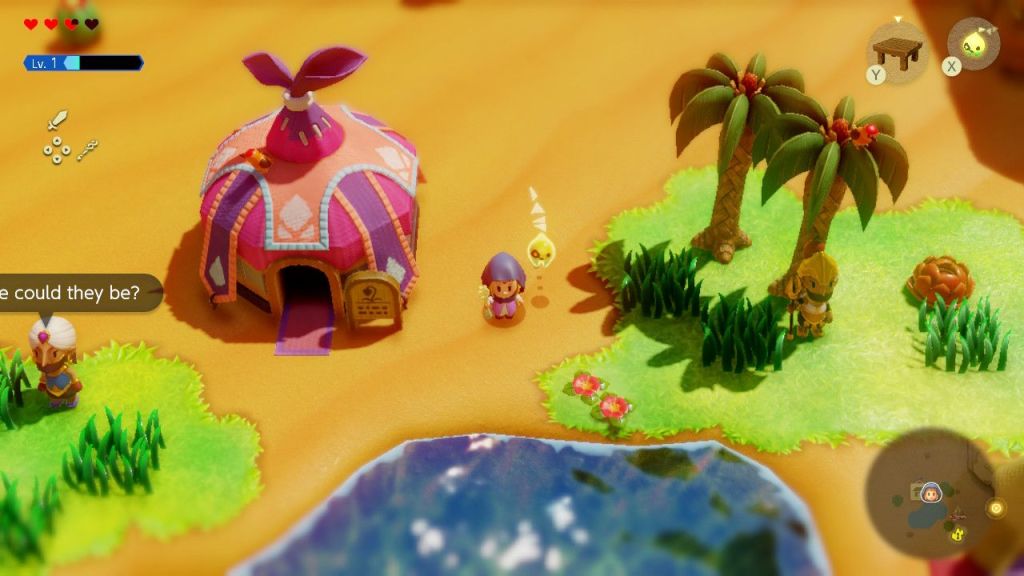
Echoes of Wisdom is an odd juxtaposition. On one hand, it is a clear return to a more classic Zelda formula. The game features traditional Zelda dungeons, with a more “medium” sized overworld that isn’t as overpowering as the recent open world Zelda games. On the other hand, it’s a dramatically different game. The series’ usual hero, Link, is captured very early in the game. Link is often looking to save Zelda in many Zelda games. For the first time ever, you play as Zelda in an effort to rescue Link and save the world. This leads to a gameplay loop that feels familiar but also has very fresh elements.
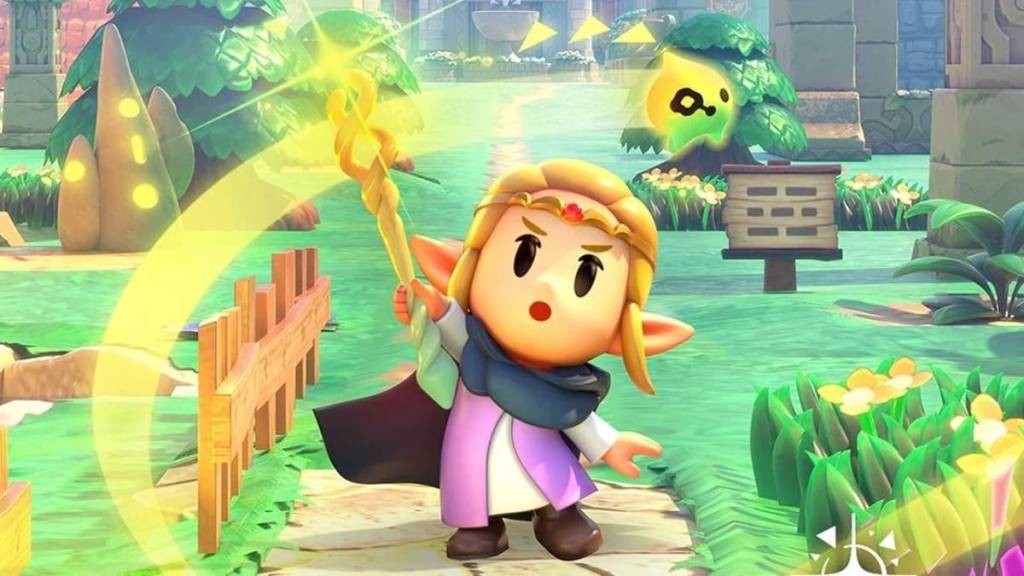
Zelda isn’t accustomed to combat like Link is. So she can’t fight in the way you traditionally would in a Zelda game (for the most part). Instead, Zelda gets a “Tri Rod” early in the game from her new friend Tri. This allows her to summon almost every enemy that she defeats in battle. This means that the combat in the game feels more akin to a Pikmin game than a Zelda game. Depending on your power level and the power level of the creatures you summon, you can have multiple different monsters fighting for you whenever you want.
This leads to combat that has some pretty interesting puzzle solving elements. While you will naturally gain access to some monsters that will be your favorites, different enemies often require different strategies. I loved using a specific monster that has a powerful sword attack and a shield, but he wasn’t all that useful against flying or ranged opponents. It’s usually smart to bust out an ice monster of some sort when you encounter a fire monster. Against opponents with a shield, I found it useful to summon 4-5 weaker monsters that could surround the foe instead of just summoning one strong monster to fight it. As you build up your power, you can put together all sorts of interesting combinations to take on bosses and any other creature that you encounter.
While you will spend most of your time summoning creatures, you do get to enter the fray at times as well. Zelda gains an ability to channel Link for short periods of time. When you have your energy meter built up, you can do sword and bow attacks like Link for very short stretches (something like 10-15 seconds with a full meter). This is nice in situations where summons don’t seem to be working all that well, as Link can overcome just about any monster when used correctly. It also adds some action elements to the game that offer some nice variety to the proceedings.
Perhaps the only flaw with being able to play as Link in stretches is that it exposes some of the annoyances that I had with the summoning combat in the game. First off, things can get a bit overly chaotic on a crowded battlefield. The more enemies that are on the field, the more the game’s poor frame rate issues become apparent. Slowdown is a constant foe here as much as any enemy. It can also be tricky to direct your allies when there’s several enemies and allies on the screen. There is a targeting system that is supposed to help guide your allies on who to attack, but I often found it difficult to get the game to target the right opponent. Sometimes, when I did successfully target someone, it didn’t seem to change the behavior of my allies all that much, either.
The AI of your allies can also be unbelievably stupid. It was frustrating how often certain summons just seemed to stop moving sometimes. At times, I found myself immediately re-summoning an ally after their first attack because I knew they would take forever to attack again, and it was faster that way.
When you don’t have energy to turn into Link, some of the stronger foes that you haven’t unlocked yet can be an absolute pain in the ass to kill purely off summons as well. I would have loved this combat system if the summoning was there as a nice bonus to the classic top-down Zelda combat. Summoning as the primary affair is fun in spots but also frustrating. Whenever I was out of energy, I was constantly wishing I had some so that I could get business taken care of as some of my allies floundered around. This does become less of an issue late in the game once you have some of the best summons in the game, but once you get those, the puzzle elements of the combat also diminish a fair bit. I thought the combat in Echoes of Wisdom was easily the weakest element of the game, even though it has some bright points.
Is Echoes Of Wisdom Giving Me A Participation Trophy For How I Solved This Puzzle?
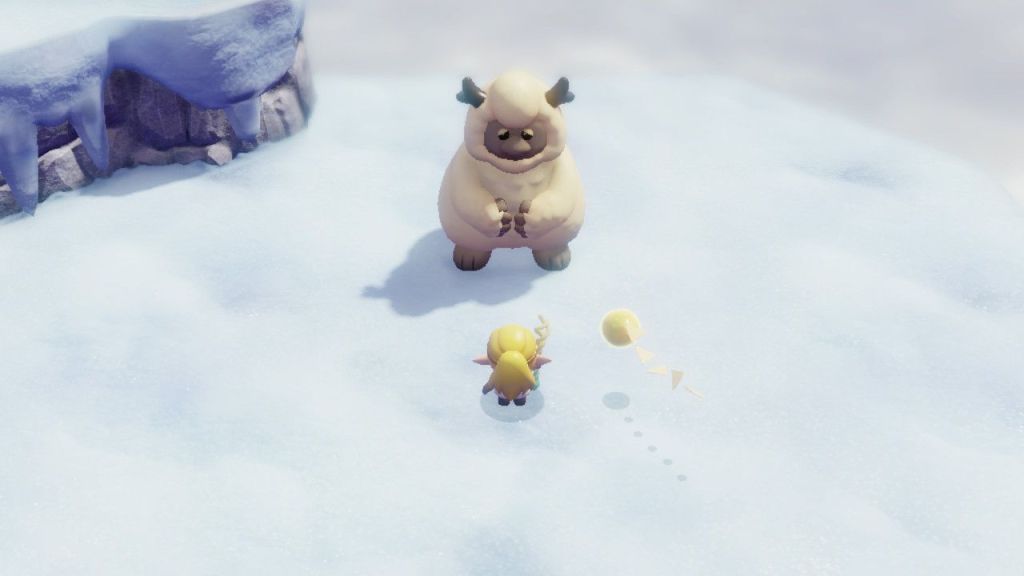
Luckily, the puzzles in Echoes of Wisdom fared much better for me. The puzzles here have classic Zelda balancing. They made me think but rarely tripped me up significantly. In addition, the game allows for a level of creative problem solving that is only matched by last year’s Tears of the Kingdom.
Much like the enemies in this game, Echoes of Wisdom allows you to summon almost any item in the game that you encounter. You can create tables, pots, trampolines, crates, boulders, and way more than that whenever you want.
This means that, much like Tears of the Kingdom last year, there are multiple ways to solve any puzzle in the game. The game has the confidence to give you all the tools to let you solve its puzzles in any jank or broken way you desire. I can’t tell you how many times I solved a puzzle and was pretty sure I didn’t do it the “right” way, but that doesn’t really matter.
The beauty of this system for me is that while it gives you all these tools, it’s considerably more simplified than TotK. You don’t have to go through the whole process of putting together all these things you want to use, which wore on me the more I played that game. Everything you need is easy to select and place wherever you want. This is the biggest part of Echoes of Wisdom that feels like “Diet” Tears of the Kingdom, and it is greatly in its favor for me.
This doesn’t mean everything with the puzzles is perfect, however. My one constant annoyance with them is the way the game handles its menus. You can summon over 100 different things in Echoes of Wisdom between creatures and items. Because of this, I spent an obnoxious amount of time in menus whenever I wanted to select something. The game does have a few options to sort everything. I often organized my menu by “last used.” But if I wanted to summon something I hadn’t seen in a few hours, it was a bit of a slog to bring it out. This goes from mildly annoying to pretty damn obnoxious by games end. It’s especially frustrating because it feels like a pretty easy fix to this would have been to allow for customizable menus so that I could quickly select what I wanted to. Even allowing the player to “favorite” certain things might have been a bit of help. It’s a baffling mistake that isn’t a deal breaker by any stretch of the imagination, but it is a completely unforced error.
I Love When It’s Big But I Certainly Don’t Want It To Be Too Big
As much as I still enjoyed the puzzle solving in Echoes of Wisdom, being able to do it while back in the classic Zelda format made it even better for me. Echoes of Wisdom returns the series to the standard Zelda dungeons of old, and they are all done quite well here. There are multiple floors, extra treasure chests to find, keys to snag, and a nice mix of puzzles, combat, and then boss fights spaced throughout. The flow and pacing in all of the dungeons is great, and they are decently varied in terms of design, too. Getting through all of them was very enjoyable, and once again made me feel like this is the format that the Zelda games should stick to.
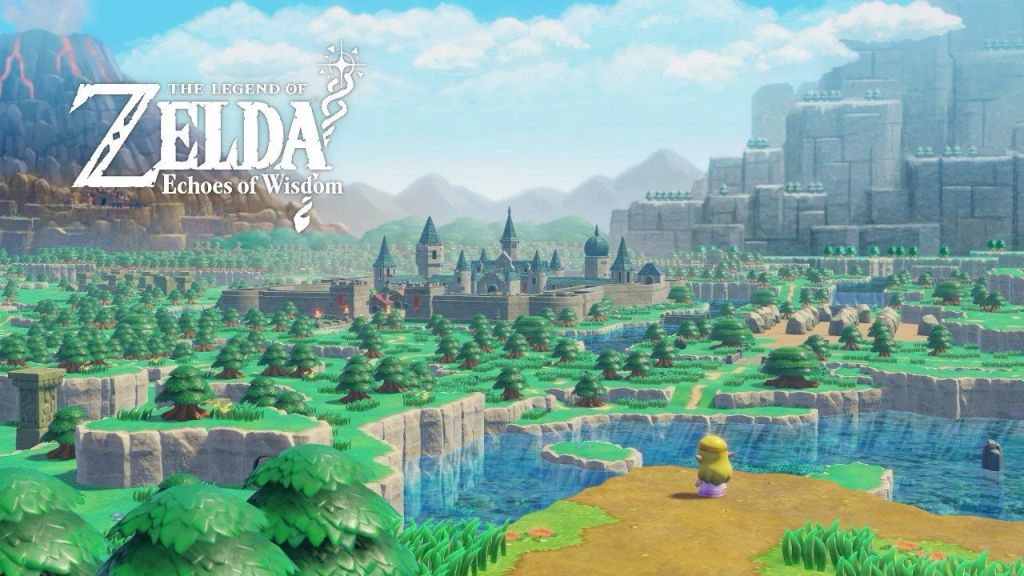
Going from the Tears of the Kingdom map to a “diet” version was also very appealing for me. Echoes of Wisdom is not a huge game at all. It only took me about 22 hours for me to complete. The world is a manageable size but still filled with little secrets to find. And the game lets you go anywhere you want to almost immediately. So, despite the smaller size, there is still a nice level of freedom here. I wouldn’t mind a slightly bigger world and maybe a little more play time, but I’ll almost never complain about a game not overstaying its welcome.
As usual with Zelda games, it is very rewarding to find hearts in the world that increase your health, as that makes survival much more manageable. You can also find ingredients all across the world. By combining certain ingredients, you can make smoothies that restore your health, your energy, and that have other benefits. These are extremely useful, so finding smoothie ingredients is also pretty rewarding. There are also lots of treasure chests in the world that contain rupees, which is the currency in the game. I found myself not really needing to spend money very often in Echoes of Wisdom, so the amount of chests that just contain rupees ended up a being a little bit disappointing, but I still enjoyed the exploration overall.
Zelda Max Zero Sugar
Much like the dungeons and the overworld, Echoes of Wisdom also has a story befitting of classic Zelda games. By that, I mean that it is completely unexceptional and uninteresting. But the game does have a couple of side stories and characters that were more endearing than I expected. The world also stands out quite a bit with its toy-like art style, although there is a blur effect on the edge of the screen that I found a bit annoying in spots. The music is also about what you’d expect from a Zelda game, which is solid enough.
But despite some complaints, I really enjoyed my time with Echoes of Wisdom. In fact, not only did I enjoy it, but I found it to be a bit of a relief. After consuming multiple Zelda games that tasted great but just left me feeling overfilled, it was so great to chug down a nice “diet” version of the game. I certainly understand the appeal of the big open world Zelda games, and I enjoy elements of them too. But sometimes, you need something that goes down a little easier. And Echoes of Wisdom was exactly that for me.
Score: 8.5/10
 Big Nerd Gaming
Leave a comment