
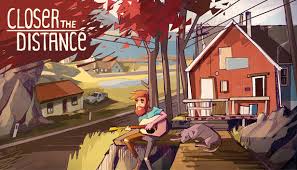
I’ve always felt a little weird whenever I’ve played a Sims game in the past. Something about those games feels inherently creepy. Watching a normal person do all of their everyday activities from a slight distance away just doesn’t feel right. It feels a bit scandalous.
Now, imagine this concept, but attach a story about a small town getting over the death of a beloved member of their community. You would think watching people struggle through grief from afar would make those creepy feelings escalate by 100. It’s one thing watching your Sim go to the bathroom. It’s another to watch as a mother goes to her room and sobs uncontrollably for two minutes.
As wrong as that can feel, this is the power of Closer the Distance. This is basically a Sims type game but with an impactful and sad story attached to it. This is a story about grief and watching how different people get through it in different ways. Despite the difficult concept and the voyeuristic nature of the game, I rarely felt like a creep playing Closer the Distance. A big part of that is because I was too busy being moved by its powerful story to notice. While there are frustrations with actually playing the game at times, this is one of the most unique and interesting narrative games that I have ever experienced.
Accurate Depictions of Grief And Not Having Enough Time To Get Things Done? Sign Me Up!
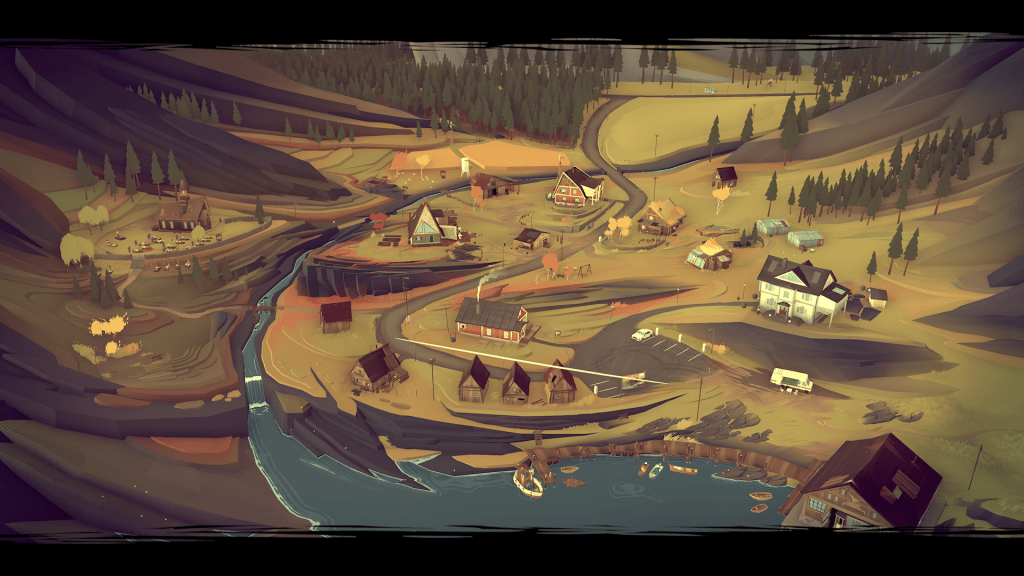
You play Closer the Distance as Angie. Angie dies at the start of the game, but her ghost still lingers. Before she can pass on, it seems that she needs to help the town she lived in move on from her death. This gives you a logical narrative reason to be able to peek in on anyone in town. This is the strongest element of Closer the Distance to me. This is a narrative game that you can kind of take in whichever way you want to. It’s fascinating and heartbreaking to watch everyone in the town deal with grief in their own ways (or, if they aren’t particularly grieving, how they deal with others dealing with grief).
You don’t just periodically peek in on people and watch the story develop though, there are five characters in particular that you can help guide, once they start to gain a sort of spiritual connection to Angie. This allows Angie to help them move forward from the grief they are dealing with, as well as help others in town to heal. In order to heal, each character needs to complete different objectives throughout the town. This might involve completing a project of some sort, spending time with a loved one, or other things of that nature.
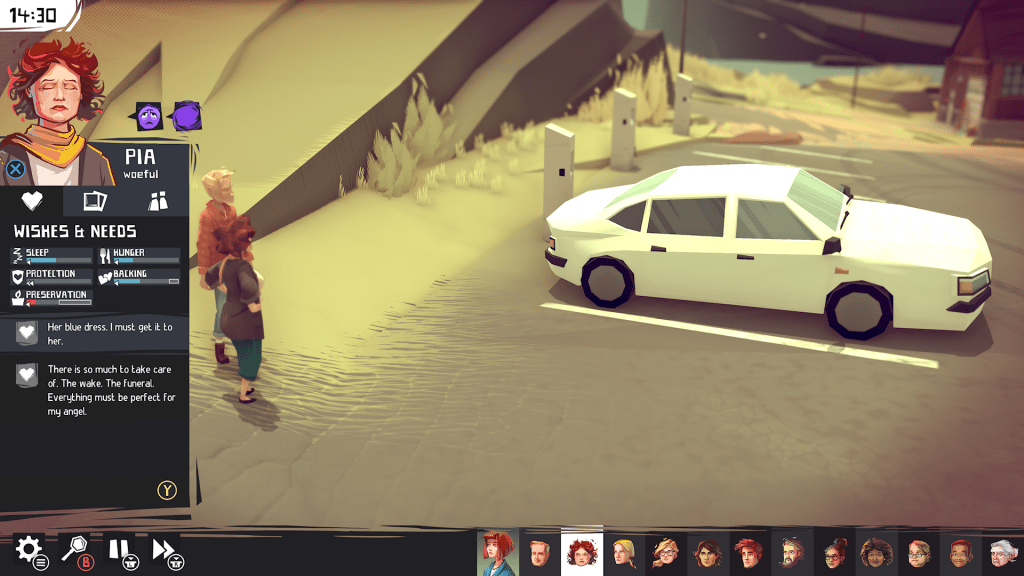
It’s not as simple as directing the characters to complete each objective, though. Your characters won’t have the bandwith to complete tasks if their other needs are not met. Much like the Sims games, each character has a set of needs that fill up when they are taken care of and then slowly diminish when they are not. Each character needs sleep and needs to eat as you’d expect, and as is common in Sims game. The rest of the needs are more unique to each character and more emotional.
Some characters need distraction, some need purpose, and some need companionship. Much like how if you don’t eat for a day, you will get hungry, if you don’t take care of these emotional needs, your character will not be able to work towards their bigger objectives. If I personally don’t have any relaxation time or time with family for days, I am not going to be at my best in anything else I do. It is a system that makes sense.
The gameplay loop in Closer the Distance ends up being pretty simple, but sometimes quite addictive, much like a Sims game can be. It’s a constant battle to monitor your characters, and ensure that all of their needs are being met as much as possible, so they can handle their big projects (or “wishes” in the game). Many of these wishes have time limits, so it’s vital to keep your characters as happy as can be so that they can accomplish what they need to do. You start out controlling one character, but the game slowly gives you control of more until you get to five. Once you get to that point, there is quite a bit of juggling to be done to keep everyone happy and on track.
I had mixed feelings about this gameplay loop. On one hand, it can be hectic in a good way, especially when you have all five playable characters active. It’s satisfying to see your characters’ needs bars all go up and to see them making tangible progress towards their goals. It can be fun to try and plan out activities that maximize your characters’ happiness in the most efficient way possible. This is a formula that has had people addicted to Sims games for decades now, and this game has many important elements from that formula that work in the same way.
But it also feels really unwieldy at times. I can’t tell you how many times I commanded a character to do a certain task, and then went to check on other characters, only to come back and see that they were now doing something completely different from what I asked. At times, this is because one of their needs got low. Sometimes, it’s because of the time of day. Either way, it was frustrating to never be alerted to this. Certain tasks in the game can actually satisfy multiple needs, and sometimes, it makes sense to guide a character to a specific closer spot to fulfill a need in order to save on travel time. So, if a character needs some fulfillment, I wanted to be the one to guide them as to where to go. It was annoying how often I just didn’t feel in control here.
The overall interface can also be a bit clunky. When characters are going to do something, you can zoom out on the map to see where they are going, but it isn’t the easiest to figure out what exactly their plans are when they get to that location. I thought several elements of the interface could have been much more user-friendly.
These systems made me feel a lot of stress at certain points. There are times that characters have multiple “wishes,” and it feels dang near impossible to complete them all before the time limit comes up on them. The story can change in several ways depending on what tasks you end up getting done, which adds to the stress.
Sometimes, this kind of stress is a good thing, but I think I found it frustrating because it took me a while to realize that it would be almost impossible to do everything in this game. This isn’t really communicated to you. It’s also not communicated that completing some objectives will cause other objectives to fail. As a gamer, it doesn’t feel right when I see objectives failing, even though it is inevitably going to happen for everyone who plays this game. There’s a lot of cool elements to the gameplay in Closer the Distance, but there is a general awkwardness with the interface and the way the game communicates with you that can make it as frustrating as it is addictive at times.
This Kinda Feels Wrong to Watch But That’s Not Going to Stop Me
But even when I struggled with the gameplay of Closer the Distance, the storytelling always shines. As I talked about before, the weird voyeurism of the Sims style gameplay makes this one of the most provocative and interesting looks at grief that I have ever seen.
One of the biggest highlights of this storytelling involved Angie’s mom, who is obviously taking the loss of her child harder than anyone. At one point in the game, I randomly decided to see what was going on with her. At the point I chose to do this, she was walking into her bedroom. She then proceeded to sit on the bed and sob uncontrollably for several minutes. I decided to go to another character because this moment felt so intense. After a minute, I decided to peek on her again, and she was still crying. This was a moment I could have easily never seen. Most of the time, when you peek in on someone, they are probably going about their day, as one must. This makes those moments where you happen to watch someone full-on deal with their sorrow, especially powerful. It’s so simple, yet so raw and real. The Sims style storytelling leads to dozens of fascinating moments that don’t feel quite like anything else.
Closer the Distance explores how people deal with grief on their own, but perhaps more interestingly, it also deals with how people deal with grief with other people they are close to. Each character is obviously dealing with it on different levels than other characters. This leads to a lot of complicated dynamics that the game explores wonderfully. You can feel the resentment that some characters have towards anyone who isn’t feeling the grief on the level that they are, and you can see how others internalize it and let it slowly tear themselves apart.
The game also looks at some other interesting concepts, like how those who have broader responsibilities to a community have to balance that with taking care of those closest to them. It looks at how not communicating with your loved one can lead to bigger issues down the road. The gameplay and story mechanics are all about how we balance everything we need in life and how sometimes we have to make hard choices about what to prioritize. I can’t say the overarching narrative in Closer the Distance is especially interesting, but there are dozens and dozens of small and meaningful stories that are told throughout that meant something to me.
All Sorts of Different Ways to Make You Sad
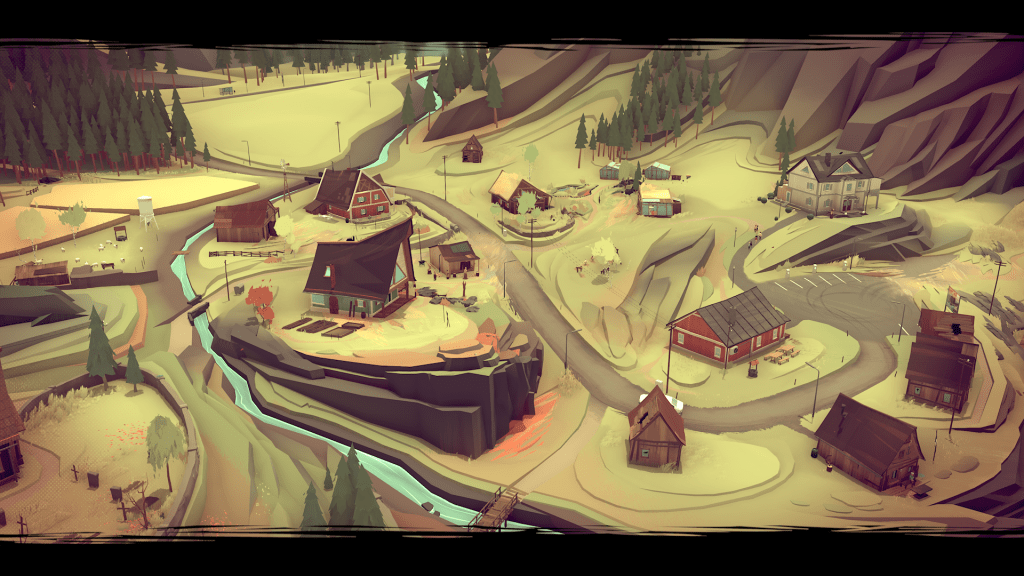
I think the way that the storytelling has a lot of great small moments over one big amazing narrative makes sense within the context of how this game is constructed. Closer the Distance isn’t a game about closely following one character’s journey. It’s about many small peeks into a dozen people’s lives. And that leads to an experience that will be very different for different people. A friend of mine who sold me on the game described a moment that meant something to him through tears. I never actually saw that moment in this game. Closer the Distance is designed to be a very personal experience for each player, both in terms of the choices you make, the tasks you prioritize, and the emotional moments that you happen to stumble across.
Playing Closer the Distance wasn’t always fun for me. I felt like there was a nagging sense of frustration pulling at me quite often as I played. But just as often, I was moved in ways that few games are able to move me.
All of these different feelings left me unsure how to rate this game. Usually, I write reviews for games almost immediately after I beat them. This is one of the rare times where I’m writing a review several weeks after I beat a game. Weirdly, that time apart from Closer the Distance has almost enhanced it for me. As I wrote about this game, one powerful moment after another that I experienced crossed my mind. Much like grief, as time passes, the worst of the pain can slowly numb a little bit, and more of the happy moments start to shine back through. While I didn’t always love playing Closer the Distance, I’m still very happy that I experienced it.
Score: 8.0/10
 Big Nerd Gaming
Leave a comment