
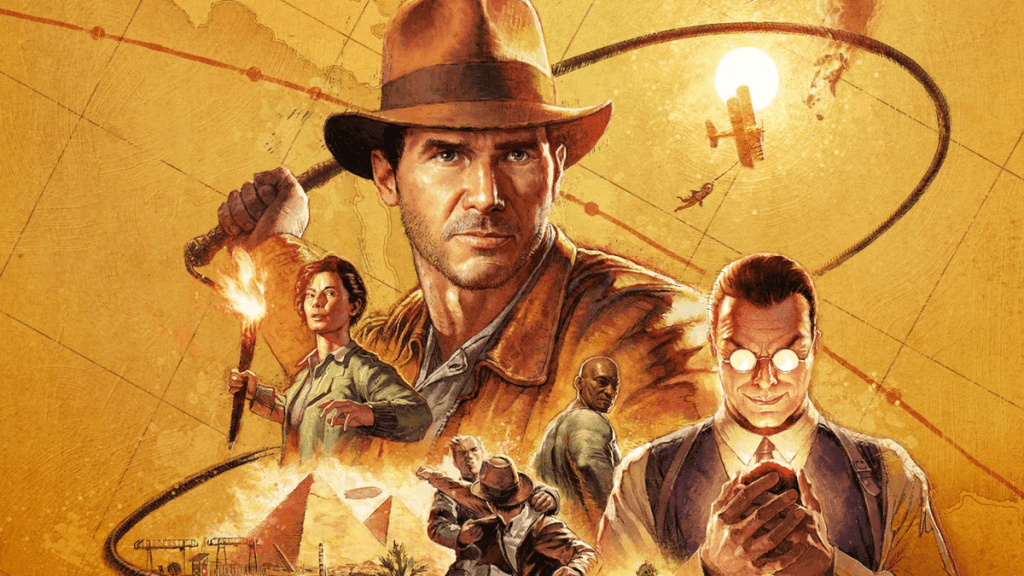
Indiana Jones and the Great Circle makes me think about how silly the human mind is. We all put a lot of importance on our first and last impressions of something or someone. And look, that’s great and all, but it doesn’t always make sense. If I have a lot of great interactions with someone, but my first one was poor, and my last one was poor, it seems silly that I would hold those interactions far above all of my other experiences with that person. But that is how we operate. All that stuff in the middle is important, but it’s not as important.
The Great Circle is a master at understanding where to make the most impact. I thought that this might be one of my favorite games of the year after the first 6 hours of the game or so. The middle section of the game is fine, but it had real flaws for me. Then, the conclusion comes back and delivers in dang near every way possible.
If this was reversed, and the intro and conclusion to the game were mediocre, but the middle 50% was incredible, I’m not sure if this game would have captured the score that I plan on giving it. I imagine it would be a little lower. I’m willing to say that this makes absolutely no sense, but I am a prisoner of my own mind. The Great Circle has such a strong introduction that I clung to that as I, at times, felt frustrated with the game. And then the last 25% of the experience is so good that I was willing to somewhat forget the sins from the middle of the game. There is some true magic here, and this is coming from someone who has never watched any of the movies.
Is It Just Me, Or Is Indiana Jones A Bit Of A Horndog?
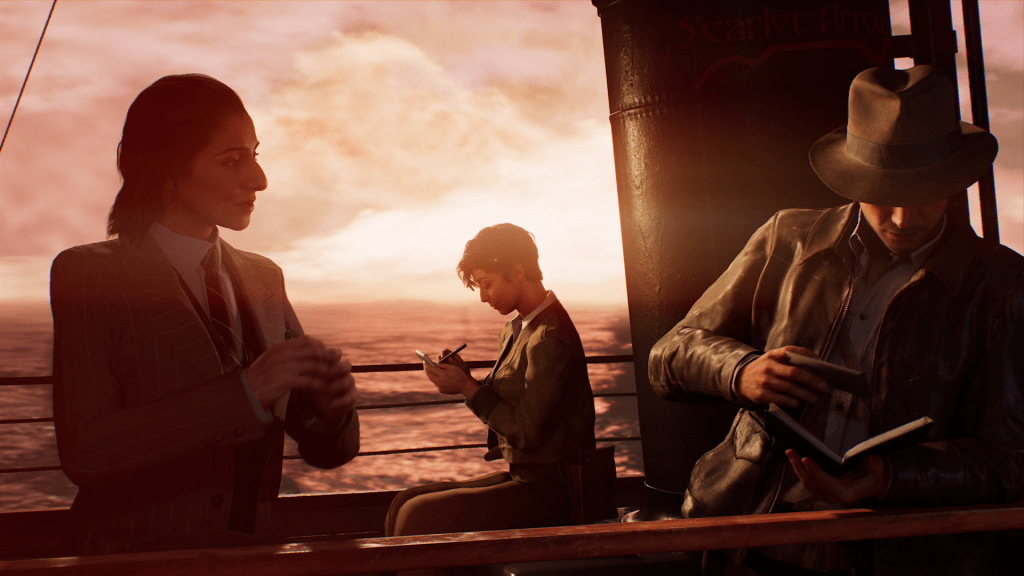
Because I never watched the movies, it might be surprising that The Great Circle was able to pull me in so quickly. Especially because the game kicks off with a somewhat clunky re-enactment of what happened in the first movie (it turns out, running away from a boulder is a little less exciting when you are in first person and have no idea how far away anything is behind you).
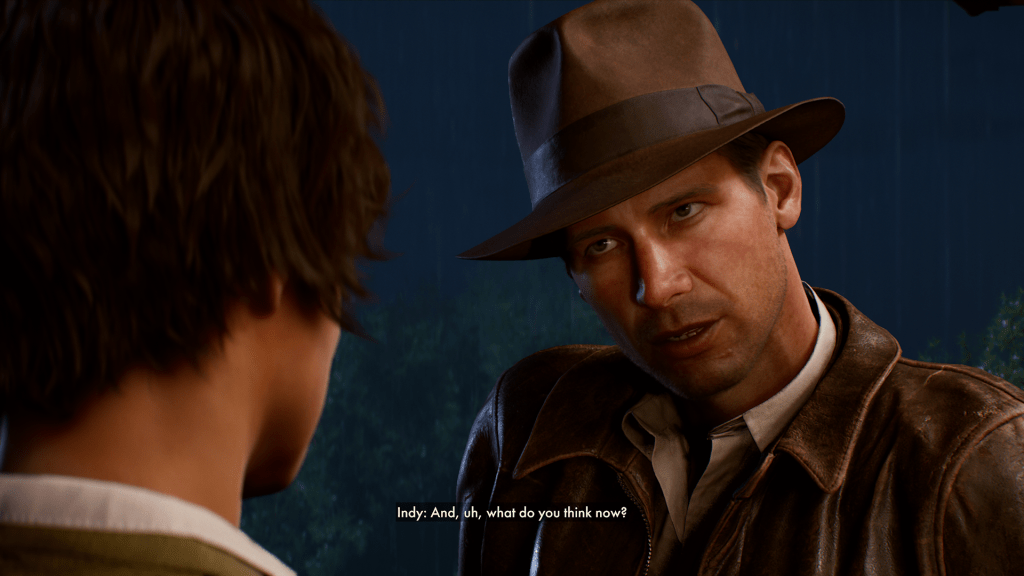
But once the game starts in earnest, I think anyone will be engaged, Indiana Jones fan or not. I was quickly taken in by Indiana as a character (as well as Troy Baker’s phenomenal performance), and several plot hooks are set up quite nicely that had me eager to see what would happen next. After the aforementioned opening segment, a giant of a man steals an artifact from the college Indiana Jones works at, and thus, he goes to find it and figure out why that particular artifact was stolen. He naturally ends up encountering Nazis, other bad guys, an attractive woman, and some mystical shit.
Once you actually get into the flow of the game, you might be surprised to find out that The Great Circle centers around exploration more than anything else. There are three open areas in the game that you can explore to your heart’s content. This game has some of the best exploration of any 2024 game I played because it doesn’t tell you where to go at all. You can find hints and books that will help guide you to the game’s various secrets, but every single thing you do in that game feels earned. Each area is big enough but not overwhelmingly large, so the lack of handholding never led to any frustration either. The game guides you where to go for its main quests and big side quests, which I liked, but then lets you explore the rest of its worlds as little or as much as you like.
By exploring, you can acquire books and adventure points. These resources help you make Indiana stronger in a large variety of ways. There are basic upgrades that strengthen your melee attacks or give you more health. There are also more interesting ones that make your whip more effective. Non-handholding exploration isn’t all that great if there is no reward for doing so, and luckily, The Great Circle is excellent at making exploration worthwhile. On the flip side, while upgrading Indiana is helpful, I didn’t run into tons of trouble playing the game on hard, so I also think this is a game you could pretty easily mainline if you don’t wish to search every nook and cranny of this world.
Yes, You Can Hit Nazis With Frying Pans
When you aren’t exploring each of the open areas, you will be engaging in either stealth, combat, platforming, or puzzle solving. These almost all have their highs and lows, but generally lean more towards good than bad.
Stealth is probably what you will do the most in the game. Indiana is tough, but he is a normal man and not built to fight tons of enemies at once. The smartest thing to do in each area that has enemies is to try and slowly take everyone out one by one or just completely sneak past everyone. I thought the stealth was pretty competent overall. You don’t have tons of options, but the first-person perspective adds an extra layer of intensity. The level design is pretty strong. Each combat area is open enough where you generally have multiple options for getting through each section. Enemy AI is also good enough, but not overwhelming, so I never felt frustrated at any particular section. It’s all nicely balanced, despite being somewhat barebones.
The highlight of the stealth ends up being the slapstick nature that it can have. Indiana can pick up dozens and dozens of items in the world and use those to attack Nazis and other enemies that he runs across. Sometimes, you will find shovels, pipes, and hammers to use. Other times, you might use something much sillier, like a broom or a fly swatter. Beating a Nazi over the head with a frying pan or a guitar just never loses its hilarity. The way The Great Circle keeps things light, even through some pretty heavy stuff, is a big part of why I enjoyed this world so much.
When you get caught sneaking around, you will be thrown into situations where you have to fight. This is probably the weakest element of the game. There is once again a fun slapstick nature to hitting enemies with the various weapons in combat, but it feels a bit clunky. The guns in the game do not feel nearly powerful enough either, and once more than one enemy is on the screen, I felt like the punching and blocking never quite worked how I wanted them to. I kind of viewed combat being more mediocre as a good thing, as it pushed me to use stealth over aggression. And I think within the context of this world, taking things from a stealthy approach makes much more sense narratively than Indiana taking dozens of guys out in one battle.
You also investigate several temples in this game, as you probably would imagine, which is where a lot more of the puzzle solving and platforming take place. I thought the puzzle solving in the game was mostly fine. Nothing really blew me away, but nothing was overly offensive or annoying, either. They can also be quite cool cinematically when you solve a puzzle and then watch elements of the temple transform around you, but the puzzles weren’t the highlight of the temples for me.
The strongest element of the temple portions of the game (and some areas outside of the temples) ended up surprisingly being the platforming for me. I didn’t expect this at all, but the game throws plenty of clever platforming challenges at you. Using the whip to swing around ends up being a really cool mechanic for platforming, and I also loved how it felt cinematic but grounded at the same time.
The Uncharted series has tons of cool platforming, but in order to retain the maximum drama and the cinematic nature of it, it often feels almost completely on the rails. The Great Circle manages to keep its cinematic nature while never feeling on the rails. It’s almost clunky in some ways, but the ways in which it is clunky feel “right.” It feels like a normal man trying to do some of these crazy jumps and other actions, and I liked that a lot. The game does a great job with its platforming set pieces, and I think a lot of other cinematic type games could learn from how it is done here.
Indiana Jones And The Hogwarts Legacy
Despite the gameplay being solid overall, the game varies wildly in how good it is across the entire adventure. A lot of this really just boils down to the open areas in the game. Certain areas are much more fun than other ones. Unfortunately, the three open areas go from great (The Vatican) to fine (Gizeh) to pretty dull (Sukhothai).
The Vatican ends up being an incredible start to the game, and was easily my favorite area in the game to explore. It may be a weird comparison, but this section reminded me a lot of how Hogwarts was designed in Hogwarts Legacy. The Vatican is very cramped and maze-y at times, but it is absolutely loaded with little secrets everywhere you look. The added backdrop of the politics of the Catholic Church and fascists in Italy added an extra plot element that I thought was one of the most interesting in the game. You can at times use disguises to get around unnoticed in certain areas, and I thought this feature was also implemented best in the Vatican area.
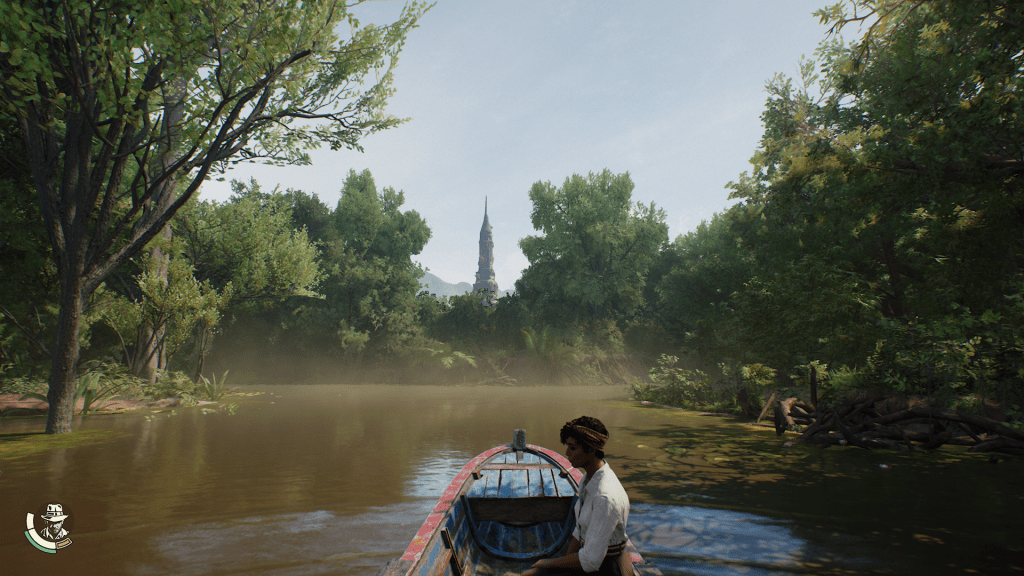
The desert area of Gizeh is much more open, and I ended up missing the more crowded nature of the Vatican. I thought this section was adequate but lacked some of the excitement of the previous area. This area felt much more like a traditional “open zone,” and that made it lose some of its charm for me. Sukhothai ends up being easily the worst zone, as to get to each location, you have to take a canoe to get through the swampy waters. The water areas have absolutely nothing to do outside of navigating to the next part of the map you want to get to. If we get another game like this, I hope the game continues to opt for more crowded city-type areas over the more wide open ones they opted for later on. Gizeh and Sukhothai also have some of the weaker set pieces and boss fights in the game, which added to some of my frustrations with these areas.
This isn’t to say that the middle portion of The Great Circle doesn’t have anything going for it. You make a stop in between Gizeh and Sukhothai to the Himalayas for a more linear level, which has some fantastic set piece and plot moments throughout. In the end, while the open exploration in The Great Circle is pretty cool, I actually thought the game succeeded the most when it was in more linear sections. These are the areas where the game busts out its best stealth areas, its best puzzles, and its best platforming sections, not to mention these areas are where the best plot moments happen.
I’m Not A Movie Guy, But I Liked When This Game Felt Like A Movie
I think that these linear sections work so well because this is when The Great Circle leans into its biggest strength. When this game is cooking, it truly feels like a movie in ways that very few games do. The Great Circle combines some excellent plot pacing, direction, writing, characters, and performances where playing this game really does feel like experiencing a new Indiana Jones film.
Or, at least, what I imagine an Indiana Jones film feels like. Once again, I never watched these films, as I’m not a huge movie guy, and this isn’t normally my genre. But playing this game had me legitimately interested in giving those movies a look. When everything is clicking here, it reaches highs that not many games do.
I wish the game hit those highs more consistently, but in the end, The Great Circle hits those highs at the most important moments in the game. It nails the opening, it nails the conclusion, and it at least has a few moments in the middle to carry you through as well. If the best moments in this game were placed in the middle and the lows were more at the beginning and ending, my score for this game might be a bit different. But logical or not, this is how most of us operate and remember the media that we experience. The Great Circle excelled the most when it needed to, and that is what I will end up remembering about this game.
Score: 8.5/10
 Big Nerd Gaming
Leave a comment