
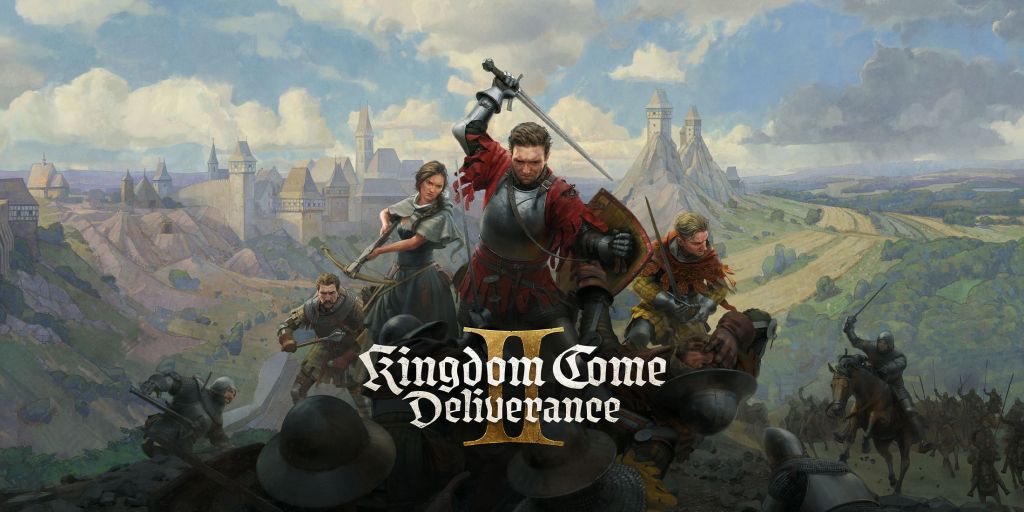
The number of people who love medieval times has always been fascinating to me. People don’t just love that era from a “history is interesting” perspective. There are entire industries built around feeling like you are living in this era. The Medieval Festival that takes place near me is a major event that so many people I know attend every year. This era has been romanticized in a variety of ways.
Yet, we all know that none of us would ever actually want to live in these times. Everything sucked. Nothing was sanitary. Disease was rampant, and war was also common. Every time I read or think about anything from those times, my first thought is often about how bad the smell must have been back then.
Kingdom Come: Deliverance II is a game, much like its predecessor, that wants to truly put you in the 1400s. The main goal of this open world RPG is immersion. The thing is, the game is trying to immerse you into a time that sucked. Perhaps it’s no surprise that absolutely nothing is easy in this game. It takes work to keep yourself and your clothes clean. It takes effort to stay fed. It takes effort to sharpen your sword and fix your gear. Brewing potions is a serious process. There is almost nothing in KCD2 that is handed to you or quickly handled with a push of a button in a menu. The game makes you work for every little thing.
And that is both the beauty and, at times, the peril of KCD2. The number of systems in place makes this one of the most immersive RPGs I have ever played. There is so much here that makes me feel like I am truly in this era. Everything is so much work, especially early on. This also means that once things get a little easier, it’s incredibly rewarding. But sometimes, the game still seems to make things a little harder than they have to be. Almost anyone playing this game is bound to be frustrated by something here. And yes, that’s by design, but sometimes it is just legitimately bad design in my view.
Despite that, there is an undeniable magic here. The constant struggle in this game means that every time you make an inch of progress, it feels like a big deal. Something as simple as forging a new weapon or finally crafting more of the potions that let you save the game all feel like a big deal. For every time KCD2 pisses me off, there’s a moment of triumph that is undeniable. Every time I play, I feel like I’m getting closer to really turning the corner on the game. I’m very interested to see where I end up on this one. But in the meantime, here are my three early takeaways on my experience with KCD2 so far.
Incredibly Immersive And Brilliant Role Playing. At times, Equally Clunky
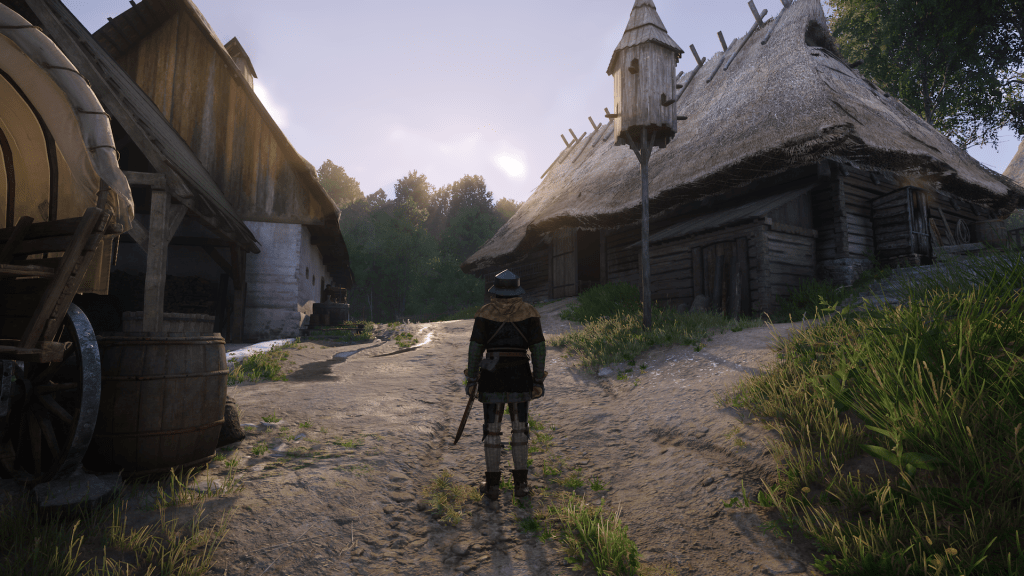
As stated in the introduction, KCD2 has a lot of systems. While I think plenty of these systems might be in other games out there, I’m not sure if I’ve ever played a game in this genre with as many different components to it. I feel like most of these systems are positives on the whole, but I also feel like almost every single one has at least one little nagging frustration for me.
One of the coolest systems in KCD2 is the alchemy system. If you want to save yourself a lot of money, you can brew your own potions, which are vital throughout the game. Like pretty much everything else in KCD2, this isn’t something you can do with a few button presses in the menu. You have to select the ingredients you want to use, put them in the pot in the right order, boil the ingredients for the right amount of time, you have to grind up certain ingredients, etc. There’s an easy enough recipe book to follow, and it’s incredibly rewarding to make a potion perfectly. There can be some annoyances, though. The game asks you to boil ingredients for a certain amount of time, but there’s a smoke animation that comes up when you lower your pot into the fire. After the smoke dissipates, you can tell that the pot is boiling. I haven’t yet figured out if I’m supposed to start my timer when the smoke starts or when the smoke goes away. The 3-4 seconds where the smoke comes up can make the difference between making a good potion or not. There’s a lot of little things like this in the game that don’t feel fully explained, and the lack of handholding can be frustrating if you aren’t doing things right but aren’t 100% sure why.
If you want to make a sword, there is also a blacksmithing system in the game that goes beyond pressing a couple of buttons. Blacksmithing is a very detailed process, which is cool, but it can be a bit long and a bit too mindless. Sharpening swords is a fun little activity, but it can also feel a bit awkward and finicky. As I stated, there are many systems in KCD2, and not every single one is quite as fun as I’d like
One of the biggest examples of this is the persuasion system for me. You have a lot of moments where you can persuade people of different things in conversation. Like most games that have something like this, when you are looking to persuade someone, you will see various stats come up on the screen that will tell you which kind of persuasion you are strongest with. The catch is that the game outright tells you that those numbers may not even matter in a lot of situations. Your reputation, the situation, and what you are wearing can matter much more. That seems cool and immersive, but it can be equally frustrating. Persuasion in this game feels like a guessing game more often than not, especially because I have absolutely no clue or real indicator how likely it is for any given option to succeed. I usually love these types of persuasion systems. I’m very much a “talk my way out of it” guy in most RPGs like this. KCD2 might genuinely have one of the least enjoyable persuasion systems that I have ever encountered.
One of my biggest issues with the first game was combat and stealth. It just felt way too clunky. This is an important one, and luckily, I do feel like it is way better this time around. Fighting multiple enemies at once isn’t quite as frustrating as last time around. Your general goal is to aim at a point where the enemy is not defending themselves and attack from there, You can also counter attacks and block attacks, as well as perform combos. It can be quite exciting to get into a long sword battle where you go back and forth with an enemy. Unfortunately, getting into swordfighting sequences with an enemy can eradicate your stamina pretty quickly in the early going of the game. I imagine this will get easier as time goes on, but I feel like I spend way too much time in combat backing up and waiting for my stamina to return. Enemies rarely pursue you aggressively, which is why its easier to fight multiple enemies, but also feels undeniably odd at times.
There are also some occasionally janky moments where my sword will just swipe through an enemy, and the blow will not register for some reason. You occasionally fight wolves in the game, too, and none of the non-human encounters in the game feel great at all. There is still a decent bit of jank here.
I’ve heard that having a dog makes the combat better. Unfortunately, I have encountered a pretty major glitch that makes it so I can’t praise my dog. You need to praise and feed your dog in order to keep him happy and obedient. Hopefully, this is fixed soon, but it’s one of several glitchy aspects of this game that occasionally impacts my enjoyment. For now, I’ve had to mostly sideline my dog.
Luckily, if you are able to avoid combat and use stealth, I actually think it is pretty well executed. Enemies are unpredictable, and there’s a nice challenge to it, but there is some room for you to mess up or cheese things as needed. My only real complaint with the stealth is that the game actually doesn’t really go into detail on a few of the mechanics on how to do a stealth takedown until a certain main mission, and I had tried to use stealth in some other scenarios before that, so I was frustrated with certain elements of it until that tutorial. With how long the opening of the game is, I’m really surprised they couldn’t work in a better stealth tutorial earlier.
I sound like I have a lot of complaints, and I definitely do. But I also think all of these systems combine to be greater than the sum of their parts. The almost bespoke nature of every mechanic in the game has a lot of charm and adds greatly to the immersion. The way villagers can figure out if you stole something or how they change how they interact with you depending on if you’ve bathed recently or what you are wearing is really fascinating.
For any of my complaints on mechanics in the game, they all do a lot to truly put you into this setting. If you want to be immersed into a world, there’s almost no game that does it better than this one. But at least so far, there are plenty of frustrations along the way, too. It does seem like the more time I spend with it, the better I feel about how this game plays. With all the different systems in place, there is definitely an adjustment period, and I feel like I’m getting close to breaking through that adjustment period. But there have been some painful moments getting there.
The Story Has Me Hooked
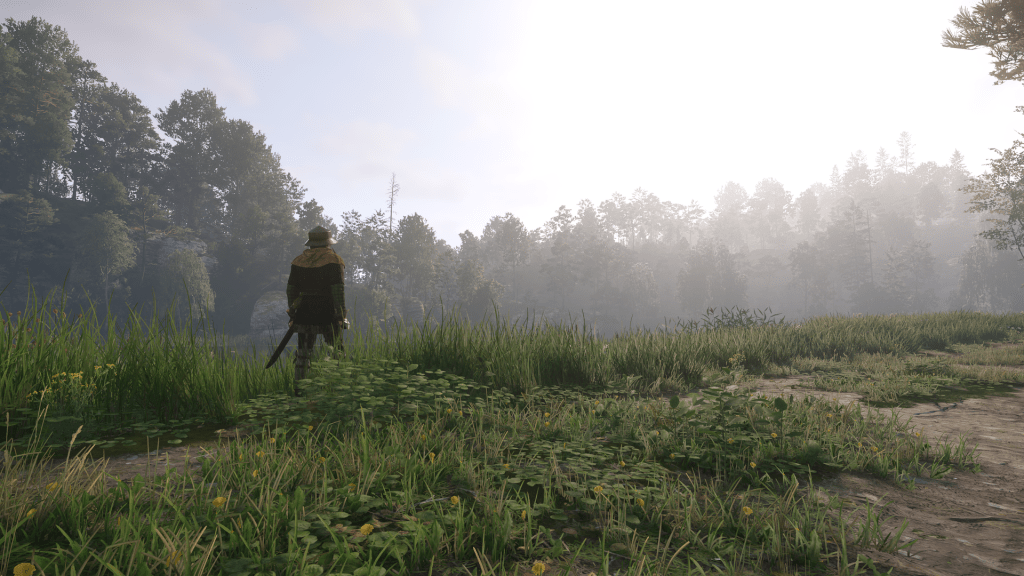
Kingdom Come: Deliverance II commits one of my biggest open world game sins. It takes something like three hours before the game really lets you loose into the world. Admittedly, that bugged me a bit, but it didn’t bother me nearly as much as it normally would. That is because KCD2 does such an excellent job with its story.
You play KCD2 as Henry, who is also the hero from the first game. Henry obviously becomes strong over the course of that game, so KCD2 needed to find a way to start you from the bottom all over again. Over the course of the opening of the game, Henry loses his clothes, his money, and pretty much everything else. You are back to nothing after an almost unbelievable series of events. But it is all executed so well that it had me very engaged. I’m excited to build Henry back up, and the medieval politics of the time are really fun and are interesting as story hooks as well.
It’s not just the main story that has me interested, though. I have been stunned at how well executed every single side quest in this game is so far. I’ve done around 4-5 side quests, and they have all been far more complicated than they first appeared. Every side quest I’ve done has had multiple parts to it, some twists and turns, and even elements of player choice. It’s incredibly impressive. Considering every side quest that I’ve done so far has been like this, I have to assume that this is how they all are.
Obviously, I have no idea how people in the 1400s acted and talked, but the game is written in a way that feels authentic, and if I feel that way, I suppose that’s all that matters. The characters I’ve met even briefly for just one quest have stuck with me, too. The storytelling and writing in this game are far beyond what I expected and have been a key cog in my enjoyment so far. Expect this one to rank highly in this years BigNerdGaming awards for both story and optional content.
This Fucking Menu
When I’m writing reviews of a game, there are almost always cuts that have to be made. I don’t like going over 2500 words, so sometimes I won’t talk about certain elements of a game. Most of the time, this is an element of the game that I have opinions on, but I’m not sure if it’s something that is really going to be worthwhile for the reader. I almost never talk about what the menus are like in a game, because I generally get used to it by the end and it’s tough to cut a paragraph about the actual gameplay or story to talk about that instead.
I’m not sure if I’ll end up talking about KCD2’s menus during my full review, so I want to make sure I talk about it here. I feel like every element of this menu is unintuitive. Almost all of the menus have sub menus on the side, and it’s really clunky to navigate. When you are looking at your items, for example, you have to pull out another submenu to read the details about what the items do. It’s really odd. The map also controls in a funny way, and often gets pulled up zoomed in on a part of the map that I haven’t even explored yet, so I have to scroll a ways down to get to where I want to look.
But the worst part about the menus is that almost every bit of text is way too damn small. I admittedly don’t have great vision, and I like to play video games while reclining back on my gaming couch. I can still play almost every video game like this with no problems. The only time I lean forward when playing games is if I’m playing something really intense. Unfortunately, I’ve been playing KCD2 much in the way I’d fight an Elden Ring boss. The menus have me constantly leaning forward. The text is too small everywhere. The icons on the screen that show you where your objectives are can be tough to parse through without leaning forward, too. The map can be really tough to read, even when I’m fully zoomed in. This is a small thing but actually significantly affects my personal enjoyment. It’s a shame because you spend a fair amount of time in the menus. I’ve talked a bit about how some elements of the game get better the more you play. Unfortunately, the more I play KCD2, the more I hate these menus.
I will write my full review when I complete the game. I didn’t complete the first Kingdom Come: Deliverance, but I feel confident in saying I will complete this one. Despite my many complaints, I think enough has been polished from the first game where I can enjoy the immersion despite the things I don’t like. I’m leaning around an 8/10 right now, but I could see myself going as high as a 9 or as low as a 7.5. I’m something like 15 hours into the game to this point. It’s rare for me to have such a wide range of outcomes when I’m this deep into a game, but I could still see things going a lot of different directions for me. But I am increasingly becoming convinced that I’ve hit a point where the game is only going to get better for me. I was probably closer to a 7.5/10 until the few hours I was able to put into it yesterday. I’m really hopeful that it will only continue to go up from here.
 Big Nerd Gaming
Leave a comment