
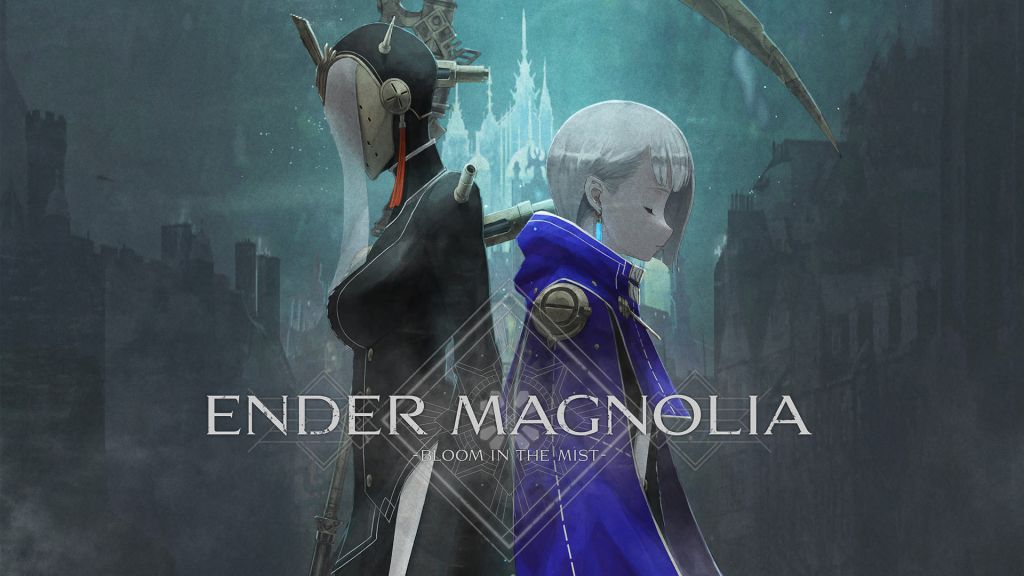
I love the idea of being in a pitch meeting for a game and imagining how the concept of it was sold to a publisher. It’s fun to devolve a game’s concept into a stupidly simple elevator pitch.
The way I envision the Ender series being pitched is “imagine a Castlevania game, but make is anime and give it sadder vibes.”
For whatever reason, the initial game in this series, Ender Lillies: Quietus of the Knights, did not click with me at all. It was well reviewed, but I jumped off of it pretty quickly. Perhaps because I’m a glutton for punishment, or because we were in the middle of a big gaming dead zone in January, I decided to give the sequel, Ender Magnolia: Bloom in the Mist a try. And I ended up being very glad I did. I love Castlevania games. The way those games focus on combat and RPG elements has always appealed to me. Not that many Metroidvanias lean into either of those elements quite as hard as those games. It was nice to play a game that seemed to have similar principles. I don’t think Ender Magnolia comes close to the highs of Castelvania games when it comes to its combat in particular, but it has its own strengths, particularly with its exploration and Metroivania elements, that help it stand out in what has become a very crowded genre.
It’s Simple. The Map Changes Colors, I Get A Dopamine Hit

There’s a few reasons why I love the Metroidvania elements in Ender Magnolia so much. Most notably, this is one of my favorite maps in any Metroidvania game ever. This has a really simple feature that I wish just about every Metroidvania game had. In each area of the map, once you’ve found everything you need to find, the map turns blue. This makes it so you don’t waste time trying to search every possible wall for an opening without knowing if you have any chance of finding anything whatsoever. I absolutely hate the “hidden wall” mechanic that 90% of Metroidvanias employ, but it’s not so bad if I realize that there is a hidden wall in a small portion of the map to find. Ender Magnolia features plenty of rewarding upgrades that make exploring worthwhile, but the feeling of turning the entire map blue is also incredibly satisfying, and something I truly hope becomes a more prevalent feature in this genre.
Cool quality of life mechanics don’t make for satisfying exploration on their own, but luckily, this game (mostly) nails everything else that makes exploration fun as well. Like every game in this genre, you slowly acquire different abilities in the game that let you unlock more of the map as you go. These abilities are doled out at a nice pace that keeps things fresh and allows a nice, consistent feeling of progression. Many of these abilities are pretty standard, like a ground pound ability that smashes through certain barriers and a grappling hook that works in very specific areas. But as you go deeper into the game, Ender Magnolia pulls out some abilities that are much more interesting and a lot of fun.
One ability allows you to launch from one side of the map to the other for as long as it is unobstructed when you are hanging on a wall. This is worked into the map in a lot of compelling ways. I had several times when I launched myself for something like 15 seconds in order to reach a spot on the complete opposite end of the map. These are extremely satisfying navigational puzzles that I never got sick of. The game also has a charged jump move that lets you jump into the air for a pretty long stretch of time. This also ends up being a really fun move, as the map uses plenty of verticality, so there are lots of ways to explore and solve navigational puzzles with this as well.
All of these exploration elements still wouldn’t mean much if there weren’t rewarding things to find on the map, and luckily, Ender Magnolia does a nice job there as well. There are components hidden everywhere that help upgrade your various attacks, as well as plenty of upgrades to your HP as well. So the game’s exploration has many rewarding feelings between both upgrading your character and the visual element of seeing the map slowly unlock.
Very Competent With A Touch Of Stupid
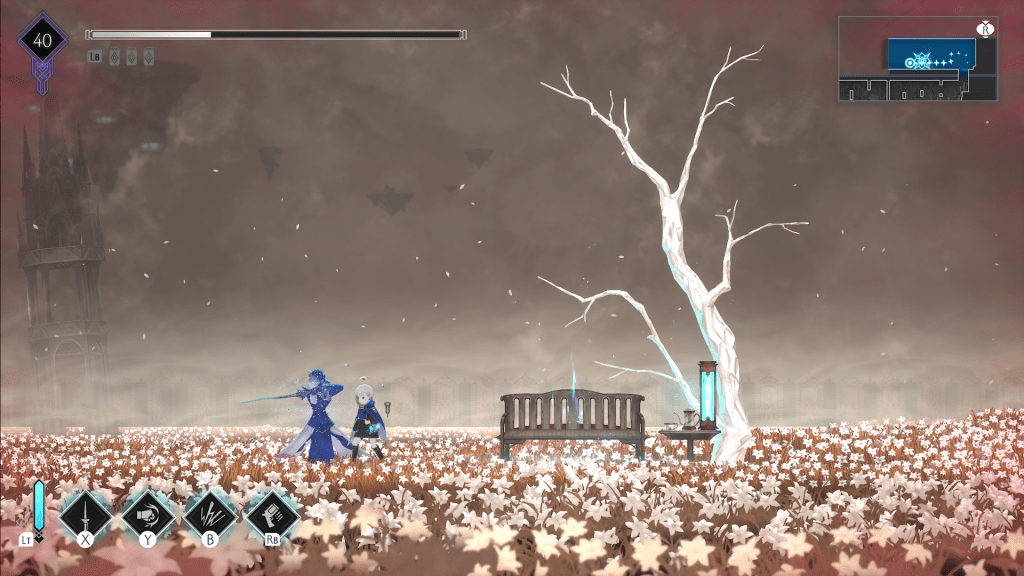
While I was having a blast with exploring the map in Ender Magnolia, I found fighting the enemies as I explored to be competent but not quite on the same level. To this game’s credit, it offers you a pretty nice range of options to customize your character and fight the way you want to. You have thirty different abilities to use, and you can equip four of them, so almost no one is going to play this game exactly the same way unless they are following some sort of build guide. I tried to keep things balanced, so I personally had a counterattack, a ranged attack, and a more medium ranged attack equipped to go with my basic attack. Once again, I think everything is really competent here. The sound design and animations on all of the attacks are really solid and give the combat a decent bit of impact. I also enjoyed playing around with all the different abilities the game gives you until I found the build that worked best for me.
I did have issues finding abilities that I really loved, though. Usually, when a game gives me a lot of abilities like this, I don’t actually spend that much time fiddling around with them, because once I find something that works, I’m content to stick with it until it doesn’t feel as effective anymore. With Ender Magnolia, I kept switching abilities until I finally just kind of settled on what I had because nothing felt quite as good as I hoped.
I think using one of the counter attacks in the game is vital, as they have some of the highest damage outputs in the game. Unfortunately, countering is a bit awkward, as it doesn’t keep you invincible for long. So I had several instances where I landed a successful counter, but still ended up taking damage. Having a ranged attack in the game is also really important with all of the verticality the game has, but I just didn’t love any of the ranged attack options that the game gave me. Most of them feel like they are only practical in very specific situations. The game has a basic gun that is much more practical in any situation, but even fully upgraded, it’s pretty weak. Ender Magnolia has lots of floating enemies or enemies on platforms a ways away from you, so I really wish the ranged options in this game felt better. Sitting just on the edge of your attack range and holding the ranged attack button for 10 seconds, waiting for an enemy to get stunned from it was never all that much fun, but was also necessary in more scenarios than I’d like.
The game also has some really weird balancing. While I didn’t 100% the game, I did invest plenty of time in backtracking and finding extra upgrades as I progressed through the game. Despite this, enemies take you out really quickly. It felt crazy to lose some fights in 2-3 hits when my health bar was upgraded to take up most of the top of my TV screen. It’s weird because I actually don’t think Ender Magnolia is particularly difficult outside of a few specific bosses. I only died occasionally when I was exploring, and I beat most of the bosses in anywhere between 1-3 tries. So despite the large amount of damage enemies do, the game isn’t overly difficult, in my opinion. Regardless, deaths get frustrating because they almost always feel a little unfair. I hated getting caught in an area of effect attack, seeing half my health go away, and then getting a status effect that kept whittling down my health even more. This also sucked because it’s the one thing that diminished the game’s exploration a little bit for me. Finding health upgrades in the game slowly loses some of its excitement as the game goes along because they don’t feel as important as they should. You can find six health upgrades, and it still might not change the amount of hits it will take before you die for many of the enemies in the game, especially the bosses.
I want to be fair and say that the game does offer difficulty settings as well. So I easily could have turned down the amount of damage enemies do. But I never really felt like doing this because outside of those couple of aforementioned bosses, I wasn’t dying enough to feel like it was warranted. I died enough in the game where it felt like a good challenge, but it also almost never felt overwhelming, so I didn’t want to mess with that. But almost every time I died, it would elicit a “that was fucking stupid” from me.
Despite the complaints, I still thought the combat was pretty solid overall. The added RPG elements are a big reason for this. In Metroidvania games where you don’t level up, enemies can become a bit of a nuisance after a while, as there might be almost no point in fighting them. I never found myself skipping through any fights in this game because leveling up and increasing my attack was well worth it. Even if combat was occasionally frustrating, the RPG elements keep it rewarding to participate in.
Similarly, the game executes on its platforming segments just well enough to be enjoyable. I think Ender Magnolia recognizes that platforming isn’t really a major strength of the game. So these segments mix things up, but the game never focuses on them in any significant way. If they did, I’d probably have a lot more complaints about it. In the end, they end up being a nice enough change of pace, and then they get out of the way.
I Don’t Know What’s Going On But It’s Quite Pretty And Sad

Surprisingly, the game does actually invest a fair bit of time and energy into its story. But all of that time and energy felt relatively wasted to me. The game throws a lot of different jargon at you fast and makes it feel like you should already know what’s going on before you even start. Perhaps the story will mean more to those who played the last game, but it never even came close to clicking for me. It’s a shame because the game has some very cool cutscenes from an artistic perspective, but they never meant anything to me.
The game does at least carry that strong art direction over to its environments as well. Ender Magnolia is a very attractive game, with dark but beautiful environments and great attack animations. The music was an even bigger highlight for me. This soundtrack is “sadchill” excellence, and that is what gives the game most of its sad Castlevania vibes that it excels at.
The art and music combine with everything else to create a package that is exceedingly competent in almost every way. Almost every element of Ender Magnolia succeeds to varying degrees. A few elements soar higher, like the exploration, and a few elements are much closer to being just slightly above average, like the combat. The biggest thing I could see someone hating in this game is the balancing, and even that can be fixed with its robust difficulty settings. Ender Magnolia isn’t an elite Metroidvania to me, but it is one that I think almost any fan of this genre can enjoy. If you like the genre, it’s an easy game to recommend.
Score: 8.0/10
 Big Nerd Gaming
Leave a comment