
Life is a fickle thing that is incomprehensibly different for almost every single person who experiences it.
Despite this, there are some undeniable truths to our existence. Life is precious. Life is not fair. You have to love yourself if you want someone else to love you. Touching grass is good.
And, of course, the most important truth of all. Every single video game is better with RPG elements tacked on to it.
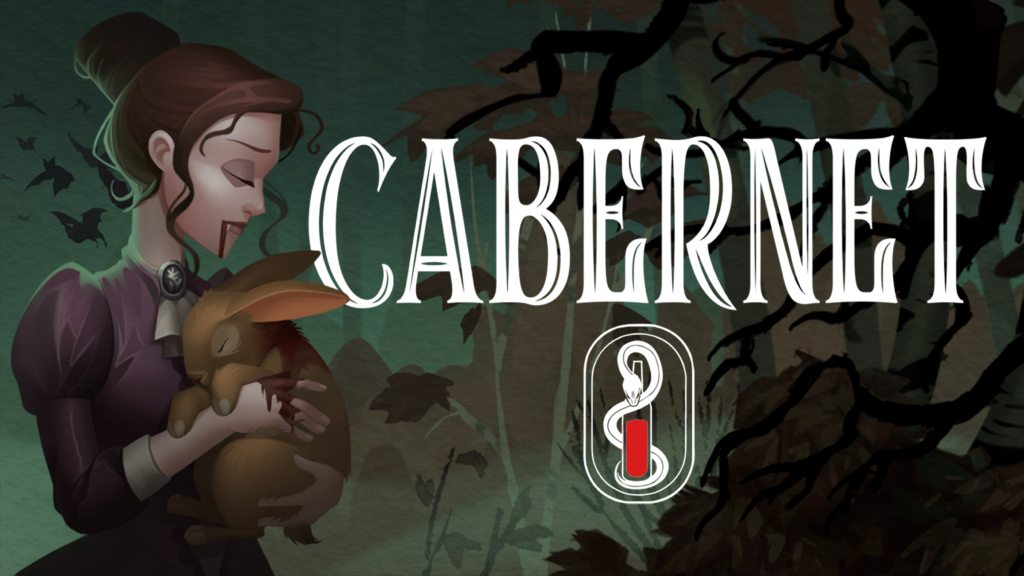
Cabernet does something that I’m surprised that I haven’t seen more of and attaches RPG elements to a narrative game. It also has a Persona styled calendar system to boot. It all blends together quite nicely and gives Cabernet a very unique flavor compared to the many other indie narrative games out there.
Unfortunately, despite such a strong concept, it stumbles in other ways, including with some dang near unforgiveable technical glitches. Luckily, Cabernet also does enough right to still be something worth experiencing for narrative game fans. I hope more games take up this mantle and make something even better with it.
One Of The Hardest Parts Of Game Development Has To Be Figuring Out What Fancy Words You Are Going To Use For Good And Evil In Your Morality System
Cabernet starts out with a big gut punch, as the family of Liza, the main character of the game, talks about her at her funeral. Liza was young and brilliant. Her death is obviously a tragedy (though this wouldn’t have been quite as uncommon in the late 1800s where the game takes place). It’s heartbreaking watching a family grieve over their young daughter, especially as a father myself. This section also cleverly allows you to select some of Liza’s opening stats, which we will talk about later.
From there, we quickly discover that Liza is still alive, technically, but she is now a vampire. She is promptly introduced to the secretive vampire society that exists in this world and sets out to start living her new life as a vampire.
Being a vampire, that life now takes place pretty much exclusively at night. Each night, Liza has 3 action points that she can use to do various actions before she has to return to her coffin for the daytime. These actions mostly consist of things that advance either the main story or a side story in the game or actions that can help Liza train up her stats. As each day and night pass, the calendar moves to the next day. The game has certain days marked on the calendar that let you know when a main quest deadline is coming up. Your goal is generally to do as much as you can before these big deadlines so that your stats will be strong enough to overcome any dialogue skill checks that the game might throw at you.
The way these RPG elements work is simple but satisfying. You have four different types of dialogue skills that you can enhance throughout the game. One pertains to Liza’s knowledge of history, one to writing, one to art, and one to science. Every time you pass a dialogue skill check, you gain EXP. You also gain EXP as you complete various questlines in the game. Once you get enough to level up, you can upgrade those skills. Oftentimes, doing side quests in narrative games is mostly just for additional story, and sometimes, it might impact elements of the ending. Cabernet certainly has those features, but also getting this EXP lends an extra level of satisfaction to everything you do. Even if I didn’t necessarily love a particular story beat, it never felt like a waste of time because it was going to help my character get better in some way. This is kind of a cheat code for a narrative game, and these RPG elements would probably work perfectly in a lot of other games in this genre if they chose to adopt them. This is a great feature that enhances the game quite a bit.
Cabernet also features a morality system that I was a little less satisfied with. Every time you do something nice in the game, Cabernet gives you humanity, which is the “good” stat. Every time you do something mean, it gives you nihilism, which is the “evil” stat. In order to do more “evil” actions as the game goes on, you need a high enough nihilism stat. It works the same for if you want to do some of the nicer actions in the game with the humanity stat. I mostly played as a good person, but I was annoyed that the game locked me out of certain actions as evil, even though they were actions that I actually thought might make sense for my character within the context that they were in. Despite essentially creating a system where you could be both a little good and a little evil, you could potentially pay the price at the end of the game if you don’t go hard on one or the other as well. There was potential with the morality system, but I thought the execution on it was a bit clunky.
BigNerdGaming Is Slowly Becoming The King Of Video Game Menu Critiques
For as much fun as I had with Cabernet, the word “clunky” is one that I consistently seem to come back to whenever I think about it. Cabernet is filled with design choices and implementation that are a bit sketchy.
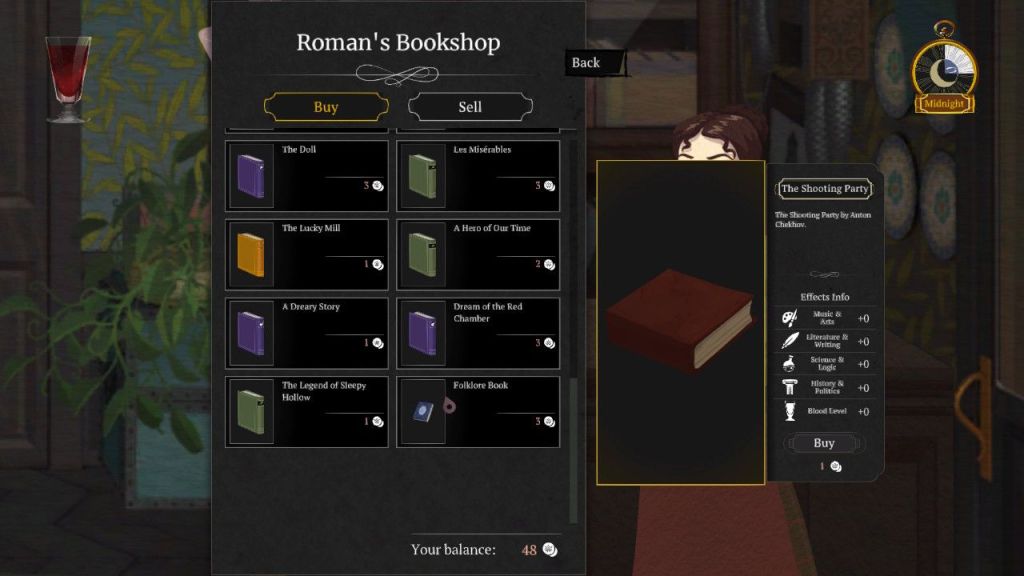
The worst offender is the menus. The menus in the game seem to be completely designed for use with a mouse on PC. There are multiple tabs, but you can’t shift between tabs with the simple press of a button like 99.5% of console games. You have to actually move the mouse with your joystick to select a new tab. It’s super odd. The menus have other issues too, most notably the shop menus, which have text so small that I literally couldn’t read the descriptive text on any items in the game. I screenshotted the menu in one instance to see if I could read it by transferring the shot to my phone and zooming in, but the text was blurry when I did this. It’s not a game breaker, but it sucks that entering the menu was always a mild nuisance.
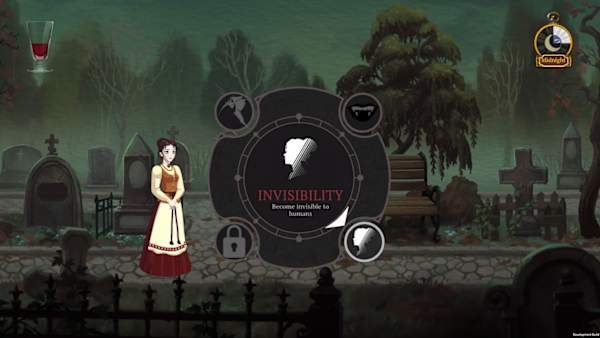
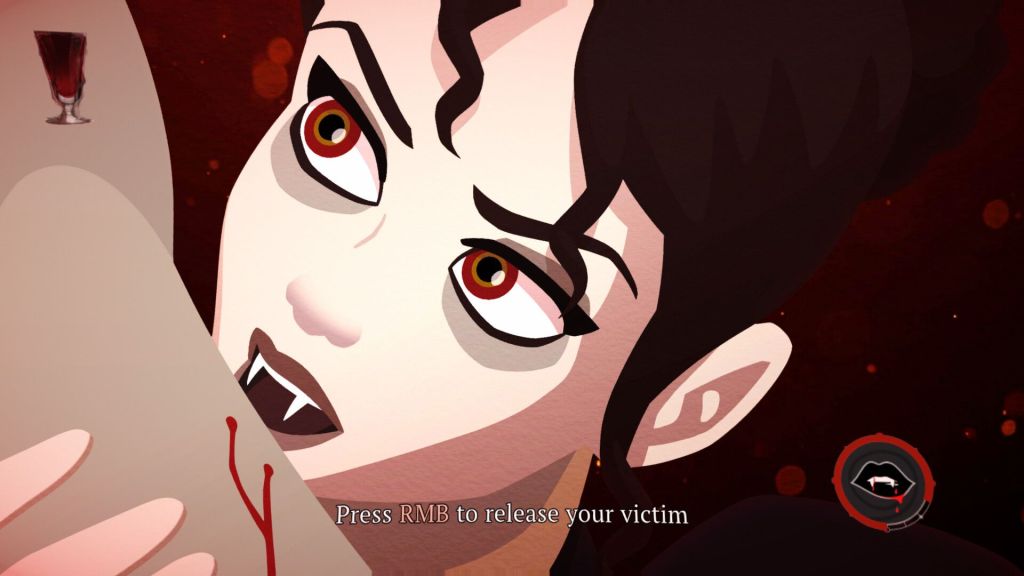
Cabernet also features special vampire skills that you can use. You can turn into a bat for faster navigation, turn into a full blown vampire to acquire blood from a victim (which you need to get occasionally, as you might imagine), and there is a skill to turn invisible for a short time. Once again, there always seems to be a slight bit of jank with a lot of these skills. It can be awkward to activate them, and several of them have real issues when you use them. Liz walks very slowly, so I used the bat skill the most, and I seemed to constantly have issues with the game detecting that I was in a proper place to land, especially if I was trying to go onto a rooftop. This is mostly a very mild nuisance, but the game actually has mini action sequences where you have to get to a certain point in a pretty short amount of time. It feels like I failed almost all of these segments at least once because the game just didn’t work well enough. Luckily, in almost all of these situations, the game autosaves right before, so you have a chance to try again, but some of these segments are infuriating. Especially since the load times in the game are quite long on the Nintendo Switch, so it is painful waiting for the game to load back up.
There are also small glitches that I encountered relatively frequently throughout my experience. It’s tricky to talk to characters in some areas, as you have to be in a very specific spot for their icon to pop up. I had one side character randomly disappear for a day at one point. I also encountered multiple hard crashes as I played the game. Several seemed to specifically trigger when I was sucking someone’s blood. I saw at least one patch come out while I was playing the game, but it didn’t seem to meaningfully change much with my experience. It seemed clear to me that Cabernet could have really used at least another month or two of work to clean some things up before release.
Vampires Making Human Friends Is Low-Key Sad As Hell
Cabernet certainly isn’t the first narrative game I’ve played with plenty of awkwardness on the gameplay front. Luckily, the game executes a fair bit better on its story, which is obviously the most important aspect of the game.
Cabernet has its main story and a whole lot of sidestories. The game is basically like Persona, where you get to spend a fair bit of time with various people in the town in-between your main quest adventures, and they each have their own little story arcs.
Some of them are quite involved, with multiple branching paths and some decent twists and turns. The game also has a pretty solid cast of characters with plenty of complex dynamics that they have to deal with, and they utilize them well during these arcs. Almost everyone in the game has solid voice acting as well. I also enjoyed a lot of the themes tackled during these stories. The game spends a fair but of time diving into the complexities of being immortal, which I found quite interesting. It also uses immortal life to discuss how society often repeats a lot of mistakes, which I also thought was astute and well done.
They aren’t all perfect, though. A few sidestories got a bit boring or were pretty uneventful on the whole. A few of them are shockingly quick in ways that almost felt a bit rushed. It was odd to have sidestories for characters that didn’t seem as important to have 5-6 parts, and then a few with characters I thought might be important would end after only a couple of interactions. Some of these have large skill checks very early in the substory, and if your skill isn’t high enough yet, you won’t be able to get the kind of ending you may have wanted from the story. These felt a bit punitive, and I wish the game let you know that you might want to save certain sidestories for later on. Imagine if in Persona, you talked to a character, but because your “knowledge” stat wasn’t high enough when you talked to them, their arc abruptly ended in an unsatisfying way. That’s essentially what happens with a couple of sidestories.
Usually, this wouldn’t be the biggest deal. But it bugged me more than usual because, at times, the side stories are the main story in Cabernet. Cabernet has a really strong introduction and closes strong. It also has its moments in the middle, but there were several other points in the middle of the story where there was literally nothing going on. In these moments, there is no real mystery I was chasing or significant arc that was about to come to pass. There are several points in Cabernet’s story where you are just living your new vampire life, and that’s it. In these sections, the sidestories entirely what dictated my enjoyment of the game, so it was disappointing when a few did not live up to my expectations. Luckily, most of them are at least decent on the whole, but I also thought that several could have been better.
I will not dive too much into the main story in order to avoid spoilers, but outside of those lulls in the middle, Cabernet’s story definitely delivers on the whole. It creates an interesting look into the world of vampires, and it really does a fantastic job with its last few chapters in particular. The game gives you plenty of choices to make that didn’t always feel like a complete “good vs. evil” type scenario, which made these decisions genuinely tricky. Everything you do comes back in the ending in a satisfying way that I really enjoyed as well. I think that even without all the RPG bells and whistles, Cabernet still would have been a solid game, as it delivers on both choice and story more than well enough to be up to the standard of the genre.
It Was Good, But Could Have Been Better. Kind of Like Life.
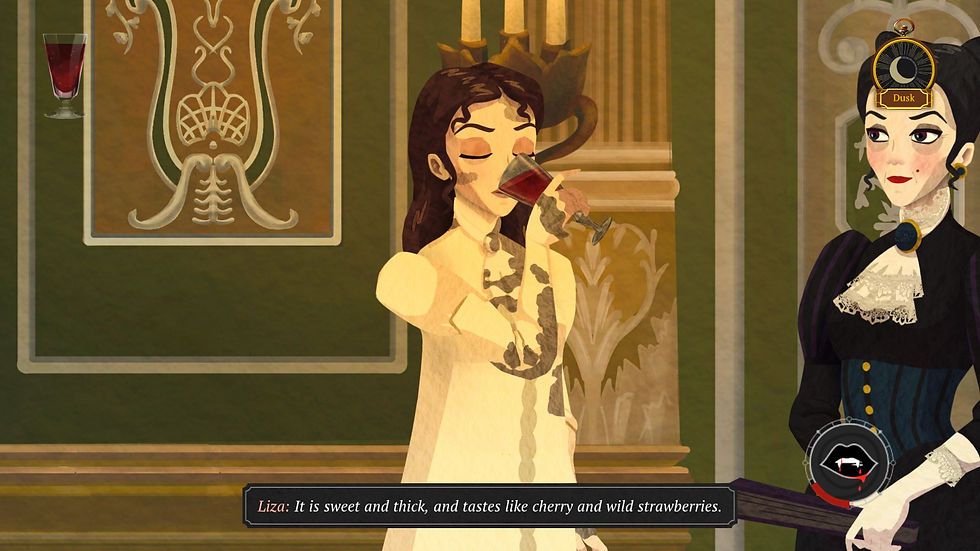
Despite delivering in key ways, Cabernet still left me a tinge disappointed. I feel like the ingredients were here for Cabernet to be a stand-out star in the indie narrative genre, but it fumbles a few too many things to get to that level.
Despite that disappointment, I still had a genuinely good time with Cabernet. It’s a game that I hope has some influence in the genre and encourages other developers to try and use some of its same mechanics. If you like narrative games, I’d say that it’s worth playing, but it also might be worth waiting a few more months for things to get cleaned up a bit more before jumping in. Time is precious for us mere mortals after all, and despite the fact that Cabernet is good as it is right now, I think it will be a lot more enjoyable in a few months as the developers continue to patch things up.
Score: 7.5/10
 Big Nerd Gaming
Leave a comment