
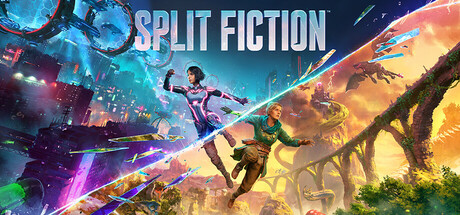
After winning Game of the Year at The Game Awards in 2021, I imagine that there was a lot of pressure on Hazelight studios for their next game. It Takes Two was one of the craziest and balls to the wall games I have ever played. One upping that was always going to be a challenge.
Luckily, Hazelight found a cheat code for their next game, Split Fiction. They invented a convoluted concept that lets them use both sci-fi and fantasy elements, which allowed them to do just about anything that they could possibly think of. Because of that, Split Fiction feels like It Takes Two on steroids.
Hazelight managed to take the core gameplay concepts from their first game and create even wilder scenarios. They also brushed up on their fundamentals in impactful ways. There are a lot of great games coming in 2025, but with everything that they did here, I believe that Split Fiction will be worthy of standing with almost any of them at year’s end.
It’s Sad That Split Fiction Was Too Cowardly To Come Out And Say That Science Fiction Is Clearly Better Than Fantasy
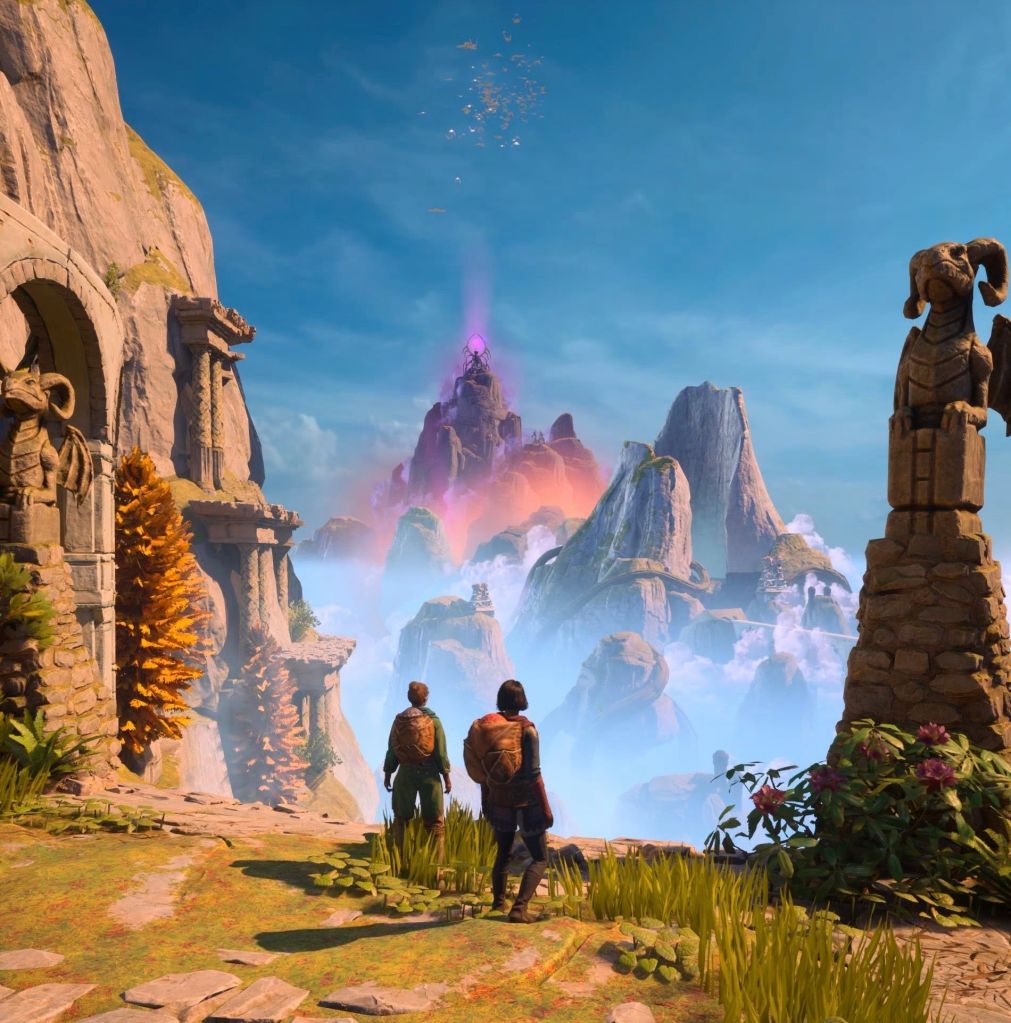
Much like It Takes Two, Split Fiction is a co-op action/adventure game. You play the game as either Mio or Zoe, and your co-op partner plays as the other one. They are both authors (Mio does sci-fi, and Zoe does fantasy), who arrive at Radar Publishing Headquarters in the hopes of landing a publishing deal.
It turns out that this publishing deal is a big scam. Authors are being put into machines that essentially steal all of their writing ideas while also letting them experience those ideas personally. Mio feels suspicious and tries to get away, but ends up accidentally getting pushed into the machine Zoe is in. In order to escape the machine, the two must navigate through their own story ideas. Thus, the levels all alternate between fantasy or science fiction scenarios.
This is genuinely one of the most shameless story concepts I have ever seen. I’m not sure if I’ve ever seen a story more obviously crafted just to give the developers carte blanche to do whatever they wanted with the gameplay design. It’s lazy, convoluted, and ridiculous.
And you know what? I love it! I’m not here for the story. Split Fiction is all about the gameplay, and this stupid concept lets Hazelight go wild.
Much like It Takes Two, Split Fiction has a pretty clear formula. In each level, the characters get a unique ability of some sort. You then use this ability to solve puzzles, platform, and fight enemies. Sometimes, you are doing all three of these things at once in various ways. You are also almost always trying to coordinate with your partner in various ways.
Right off the bat, I was quick to notice that Split Fiction feels much better than It Takes Two. Yes, Hazelight worked hard on the big gimmicks and new abilities, but they were in the lab working on their fundamentals as well. The basic movement and jump feel quite a bit better in this game. There is a lot more weight behind everything, and it feels a lot more consistent and satisfying.
Having that core gameplay improved just enhances all of the crazy scenarios that the game puts you in. Split Fiction’s pacing is absolutely insane. I felt like there were significantly more wild set pieces than It Takes Two, which already had a large number of big set piece moments. You will spend tons of time sliding down tubes, avoiding giant enemies, dodging lasers, and much more. The game constantly throws different perspective shifts and other gimmicks to keep these things fresh, so even though you are doing the same things sometimes, it doesn’t really feel that way.
The first 30 minutes of Split Fiction really set the tone for this. The intro to the game felt reminiscent of Nier Automata. You are thrown into one set piece after another, with constant perspective shifts and different gameplay mechanics. It’s a perfect way to get you ready for what is to come. The game also closes with one of the most creative levels that I have ever played. It uses both its setting and co-op elements in unique ways that I couldn’t believe. Split Fiction understands the art of opening and closing strong.
Outside of that beginning and ending, the game remains chaotic but settles into a more normal rhythm. You still encounter plenty of crazy situations, but you get to breathe a bit, too. There are a bunch of standard platforming segments, which are usually a blast, especially with the aforementioned increased weightiness of the characters. These are especially fun when the game’s various abilities get worked in, like when one of the characters gets a fairy ability that allows them to continuously double jump. Of course, you also get a jetpack eventually, which is as fun as you might imagine. Those are just a few of the abilities that make the platforming more compelling in spots.
My only real complaint with some of these platforming and set piece segments is that the game throws tons of different perspectives and camera angles at you. A lot of times, that is awesome, as those different perspectives keep things interesting beyond the standard abilities changing. But there are a lot of times when I slightly questioned the camera angles chosen for some of those perspective shifts. There were more than a few times when I felt like the camera angle made life a fair bit harder than it needed to be. Luckily, any time this happened, that perspective was probably going to be gone within a minute or two, so this rarely hampered my enjoyment for long.
I’d say the biggest meat of the slower sections in Split Fiction ends up being the puzzle solving, though. Each ability you gain in the game is utilized in different ways to clear or navigate around obstacles in order to progress. With the science fiction and fantasy genres to work with, things get as crazy as you would hope. You will see things like a gravity whip, the ability to shapeshift into different creatures, an energy katana, and way more.
I thought the puzzles also had the perfect flow to them. They require some thought, but nothing ever completely tripped up me or my partner. Much like It Takes Two, the co-op elements really help the puzzles have an excellent difficulty curve to them. The mental labor is shared, which keeps you from getting overly stuck on anything. There were plenty of puzzles that I figured out myself and plenty that my partner figured out themselves. Then there were some where we bounced ideas off of each other, and eventually found our way to a solution. There aren’t tons of co-op games with puzzle elements out there, and every game from Hazelight makes me wish there were more. These also function as an excellent breather from the absolute insanity that the game is constantly throwing at you.
Despite all that variety in the gameplay, Split Fiction still isn’t content to let you stay on one thing for too long. The game also features “side stories,” which are short 10-20 minute excursions that go in all sorts of directions that you wouldn’t expect. You’ll spend one playing as a pig. Another riding on kites. I don’t want to talk about many more, as my surprise as to what I was doing next in each side story was one of my favorite parts of Split Fiction, but these are truly magical, and featured many of my favorite parts of the game. They are unskippable in my view. My only complaint with these is I missed at least one of them because it was a bit too hidden. They should have made these impossible to miss with all of the incredible work they put into them.
From So Bad It’s Good To So Bad It’s Bad

Split Fiction also has some breaks from the gameplay with its story cutscenes. These mostly involve Mio and Zoe getting to know each other, as well as occasional shots of the evil corporation that is trying to figure out what to do with the authors. I didn’t love the story in It Takes Two, but it had some genuinely great moments, and it at least reached “so bad, it’s good” territory sometimes.
Split Fiction is a step down from even that low bar. Everything with Mio and Zoe is just incredibly dull. As you might expect, they don’t quite get along all that well early on. They have very different personalities (Mio is more serious, while Zoe is incredibly chipper), so there’s a bit of awkwardness between them. But as the game goes on, they slowly get to know each other better and start to become friends. It’s as predictable as it gets. Even the deeper elements of their backstories struggled to break through with me as the cliches continued to pile up. There is occasionally funny commentary on science fiction vs. fantasy as genres that I enjoyed, but otherwise, this was a big bust. The main villain is also as bland as humanly possible, with a noticeably weak voice acting performance as well. I wasn’t expecting much here. I definitely didn’t play the game for it, but I still ended up disappointed with it because it was just that bad.
Luckily, Split Fiction makes up for its writing downgrade with a big upgrade in its art direction. The team seemed to have a blast crafting diverse locales with both its fantasy and science fiction settings. The game is constantly giving you gorgeous backdrops, and while the different perspectives are annoying in some parts from a gameplay perspective, they also create some incredibly cinematic moments with their camera choices at other times. This was not something I really viewed as a strength for Hazelight, but Split Fiction changed my perception of their art direction skills considerably. The music also has its moments and felt like a nice upgrade from It Takes Two.
The New Greatest Co-op Game Of All Time
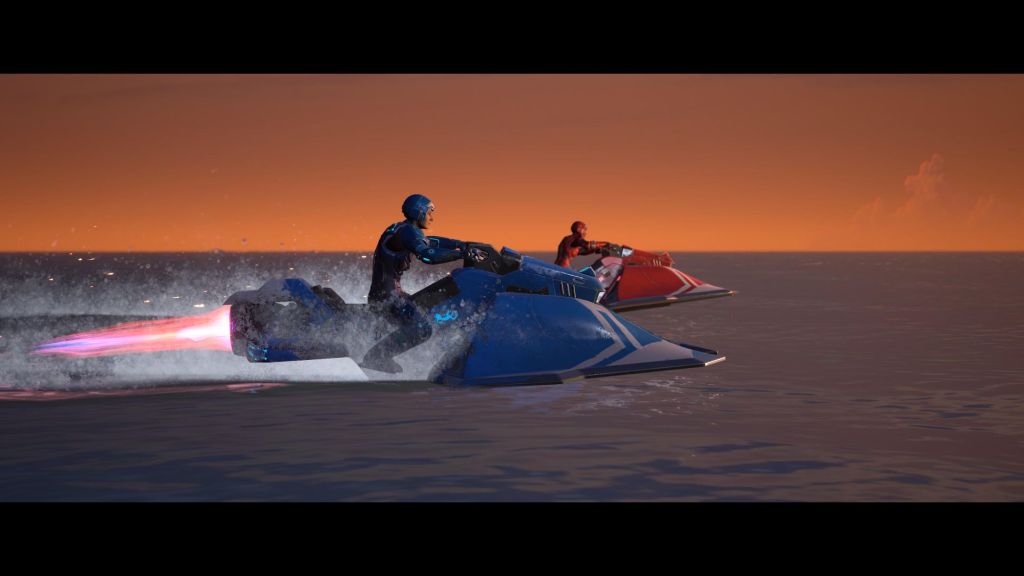
In the end, that surprise improvement is the biggest story of Split Fiction for me. It is the follow-up for what I called the best co-op game of all time. Yet, it somehow makes the game better in almost every way. The enhancements to the fundamentals drive a lot of that, but the game improves its art, its music, and most importantly, its creativity as well. It Takes Two had pretty mediocre minigames as its little distractions. Split Fiction crafts entire sidequests that often surpass what the main game is doing. That’s the stuff that makes a massive difference.
I kind of felt like It Takes Two might be as good as it gets for a co-op game. Now, Split Fiction has me dreaming even bigger. The sky might be the limit for Hazelight Studios. I gave It Takes Two a 9. I’m giving Split Fiction a 9.5. The next one could very well hit a 10. I can’t count them out at this point.
Score: 9.5/10
 Big Nerd Gaming
Leave a comment