

How do you respond when you encounter greatness?
Across any field, greatness can either be something that evokes feelings of inspiration or it can completely demoralize you. Almost every great artist had someone that came before them that pushed them to reach the level that they ended up at. There are many others who we will never know that encountered that greatness and gave up, believing that they would never be able to reach those heights.
I encounter this almost every week with my own blog. Sometimes, I read an article or listen to a podcast, and it’s so good that I want to be better. I want to be on that level. I want to continue to improve and get there. Other days, I might read something fantastic and think to myself that I’ll never be that good or talented. I just don’t have it in me. Sometimes, that feeling makes me wonder if I should devote less energy to my blog and limit my own ambition. It’s a constant battle, and it’s one I imagine we’ve all come up against in one shape or another during our lives.
The people at Sandfall Interactive have clearly been extremely inspired by some of the greatest JRPGs and even soulslikes of our time. They have outright stated that they love games like Final Fantasy X and Sekiro and that those games pushed them to make Clair Obscur: Expedition 33. Those are two of the greatest games of all time by many estimations. But they did not shirk from these inspirations. These games pushed them to try and be even better.
Sandfall Interactive featured someone writing their first video game script. It had a composer who was discovered off of Soundcloud. Many people designing the game were working on one of their first video games. Despite that, this team wanted to shoot for the moon. They wanted to craft one of the best “JRPGs” of all time.
And god damn it, they did it. They really did. Despite every obstacle in their path, despite an ambition that seemed impossible for first timers to reach, they went and created one of the best video games of all time on their first attempt. I’m so happy that when encountered with greatness, Sandfall decided to push forward and make something that could stand on its own two feet and even be considered better than that which came before.
My only hope is that the next batch of video game developers that play this game are similarly inspired instead of demoralized. If that’s the case, perhaps we will have even more first-time developers that shoot for the moon as well. The story behind Expedition 33 is one of the most unlikely that I have ever seen, but after experiencing this masterpiece, I really hope it isn’t the last time that I see a developer story like this come to fruition.
Fun Fact: Expedition 2 Would Be Comprised Entirely Of Toddlers

Expedition 33 was able to get my attention early on for a lot of reasons, but perhaps the biggest was that it has one of the coolest story hooks that I have ever seen across any medium. You play as the members of, you guessed it, Expedition 33. They live in a world where a giant “paintress” paints a number that goes down by one each year. When she paints that number, everyone that is that age immediately dies (they call it “the gommage”). There is a yearly expedition when people who are generally the next to die set out to try and confront and kill this paintress and end the gommage for good.
It’s such a weird and interesting premise, but luckily, it is executed perfectly. The game hits you with a small twist early, and then after you get through the phase of the game where you are introduced to all of your party members, it never stops being compelling. I obviously don’t want to get into too many details, but the game has a few distinct strengths. First off, it tackles some really difficult themes with grace and complexity. Obviously, the society of Lumiere (the main city in the game where everyone lives) is filled with grief. We all face death in our world, but it is omnipresent in almost every single aspect of life in Lumiere. There are no old people in this society. There are no friendships that have lasted decades. Children are increasingly sparse and are no longer raised by their parents for very long. This concept offered so many paths for Sandfall to tackle difficult subjects, and they really did a phenomenal job with it.
I think the storytelling also shines because the game is so efficient with its pacing. If you mainline Expedition 33, the game is only about 30 hours. There are plenty of optional tasks and a nicely sized world map to explore, but the game mostly keeps you on course (it ended up taking me closer to 45 hours). The slightly shorter than normal JRPG runtime means that the game has no incentive to throw any useless arcs at you or any filler.
Whenever I was doing something related to the main quest in the game, I felt like it was important. The game also throws a lot of big and little mysteries at you, but does a nice job slowly doling out answers before it massively gives you answers about 80% through. Games like Expedition 33 that have a lot of mysteries tend to leave me at least mildly unsatisfied at the end because something big doesn’t get explained. I was surprised at how thoroughly pretty much everything I had questions about got answered. Most of the things that don’t get real resolution aren’t things that I considered terribly important for this specific story. I was also impressed with the fact that while the game’s plot gets decently complex and throws some pretty big concepts at you, I never felt totally lost or in need of a google search to really get what was going on. Outside of a slightly slow stretch in Act 1, I felt like this was a masterful story. In fact, I’d say it is one of the best stories ever told in a video game.
My Next Child Is Due In Late June. Is It Too Late To Sell My Wife On Naming Our Child Lune or Maelle?
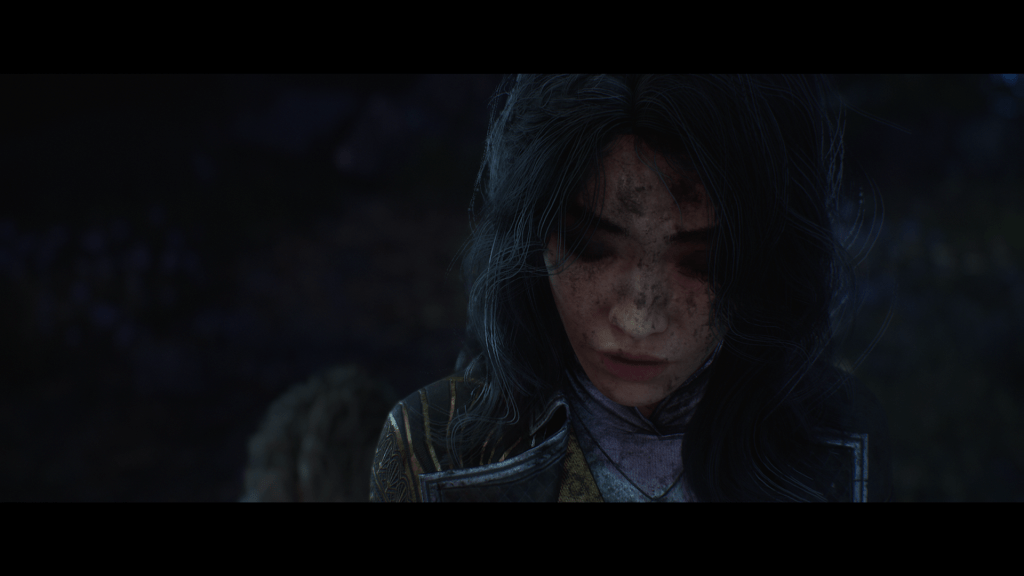
Even if I’m experiencing an excellent story, it is always difficult to get overly attached to it if I don’t care about the characters. This is especially true in a big party based RPG like this. Luckily, Expedition 33 also excels here, but in a different way than many of the games it is inspired by. Unlike many of its genre contemporaries, every character in the game is relatively understated (outside of one big exception). Almost no character has a big time hook or gimmick that grabs your interest right away. Everyone feels pretty real. At first, I thought the cast might be a bit boring, but after a few hours with each of them, I started to feel differently. As I started learning about them, and as I began to see their various dynamics with other party members, they quickly grew on me.
They especially grew on me after experiencing each of the “campfire bonds” that the game has for each character. As you travel through the lands, you can stop at camp whenever you want to upgrade your gear and to talk to your party members. As you play the game, you will unlock new conversations with each party member. I thought every single one of these was stunning. I really enjoyed how varied they could be. Some of the conversations are really fun and will reveal elements of a party member’s personality. Others get pretty freaking deep. Almost all of the campfire bonds have some extremely heavy moments by the end, where major plot moments happen or a big mystery is resolved. If I have any criticism of the campfire bonds, I’d only say that I can’t believe that the game let these be optional. While it was nice to tackle them at my own pace, the moments here are so important and so good, that I don’t think the game should have given any opportunity to miss them (although you’d probably have to actively avoid them to miss them).
The campfire bonds also excel because the writing, and particularly the conversations, are so exquisite. More than anything, I adored how natural all of the dialogue in Expedition 33 feels. Many characters in the game have a history together, and the way the conversations go between characters who have a past and those who don’t is so well done. It feels distinctly different, and then you can slowly see the rapport build between different characters as the game goes along.
The game also doesn’t hold your hand when it comes to conversations. There aren’t any awkward explanations where they overly elaborate on inside references and jokes between characters that know each other well. The writers felt very purposeful in making every conversation feel authentic, and that, in turn, made the characters feel that much more real. The lack of over the top characters means that I don’t think anyone will come away from this story with an “Ichiban Kasuga” type of character that they consider their favorite of all time, but I also don’t find that to be a bad thing.
I feel like Expedition 33 is a game that really made me think hard about the difference between “best” and “favorite” characters. I really liked a lot of characters here, but none of them are going to be on my favorite characters of all time list. Several of them might be on a “best” characters of all time list for me, however. There is wonderful complexity and even some interesting moral ambiguity written into so many key characters here. I really appreciated the nuance that almost every character has. That goes for both protagonists and antagonists. It makes the game’s characters feel on another level from most of its contemporaries.
Expedition 33 Literally Invented Turn Based Combat
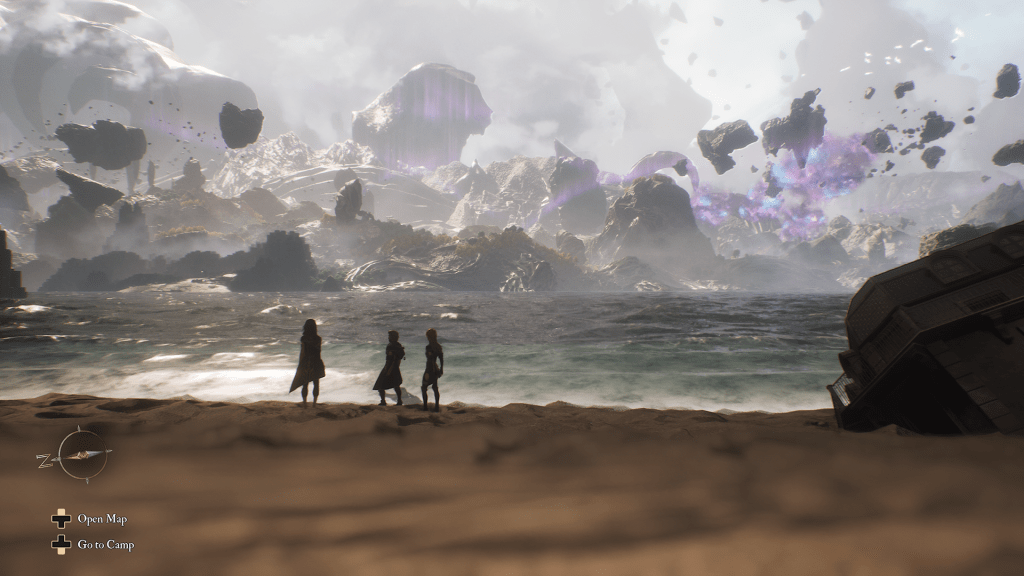
I think it was very easy for me to get through some of the slower Act 1 moments in Expedition 33 because even when I wasn’t absolutely in love with the plot, I was always pretty in love with the battle system. Expedition 33 has a battle system with influences such as Persona, Sekiro, and perhaps even Mario and Luigi. It all blends together to create something familiar, but also not quite like anything else. It’s one of my favorite battle systems of all time because I genuinely believe you can win most fights purely with the right build and high enough stats, or completely off of your action gaming abilities.
We’ll start by talking about the turn based elements of the game. Like any turn based RPG, you alternate attacks with your enemy. This system has several elements that would make it stand out as a very strong battle system even if you completely ignore the action elements. First off, the game has no standard “MP” battle system. You use “AP,” which you start from scratch on in each battle. You can build up AP by attacking your enemies, by having certain passive abilities, and by dodging or parrying the enemy. This means that you enter each fight in Expedition 33 with the potential to do whatever you want. There is no rationing MP or holding back on using your strongest moves here.
This alone doesn’t make a great system, but Expedition 33 gives you a ton of options that let you customize builds in a way to “break the game” as the developers say, and it ends up being a whole lot of fun. First off, you have your standard skills that you can use with the “AP” like any other battle system. Then, many of the weapons in the game have their own passives that you can build off of. The game also gives you tons of extra passives (called Luminas) that can play off your builds to really let you do cool things. In addition, each of the playable characters have their own gimmick of sorts that gives them power in different ways and makes them all quite distinct. There is a lot going on here, but it’s also a lot simpler to play with than you might expect.
Once you dig in a little bit and figure out what you want to do or what might play well off of what weapons you have, it is truly something to behold. In the back half of the game, my party had a simple formula that worked incredibly well. I would use a “burn” spell early on in combat, and then I had passives on all of my characters that made it so that attacking burning enemies gave more odds of critical hits, or even healed them. My second character had a sword that allowed him to attack again after using a “base” attack. I then put passives on him that made his base attacks stronger, one that gave him more “AP” when he used base attacks, and one that made his base attacks happen twice whenever he used them. I was able to use this to do tons of damage and build up my AP to near max before I had even ended a turn. My third character would then have some other abilities that played nicely off of burned enemies. It’s really cool. I enjoyed my build so much that I didn’t really mess with it in the back half of the game, but I saw tons of opportunities for neat combinations as I unlocked more passives (and occasionally I’d work a new passive into the mix as I kept leveling up and could equip more).
My only complaint with the turn based elements of the game is that you can only equip six skills per character. I still had flexibility, but I felt like there would have had even more strategic depth if I could have equipped something like eight instead. If a foe was resistant to burn, I didn’t feel like I had enough room to truly build up a 2nd equally effective strategy into the same build. I’d have to scrape by instead. This was a small annoyance that only popped up here and there, but it was a slight weakness of the game in my view.
I’m Very Annoyed That Expedition 33 Has Difficulty Modes. Now Where Will I Find My Self Worth?

But if you don’t want to mess with all that, and you are purely an action gamer, you genuinely can beat Expedition 33 without thinking about builds or any strategy whatsoever. Every enemy attack in Expedition 33 can be dodged or parried. This isn’t totally new, but it is still pretty rare in the genre.
I was a touch curious going in if parrying attacks would get a bit easy after a while. But I found it to be an enjoyable difficulty curve overall, even though a couple of mostly optional fights were a bit frustrating. Enemy attack patterns are no joke here. Enemies love to fuck with you. Expect long pauses before someone swings a sword, big jumps that will throw you off, and even the occasional feint when fending off attacks. All of this stuff made it so I was really not parrying much in the first half of the game. Especially when I was facing enemies for the first or second time. But if it was too easy, it might have broken things a bit, so even when I was getting my ass beat, I was enjoying it. I was still able to overcome most challenges after a few tries thanks to my strong build (I played on normal, but I do want to note that I’m aware of several people that thought the easy mode was way harder than the usual easy mode. So experiences may differ).
The smartest way to play is actually to use the dodge instead of the parry when you first fight foes. Your timing can be a little more off and you can still avoid all damage, but you don’t get to counterattack like you do with the parry. I was too stubborn to play this way, but it’s nice that the game gives you this option, and it can be a nice risk/reward decision against tougher foes.
I think that it was also hard for me to stop using the parry because it feels so damn good to use. The sound that it makes when you block an attack, as well as the sound when you start the counterattack, are both so satisfying somehow. That sound design and the fact that every parry feels well-earned, made for an incredibly satisfying feeling whenever I did pull off a parry and counterattack. That feeling always felt amazing for my entire journey with the game. Expedition 33 also has some light action elements with the aforementioned gun that is reminiscent of the Persona series. The one difference is that you actually have to aim it. Aiming for weak spots or head shots wasn’t anything crazy, but it was a nice, small thing that added that little bit of extra involvement with the system.
I wouldn’t say the action elements are good enough to be worthy of their own game on their own, and while the turn-based elements are really good, I’d also say they aren’t at the absolutely top of the genre. However, when they are combined, they create something very special. This isn’t quite my favorite turn based battle system of all time, but it is definitely very close to the top.
Yeah, I Like To Look At The Map A Lot When We Go To The Zoo. Is That So Wrong?

One of the other beauties of the battle system in Expedition 33 is that if you are getting your ass kicked, grinding is always an option. I do genuinely believe that the vast majority of the main storyline encounters can be overcome with the turn based elements alone if you are strong enough. Expedition 33 gives you lots of opportunities to get stronger, with its classic world map that has lots of optional areas, as well as with its dungeons that have diverting paths you can explore to acquire more loot and fight more enemies.
The world map, in particular, is one of my favorites in any JRPG that I have ever played. It has a diorama-esque appearance, and it has genuine exploration within it. You slowly uncover the main map as you play, and once you acquire more traversal abilities, you can explore parts that you couldn’t reach before. All of the extremely varied locations in the game are showcased, so you can quickly go from a snow-covered mountain to a beautiful red forest within seconds. It’s extremely stunning and has a lot of fun secrets to uncover. I truly hope that this helps encourage a world map renaissance of sorts from other developers.
Unfortunately, the world map is about the only thing I really enjoyed about the exploration in Expedition 33, and even that has some flaws. My biggest issue with the game is the lack of minimap or map in the menu for any of the dungeons. There are small visual indicators that tell you if you are going down the correct path, like lanterns, but if you decide to explore, take a break in the middle of the dungeon, or fight a few enemies, it is very easy to get turned around. This is also the case for when you decide to explore a side path. It’s really unfortunate because I really loved being in this world, and I wanted to explore everything that I could. But there were plenty of dungeons that I cut short because I saw the way out, and I didn’t want to risk getting turned around since it had happened to me in several areas.
Also, while there are lots of cool optional areas that you can find on the world map, the game has absolutely no quality of life elements that let you know how much of a particular area you have actually explored. If I find an area and realize that I am way too underleveled for it, it will still show up on the map as a location that I have been to. After 30+ hours and dozens of other spots, it would be easy to forget if I already fully explored that area or not when I see it there. Each area in the game also has various bits of specific loot, but the game gives you zero indications on if you have gathered all the loot that there is to find in any of its dungeons. There are multiple dungeons in the game that I explored, but felt like I had perhaps missed something in them due to the aforementioned lack of maps. Not having any clear idea if I missed something or not made me completely uninterested in going back or exploring further, as that exploration could all very easily be for nothing. If these small features were implemented, I honestly think I might have spent another 20+ hours in this game just exploring more.
I wanted to explore more because Expedition 33 is genuinely one of the most stunning video games that I have ever played. The fidelity is great. The art direction is incredible, with stunning and creative backdrops pretty much everywhere you go. The lighting is top-notch and beautifully done as well. The lack of HUD also gives the game an extra level of immersion, even though the lack of map annoyed me. For my entire time with the game, every single new area I went into was a treat just for the ability to take in new scenery.
The same goes for the music, which is unbelievably Lorien Testard’s first time composing music for a video game. Everything from the writing to the world to the visuals gives Expedition 33 a certain ethereal air to it, and the music captures that perfectly. I felt grabbed by the music everywhere I went. I was wowed by how in each new area, yet another amazing new battle theme would start playing. It manages to feel unique, but it also has an unmistakable classic JRPG feel to it as well. Even when I was lost and mildly frustrated in a dungeon, the visuals and music made it so I wasn’t all that mad about it. These two remarkable features add to a game that was already fantastic in almost every way.
The Second 10/10 In BigNerdGaming History
Lorien Testard creating what could very well win “best soundtrack” at The Game Awards when he was mostly making music on Soundcloud before this really exemplifies just how incredible the story behind Expedition 33 is. This is a game that has absolutely no right to be this good. If you were to list off the track record of everyone behind this project, there is no way that it would have been close to on my radar.
But somehow, a lot of people who were either overlooked or just never given a chance were able to create a video game that can stand with any of the biggest titans of the genre. It’s also a video game that exemplifies what video games as art can be when people with passion and talent are able to do what they want to do.
Many great games inspired the creation of Expedition 33. After playing it, I imagine that Expedition 33 will now be one that we hear as an inspiration to video game developers in the decades to come. Hopefully, the cycle continues, and even more amazing video games are created in turn.
Score: 10/10
If you want more Expedition 33 content, I wrote about the end of Act 1 here.
I also wrote about the ending here.
Follow me on:
 Big Nerd Gaming
Leave a comment