
I think oftentimes with developers, after we experience one game from them, we tend to put them in a box. If I didn’t like the first game from a developer, my general assumption is that the next game from that same studio isn’t going to be something that is worth my time. We view the current talent level of a team as their ceiling.
However, much like literally everything in life, you can get better at game development. As developers make games and take on feedback, they can get improve. They can polish up on their animations, storytelling, sound design, and everything else.
There are plenty of developers that seem to continually make games that I view around the same level as past games, but there are many more that get better with each new release. I had no desire to play Silent Hill 2 last year because The Medium from Bloober left such a sour taste in my mouth, but Silent Hill 2 ended up being incredible. CD Projekt Red has gone from a good developer to arguably one of the best in the industry over the course of many years.
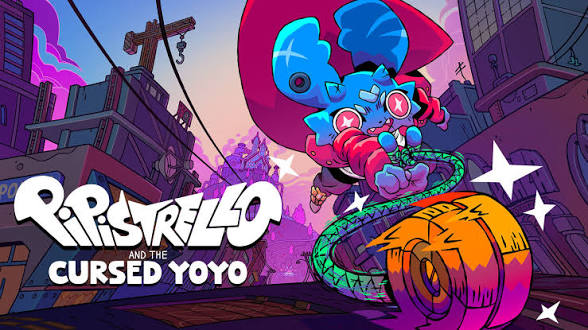
Despite the fact that I know that developers can get better, I still find myself falling into the same trap often. When I first saw a clip of Pipistrello and the Cursed Yoyo, I thought it looked cool, but I also saw that the developer, Pocket Trap Games, also made Dodgeball Academia. I liked Dodgeball Academia but fell off it around halfway through. It was fine, but it couldn’t hold my interest for the entire game. Because of this, I kind of internally wrote off Pipistrello.
When will I learn? After the strong reviews for Pipistrello, I decided to go ahead and give it a go, and I was absolutely blown away. Pipistrello is one of the best Metroidvanias and one of the best Zelda-likes that I have played in recent years. It’s a game that does damn near everything well, from exploration to the puzzles to the combat. This game is brimming with the confidence and style befitting an acclaimed developer that never seems to miss.
After playing this, it feels like Pocket Trap games are on that level now. They have reached another level as a company. And if you take the plunge on this game, I think you will feel the same.
If You Don’t Like The Story, It’s Anti-Italian Discrimination
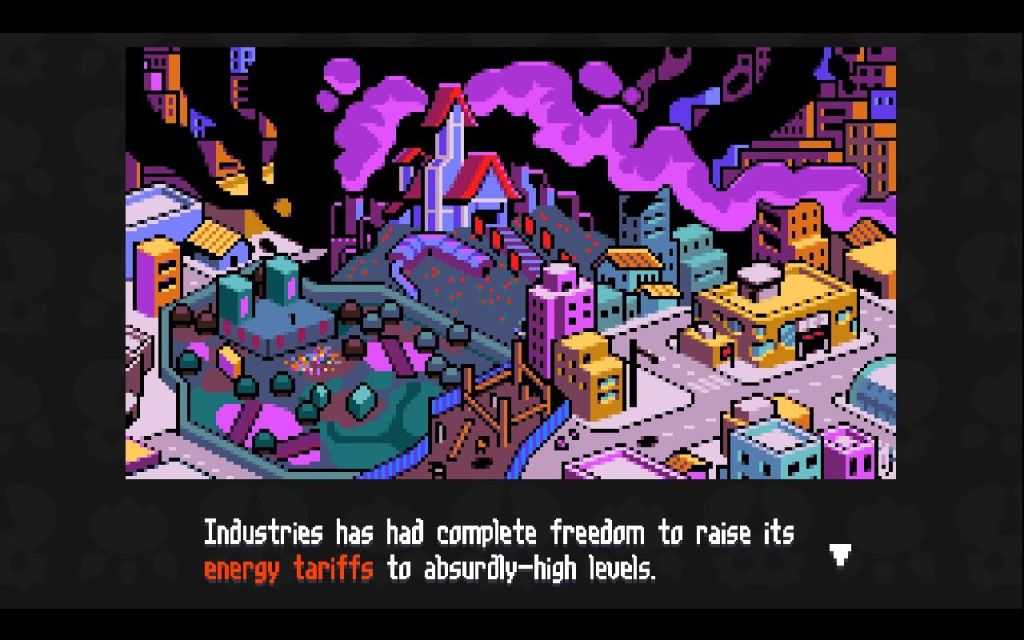
You play Pipistrello and the Cursed Yoyo as Pippit. He’s a bat and the nephew to his Aunt Madame Pipistrello. His aunt essentially owns the city they live in thanks to her monopoly on the energy sources that keep everything running. There’s a very “mafia” feel to the whole thing, which makes sense, as pipistrello is the Italian word for bat.
Soon enough, some business owners in town rebel against Madame Pipistrello and steal the batteries that keep the city running for their own use. In their ambush on Pipistrello, her spirit becomes imbued with Pippit’s yoyo. This suddenly gives Pippit special powers, and his aunt is now permanently in his pocket. Pippit doesn’t really care for the family business, but realizes that his lazy lifestyle is essentially funded by his Aunt’s dealings, so he sets out with her to get the batteries back, and to return her to her body.
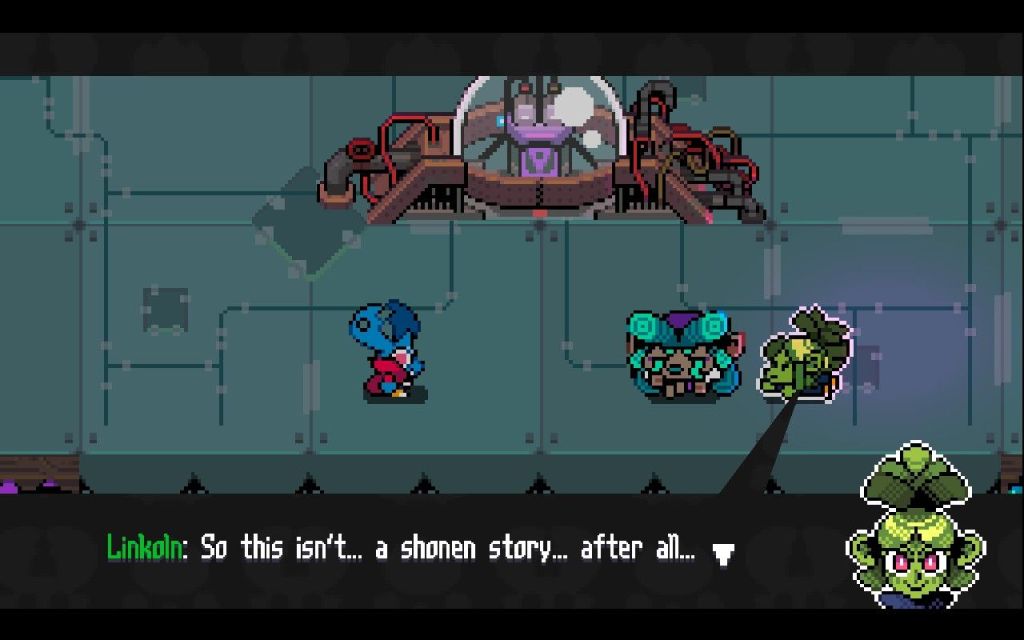
I think what I most enjoyed about the story is that it isn’t a cut and dry battle of good and evil. The aunt is absolutely a bit evil, but the people who attacked her are also pretty evil. This gives the story a slightly more unpredictable air than it might have otherwise. There are many times when Madame Pipistrello reveals herself to be a corrupt and uncaring person, but the people who attacked her could be argued to be even worse. It’s a fun dynamic.
It also leads to a lot of entertaining and witty dialogue. It’s interesting to see how the city is falling apart in various ways and how the aunt uses this to justify her own bad actions. Poor Pippit is mostly a pure heart and caught in the middle. While the game obviously isn’t super deep or dramatic, it’s amusing to see him grapple with the corruption and how it might be at times beneficial both to the city and to himself. This dynamic means that I was actually pretty engaged with a story in a setting and genre where I normally wouldn’t expect to care at all. The story has just enough small twists, fun dialogue, and a great ending that made me enjoy the narrative ride way more than I thought I would from start to finish.
We Used To Be A Society. A Proper Society. The Children Used To Yearn For Yoyos.

Despite the unexpected story strength, Pipistrello is all about the gameplay, as you’d hope from any Zelda or Metroidvania game, and I’m happy to report that Pipistrello excels at almost every level.
The main hook with the game is the yoyo mechanic, which is used in a large variety of clever ways for navigation, puzzle solving, and combat. At times, all three of these gameplay elements can blend together. A lot of the puzzle solving in the game involves finding the best way to use your yoyo to navigate through an area that has various obstacles. Several of the moves that you use for navigation can be used for combat as well.
Combat in Pipistrello feels a fair bit like a Zelda game except with a yoyo. You have your basic attack, a charged attack, and another ability at your disposal, as well as those aforementioned puzzle solving abilities. I love to parry, so I was using the counterattack ability throughout the game, which is really satisfying to utilize.
I thought the game nailed so many of the basics of combat. There’s a nice variety of enemies, and you get new ones up until the end of the game. You have a pretty solid array of move options and enough customization where you can handle combat in plenty of different ways depending on the moves and upgrades you choose. There are also occasionally some extra items like bombs that you can use in combat. The game is also filled with edge pieces, where if you hit them, your yoyo attack will extend out into different directions, allowing you to attack enemies from safer distances or angles. The sound design and animations are also well done, and feel like an extremely polished version of what you might have seen on a high-end Game Boy Advance game. Pipistrello will also throw a surprising number of enemies on screen at once sometimes, which add to the chaos and intensity. The point is that the game gives you a lot to play with, and it feels great in almost every way.
There is one thing that holds it back a little bit, and that is a lack of mobility. You have no dodge roll, or sprint, or really anything to help you move quickly in this game. You can use some navigational abilities that we will talk about later, but they are all a little too slow or used in too specific of circumstances to be consistently useful. It can make combat feel just a touch awkward when you sort of slowly walk directly in front of enemies in order to attack them. It is just a bit off, especially when the game can feel almost bullet hell-esque on occasion with how many enemies and projectiles can come at you. It certainly didn’t make me dislike the combat, but it was the one thing about it that didn’t feel great.
While combat is pretty fun, the navigation puzzles were the bigger highlight of Pipistrello for me. As you get each new ability, you will use them to get through new sections that you couldn’t before. The game slowly unveils different things you can do with each mechanic with clever puzzles that sort of work as tutorials without actually being tutorials. These skills utilize the yoyo in really neat ways. One of the first skills you get in the game is a very enjoyable ability that allows you to ride your yoyo over water. Later on in the game, you get an ability to hit a wall and thrust yourself in the other direction. You also get the ability to ride on certain walls. As you get these skills, Pipistrello starts throwing lots of scenarios at you where you have to combine everything to move on. There are many areas in the game where you have to figure out the best route to water ride, then bounce off a wall, then water ride again, before wall running to get to the other side of an obstacle. The game never stops finding clever ways to utilize all of its mechanics.
I will say that the planning portion of how to accomplish these puzzles is really fun, but stringing moves together can at times be a nuisance. There are a lot of double button prompts to do all of the moves in the game, and you don’t have a lot of time to go from one move to another. Platformers are probably the genre that I’m strongest at skill level wise, and I definitely made way more mistakes playing this game than usual, even though the actual design doesn’t feel like it’s made to be that difficult. Dying in the game causes you to lose money, which I liked as a mechanic, because it’s not overly punishing but does add stakes to each encounter. But it’s really easy to lose a good chunk of money to some of the tougher platforming areas, which sucks, as it is important for upgrading your character. Luckily, there are accessibility options to turn that off, but I kept it at the default because I still wanted that extra layer of intensity, even if it could also be frustrating here and there.
OK, Maybe We Took The Mafia Thing Too Far

Luckily, the game gives you plenty of opportunities to get money back, plus tons of upgrades with its optional exploration. The main way that Pipistrello feels like a mix of Zelda and Metroidvania is the way its map is set up. There is an overworld in the map that takes place in the city, and then certain buildings in the city function as standalone dungeons where you do a mix of puzzle solving, combat, and boss fights to advance the story. The main city in the game is incredibly well designed. I was astounded by how many secret areas and optional puzzles are packed in everywhere you go. One of the greatest joys in the Metroidvania genre is going back to an old area and clearing it out once you get some new abilities, and Pipistrello has that in spades. There are always new things to find in the overworld, and the game offers so many different rewards with health upgrades, badges (which basically serve as equipment that makes you stronger), “badge points” (which allow you to equip more badges), and money (which is also needed to upgrade your character). With these wide variety of upgrades, and a decently generous fast travel system that makes it so backtracking isn’t overly annoying, I was always excited to try and explore every nook and cranny of the map, because there was always something new to find that could help me in my journey.
Unfortunately, while it’s awesome that there are so many upgrades in the game, the execution on one element of them in particular was really irritating throughout my time with the game. The biggest upgrades in the game come through a skill tree that has very weird rules that I’ve never seen in any game before. When you select an upgrade, you must pay for it with money, like in most games. The difference is that even if you have the amount of money needed to buy an upgrade, the game doesn’t let you just buy it. You have to enter into a “contract” with loan shark types of terms. Once you accept a contract, you take certain hits to your stats. You might lose health, attack power, badge points, or deal with some other consequences. From there, 50% of all of the money you acquire goes towards paying off this loan. Once the loan is paid off, you have to go back to your base to officially upgrade and get rid of the negative effects that are on you.
This is clever given some of the story elements, but it’s annoying as hell in practice. Every single time I acquired an upgrade, it felt like I had to give up that upgrade away to try and get the next one. After upgrading my attack stat, the next upgrade I needed would inevitably be something that made me lower my attack. After all the work I had done to upgrade my health, I’d have to play for the next 30 minutes with 2 fewer health points. It just doesn’t work. That rewarding feeling of upgrading my character went missing at times because with this system, you will literally play almost the entire game with at least some sort of handicap stopping you.
It’s especially annoying that you don’t automatically get the upgrade when you “pay it off” and have to report back to the base to officially apply it as well. There are several times that I had an upgrade all paid for, but was in the middle of a dungeon, so still had to go through several more areas before I could get rid of my negative status effect. This feature is a legitimate nuisance throughout the entire game.
This Brazilian Studio Just Made One Hell Of A Game Inspired By Japanese Developers And Italian Mafia Sterotypes #Globalism
It’s a credit to Pipistrello that the game is so good that this didn’t bother me more, because despite that pretty serious complaint, it really didn’t affect my enjoyment nearly as much as I would expect. Yes, it was annoying to constantly be at a disadvantage when trying to upgrade my character, but I spent way more time having a blast wracking my brain to solve that next puzzle, or heading to that area of the map I hadn’t explored yet, or fighting off dozens of foes at once to think about it too much. While there are a few things on the edges that could have been better, Pipistrello’s execution of all of its core elements is so good that it made it easy to overlook some of those flaws. The game’s fun personality also shines through in a way that made it so turning on this game always brightened my day a little bit.
On a personal note, playing the game somehow felt even cooler as someone who had played Pocket Trap’s last game. There is something really neat about seeing a developer grow in real time. It’ll be hard for Pocket Trap to do much better than this game, as I think Pipistrello is truly fantastic, but if they take another step next time, they might have a legitimate all-timer on their hands. For now, they will simply have to settle for creating one of the best games of 2025. If you like Zelda games or Metroidvanias at all, it should be an easy decision to jump into this one.
Score: 9.0/10
 Big Nerd Gaming
Leave a comment