
You can read my early thoughts on Hell Clock here as well.
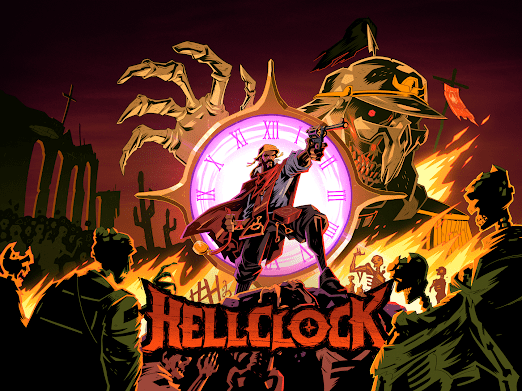
Hell Clock launches today. This is a game built around the War of Canudos in Brazil back in 1896. But essentially, this is the closest thing to if Diablo or Path of Exile was a roguelite. There’s plenty of loot, build options, and the game has classic ARPG styled combat.
This is a cool concept, and it works well. There’s one additional difference that makes the game stand out, and that is the “hell clock” mechanic itself. Basically, all of your runs in Hell Clock are timed. The clock ticks down the longer you play, and it only pauses during boss fights and one other wave based type challenge that pops up occasionally. You also get a few extra minutes on the clock when you beat a boss. As you play the game, it’s inevitable that a lot of your good runs are going to end because the timer ran out, and not because you actually died.
I wasn’t sure how to feel about this at first. One of the best feelings in a roguelite is when you have that “perfect run” going. Whenever I’ve had that feeling in Hell Clock, my timer ends up running out. I’m not strong enough or good enough yet to both complete a run and do it as quickly as I need to.
Frankly, I still have some conflicting thoughts about this mechanic. Hell Clock actually gives you an option right when you start to turn it off so that you can play the game untimed. I thought about turning it off when I first started, but I eventually decided to keep it on. The more I play Hell Clock, the more I realize that whether you like the mechanic or not, the game is absolutely built around it completely. If you feel conflicted on whether to turn the hell clock off or not, I would advise you to keep it on. I have a few reasons why.
The Difficulty Balance Is Completely Built Around The Hell Clock

Like most roguelites, I died in the first main area during my first few runs with the game as I ran into increasingly more powerful foes, and was just trying to figure out how to properly play the game.
In each of my first few runs, I unlocked new abilities and equipment that suddenly made me significantly stronger than I was before. By something like my 4th or 5th run, the first area of the game becomes insanely easy. Every foe was crushed instantly, and I was able to beat the final boss within 5-10 seconds. That is no exaggeration.
Normally, I would hate this. I expect the first area of a roguelite to get pretty easy as I go along, but I don’t expect to be crushing that area within an hour or two of gametime. But it doesn’t bug me in Hell Clock because of the timer. The first area of the game is usually a mad dash, as I just run straight through each level, often skipping plenty of enemies and loot to try and get to the end as fast as possible. My goal is to kill enemies that get in my way (which levels you up) and to grab any loot that is obviously nearby. But I don’t go hunting around for treasure because every second in the game is vital. I have made it to several boss fights later on with mere seconds to spare on the hell clock.
Without the hell clock, I would likely spend 10-15 minutes crushing the first area, looking to kill every enemy, open every chest, and shoot every crate for every bit of gold possible. Inevitably, this would start to feel pretty mind numbingly boring. I would still do it, as it would make my life a lot easier once things get harder, but I think it would significantly damage the gameplay loop. There’s also a fun risk/reward element in deciding when to go for that extra chest to try and get a little stronger versus deciding when to prioritize the clock. The balance of the game is significantly better with the hell clock.
You Can Upgrade Your Hell Clock

A big part of what makes Hell Clock awesome is that it has a massive skill tree with tons of upgrades attached to it. Every run in the game can lead you to various ways to get stronger.
But not every upgrade is directly related to making you stronger in the traditional sense. Hell Clock also has upgrades related to it timer. There are multiple different upgrades that increase the timer in the skill tree. There are also upgrades that create portals that allow you to skip floors. More than upgrading my attack or health, both these upgrades felt amazing to unlock because of the challenges that the hell clock brings to the table. Having an extra three minutes in this game feels like a lifetime. You will not get that feeling of satisfaction with the timer.
Short Runs Are Pretty Fun
As I discussed earlier, without the timer, runs in this game that take me 10 minutes would probably take closer to 25-30 minutes. There are several branching paths, treasure chests, enemies, and loot that you can find if you thoroughly explore every floor.
Beyond it being a bit too easy if you do this, it’s also just a cool change of pace to play an action roguelite with runs as short as Hell Clock’s are. I feel like the average winning run in an action roguelite these days is something like 45 minutes to an hour. It can be a lot. As a father, it’s easy for me to get interrupted at any point in the day or night. The short runs make it really easy to say, “Screw it, I’ll play one run of Hell Clock,” in a way I can’t for many other games in this genre.
I will say that I think this game would stand on its own just fine without the timer. It brings a lot of cool things to the table between its ARPG combat and its robust upgrade system. But the more I play the game, the more I also appreciate what the timer brings to the table. I truly think that you should play with it on.
If you enjoyed this post, please consider following me on social media!
 Big Nerd Gaming
Leave a comment