
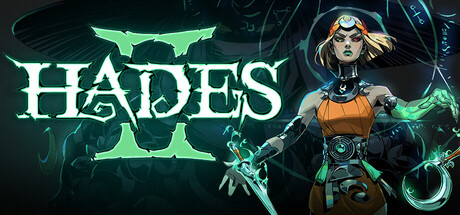
When people talk about the original Hades, much of the conversation ends up centering around the story. I’m guilty of this as well. But the story in that game was such a remarkable achievement that it’s tough not to. The roguelike genre is one that makes good storytelling seemingly impossible, as the repetition element can make it challenging in a whole myriad of ways. Even with the influence that Hades had, I’d still say that there’s only one roguelike game that has drawn me into its story since. So if I were told before playing that Hades 2 had a significantly inferior story to the original, my gut instinct would obviously be to assume that Hades 2 is a worse game than Hades 1.
But for all that discussion, one thing that seems to get forgotten is that the gameplay in Hades 1 is really freaking awesome. That game had tight combat combined with impressive weapon and build diversity that had me thoroughly impressed. Every run in that game felt great, and the roguelite progression systems were really strong as well.
And somehow, Hades 2 takes everything that Hades 1 does gameplay wise and makes it all significantly better. The combat feels more exciting thanks to each weapon having several new moves attached to them. The builds feel like they get even wilder than they did in the first game, and the roguelite elements have been expanded in ways to make every run in the game feel even more rewarding.
So yes, it’s disappointing that Hades 2 doesn’t have a better story. But it doesn’t matter when the gameplay is literal perfection. I genuinely have next to no complaints. That’s nearly impossible for me, even with games that I give perfect scores to. But that’s just how well crafted this phenomenal video game is.
Hades 2 Builds Are Kind Of Like Pizza And Sex. Even When It’s Bad, It’s Good
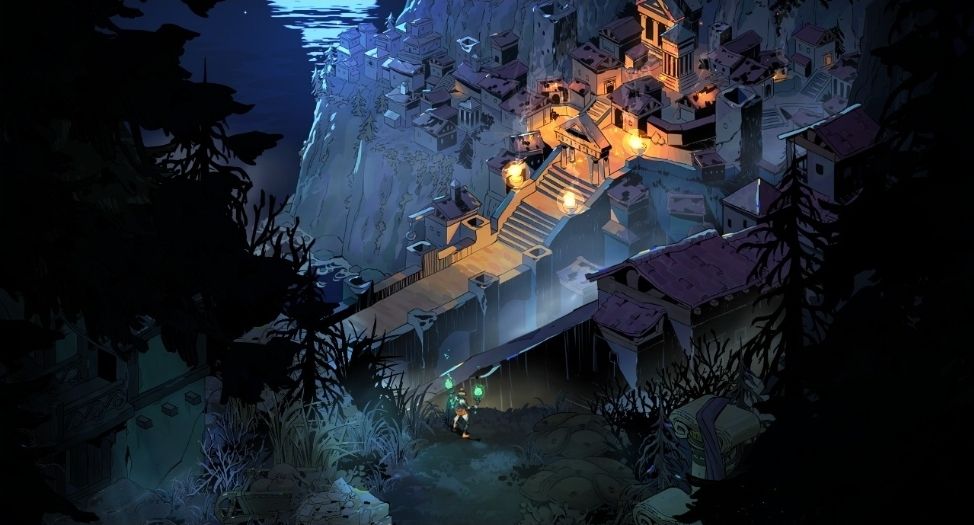
You play Hades 2 as Melinoe. She is the sister of the hero from the original game, Zagreus. The game takes place after the events of the first game, and our favorite dysfunctional family from that game is now locked up by a titan named Chronos. Melinoe has been training for her entire life to take down Chronos and rescue her family. The game kicks off with Melinoe officially beginning her efforts to save them. As you’d expect from a roguelike, this means you will be making “runs” into the underworld to try and take out Chronos. If you die, you will start back at the beginning. Even when you lose, you can acquire plenty of resources each run to upgrade your character and weapons in various ways.
One of the first things anyone who has played the original Hades will notice is how many more options you have in combat now. There is now a magic system in the game that fuels a charged basic attack and a charged special attack in addition to the standard attack, special attack, and “cast” move. There is also a new “moon hex” move that you can find during each run. It’s kind of amazing to see how much they added to the formula. I tried my best to rotate between all the different weapons in the game (you end up with six), and I felt like every move with every weapon in the game is viable, even if there can be more of an adjustment period to properly figure out how to use some of them.
The biggest thing that makes all of these moves so much fun are the various build options you get over the course of each run. Much like most action roguelites, as you get through each encounter, you have a chance to select various upgrades for your attacks, and man, these upgrades are awesome. Generally, the first upgrade you can find for an attack will give it a status effect (like lightning) that helps enhance it. You can also find “Daedalus Hammer” upgrades that can completely alter how your attacks work while upgrading them. From there, you can continue to find various upgrades that will play off your early upgrades. For example, after finding a lightning upgrade, it’s usually not too hard to find an upgrade that increases the amount of lightning bolts that enemies get hit with, or maybe one that makes it so enemies that are getting hit by lightning are more susceptible to other forms of damage. These are very simple examples, but I was stunned at how often I would end up putting together a build that works together seamlessly and made me feel overpowered in spots.
I think that’s one of the biggest differences between Hades 2 and many other roguelikes out there. Almost every time I started a run in this game, I would feel like I had a chance to win or to get further than I had in any past run. This is despite the fact that Hades 2 is still as tough as you’d expect a game in this genre to be. In so many other roguelikes, I will have a good chunk of runs where I’m almost happy to just die and get a new run going. That only happened to me a few times here, because you have so many options, and there are so many creative upgrades to find. It’s not hard to find a path that you will be happy with once you know what to look for.
Hades 2 Weapons Are Kind Of Like Pizza And Sex. There’s A Variety Of Different Styles? OK, I Give Up On This Gimmick
All these different builds allow every run in the game to feel pretty unique and different. But it’s not just the builds that accomplish that. Hades 2 has several other tricks up its sleeve to help you avoid the burnout that can come with playing the same levels over and over. It’s one of the hardest pitfalls for a roguelike to avoid.
The first one is something that the original game was also strong at, and that is weapon variety. You eventually can unlock six weapons in Hades 2, and they all play extremely differently. This isn’t a situation where you can use a sword or an axe, and the main difference is that one is a little slower but more powerful. Each weapon is much more unique and they all completely change how you approach every fight. That variety is even more extreme once you realize how drastically those aforementioned Daedalus Hammer upgrades can change how you play with each weapon. I never felt burnout in Hades 2 because it almost felt like I was playing a different game during each run.
Just as important as the weapons is the level design. Rather than just having one type of run like the first game did, Hades 2 offers you two separate paths. You have to beat each run type multiple times in order to get the “true ending.” Once again, if I ever felt close to feeling something like burnout when playing this game, I would just switch what type of run I was doing. Fighting completely different enemies and bosses makes everything feel fresh all over again.
Importantly, Hades 2 also gives you a whole lot to do in-between runs, which also kept me consistently engaged. The game lets you create concoctions, which make runs easier in a variety of unique ways that are much more interesting than simply making your attack better. For example, several concoctions allow you to heal in different places while in the middle of the run. Additionally, you can give gifts to people in the hub area, which unlocks story moments and gives you “keepsakes,” which are artifacts you can equip. You can also upgrade your weapons as you’d expect, but a lot of the upgrades are much more interesting than simply upgrading your attack. For example, one makes it so your charged attack hits the same spot multiple times every few seconds, which completely changed how I played with that weapon.
There is also an entirely new upgrade system tied to “Arcana Cards.” These give you various buffs and make life easier. You can spend resources to be able to upgrade these cards, too. This system is one of the few things in the game that I wasn’t a massive fan of. Each card has a value and eats up that value for your collective upgrade pool. There are also several important cards that have a value of 0, so they don’t take up your resource pool, but they have very specific requirements in order to activate them. For example, one card that I liked a lot didn’t allow me to have more than two of any cards with the same value (so I couldn’t active three cards with the value of 1). It just seemed like they got a bit too cute with this system, and it limits your freedom a lot for selecting upgrades. I could see someone arguing that it just makes for interesting strategic decisions, but I thought that the upgrade resource already having a limit did the job of making you think about your upgrades. It’s not overly offensive, but it also never quite did it for me.
I love the roguelike genre, but there are certain issues I can consistently have with it across any game. Fighting the same bosses and running through the same levels can get boring. Many games have characters or weapons that don’t feel different enough from each other. Many have a lot of runs that feel like they are doomed to fail from the start, and many have upgrade systems that are not particularly compelling. Somehow, Hades 2 gets around all of these issues. It’s remarkable.
Really Could Have Used More Daddy Issues… Don’t Think I’ve Ever Said That Before
Unfortunately, as previously discussed, Hades 2 just doesn’t land the same way with its story. This isn’t to say that there aren’t interesting things going on in the game, but it doesn’t come together in any way that had me particularly invested in the outcome. With most games in this genre, I’d be thrilled with what the story provides, but when coming up against the high bar that is the original Hades, it falls flat.
I think the biggest difference in the story is that it just isn’t quite as hard hitting as the original. In the first game, Zagreus had very personal reasons for wanting to get out of the underworld, and he was facing off with his father, which is inherently pretty interesting stuff. Our lead character in the game Melinoe is fighting for her family, which has similarities to the first game, but she has been in isolation her whole life, so it just doesn’t have that extra juice. The main enemy in the game is also not all that compelling, once again, because it does not feel as personal.
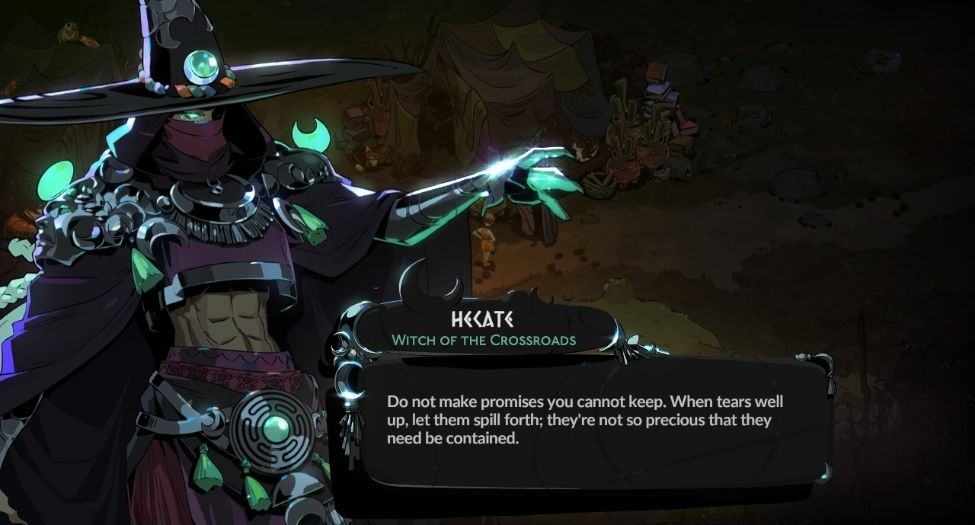
That doesn’t mean that I still didn’t enjoy elements of the story, or at least the writing. The dialogue between characters is excellent, and I really liked both Melinoe and her mentor, Hecate a lot. Melinoe has a lot of fun interactions with all of the other characters in the game. Each character has their own little arc that is fun to uncover, and each character feels believable in their own way. I was also amazed at how even as you get deeper into the game, it just keeps coming up with new and interesting conversations between different characters. You never know quite what to expect each time you return to The Crossroads after a run.
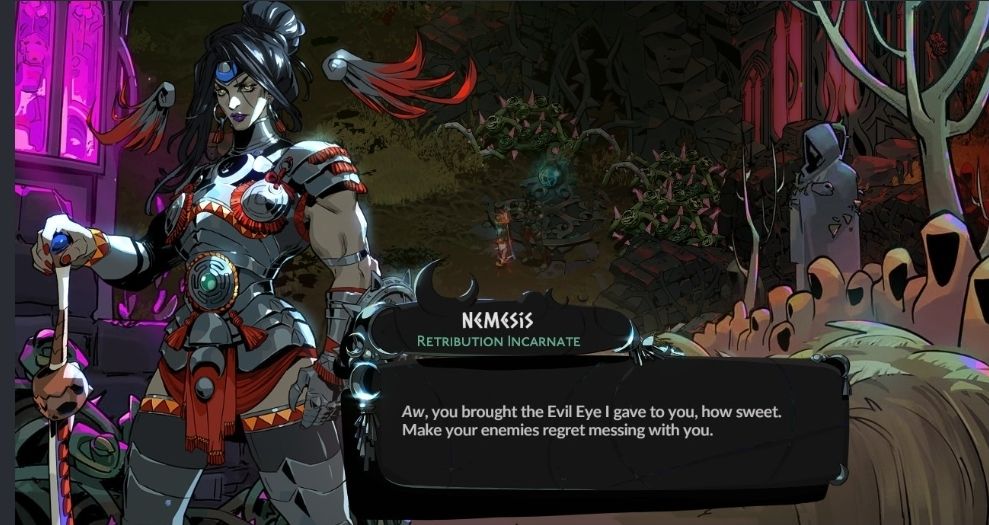
As excited as I was for conversations in Hades 2, I was equally excited for each new character portrait that would pop up. Much like the first game, I absolutely love the way they portray these mythical Greek characters. The art style is sublime, and there’s tons of detail in every character that I absolutely loved. I also adored how Supergiant found ways to mix things up with its art in spots. Melinoe (and whoever her pet companion is) are portrayed as game board pieces while you are navigating between zones during each run. The game also has a chibi Melinoe portrait that gets used in certain spots. There’s so much personality and style here. This game has some of my favorite art of the year. The music wasn’t quite as strong for me, but it still has a few epic bangers mixed in during some of the later levels.
The Third 10/10 In Big Nerd Gaming History

As a reviewer, a 10/10 is a very precious thing to hand out. It is obviously the highest recommendation I can give for a game.
So I have one rule in order to give a 10/10 out, and it is that I can have no doubt when I do so. I can’t be in that 9.75 range in my head. It has to be a game that I consider a 10/10 with my whole heart.
I felt like Hades 2 was a 10/10 within my first hours with it, and that feeling never faded away throughout my entire experience. In many roguelites, the first area can get a little dull once you get strong enough. In this game, every single time I’d start a run, I’d get my first upgrade, and then dozens of possibilities would start popping into my mind about how this run might go. My excitement would be rekindled all over again. I was always excited about playing Hades 2.
So I feel extremely comfortable giving this game a 10/10. I also feel pretty comfortable saying that it is the best roguelike I’ve ever played. This is beyond essential for any fan of the genre. My only regret at all is that if this game had a story on the level of the first game, we might honestly be looking at a true all-timer. I guess Hades 2 will have to settle for being a mere “classic” instead.
Score: 10.0/10
If you enjoyed this post, please consider following me on social media, or checking out The Big Nerd Gaming Podcast!
The Big Nerd Gaming Podcast on Youtube
 Big Nerd Gaming
Leave a comment