

*I don’t watch TV.
As you get older and continue to gain responsibilities in life, it’s easy to get stuck in a rut. Especially as a parent, it’s common to end up in a routine where every single day is the exact same thing, and you go through life working, parenting, eating, and sleeping.
Getting caught in this type of rut can be draining and demoralizing. It’s why I think it’s so important to always take breaks when possible and to have things to look forward to each week, even small things. Every Sunday, I look forward to my day off and watching plenty of football. Every Tuesday, I play pickup basketball. Every month, my wife and I try to have an actual child-free date together. Of course, I get excited for every day a new blog post or podcast goes up as well. These are the things that help keep me going each week and that make me feel like I’m doing more than merely surviving.
For the past month, I’ve had one extra thing circled on my calendar every single week. Wednesdays briefly became “Dispatch day” for me. Dispatch is the new narrative game from AdHoc Studio (made up of many alums from Telltale). Much like a TV show, the studio has been dropping two of its eight episodes every single week rather than releasing the entire game all at once.
Wednesday is generally a pretty unexceptional day for me. But for the past four weeks, it has been the day that damn near got me through every week. That is because Dispatch is really fucking good. Many of the developers behind this game were part of some of the best narrative games of all time, including The Walking Dead Season 1 and The Wolf Among Us. I’m not sure if Dispatch ends up above those games, but it is at least in the conversation, and that is one hell of an achievement.
Blonde Blazer Could Recruit Me To Pick Up Horse Shit For The Rest Of My Life And I’d Probably Happily Sign The Dotted Line

You play as Robert Robertson, who is based in LA. It seems that society in this world has an influx of people with superpowers, which has, of course, led to many people doing bad things with those powers, and others who have taken on the mantle of “heroes” with theirs. While Robert doesn’t have powers, he does have a really cool mech, which essentially makes him a superhero. The game starts out with Robert’s mech being taken out by his archnemesis, which leads to his retirement. Not long after, he is recruited by “Blonde Blazer,” who runs a hero agency of sorts, to be a “dispatcher” for a group called the “Z-Team.” This is essentially a team of former supervillains who are (reluctantly) trying to turn their lives around and be heroes instead. Robert’s job as a dispatcher is to get alerts about different crimes and events in the city and use a small bit of information to figure out which heroes to send out to take care of things.
Despite being a narrative game, there is actually a decent amount of “gameplay” in every episode of Dispatch thanks to this system. You’ll spend 20 minutes or more in each episode doing it. Despite not being terribly deep, there is just enough here to keep the dispatching pretty compelling throughout all eight episodes.
There are several things to balance with each dispatching session. First off, you have to read the information about each incident to decide which heroes you want to send out. Each hero has their own stats, so after reading the description, you have to figure out which stats would be best for a mission. Most of the time, it’s easy enough to parse. If you need to evacuate people from a dangerous spot, the mobility stat is usually best. If you also need to fight people off before evacuating them, then you should also send a hero with strong combat ability.
It’s also vital to figure out how many heroes to send on each mission. The higher your stats, the higher your odds of successfully handling whatever issues there are. You aren’t given the numbers you need to guarantee completion of a mission, so there’s a fair bit of guesswork in figuring out how much of a stat you are going to need. Ideally, you want to solve each issue with the fewest heroes possible. Each time you send a hero out, they are occupied for a while and need to rest after they are done. So if you send too many heroes out on a job, you might put yourself in a bad spot if multiple other incidents pop up soon after. There’s a mix of risk-reward and RNG here that goes beyond the usual strategy game.
After each successful mission, your heroes gain EXP and can level up, which allows you to upgrade one stat for them. You can essentially decide whether to make your heroes very specialized or more balanced. I enjoyed the decision making that went into this, and I personally opted to try and have more balanced teams with one or two slightly stronger stats for each of them. Unfortunately, later missions in the game penalize you if you go over a specific stat, which really hurt me during one session in particular. Essentially, my team was so balanced that if I sent two heroes on any mission where going over a certain stat was an auto-fail, I was going to hit the threshold and lose. This made me believe that the game overall wants you to specialize your heroes a bit, and it was kind of annoying.
But the weird part about that particular dispatching session is that while my balanced team led me to fail multiple missions on that specific level, I never personally saw any consequences from that. I got an achievement for not reaching any fail states in the game, so I assume there are ways to fail your entire dispatch session and get a game over, but I had no idea how I would even get to that point. The last mission in the game gets very hectic, as you might imagine, and that mission actually gives you a health bar for the entire city. Your health bar goes down every time you fail any incidents or if you simply don’t get to them. This ended up being my favorite dispatch session in the entire game because I understood what I was fighting for. Every session could have used that health bar.
The game also throws in some other elements to keep things interesting. There’s a hacking minigame that I thought was fine. Occasionally, the game rewards you for breaking a stat barrier and gives you more exp if you send an extra strong team on a mission. There are a few other twists thrown in here and there as well. While I certainly think there are several things in the dispatching that could be cleaned up, I still ended up enjoying it overall. It has just the right mix of luck and strategy, and it’s just deep enough not to get boring.
Look. This Game Is Not From Telltale Studios, But I’m Going To Continue To Call It A Telltale Game Frequently In This Section. Deal With It.
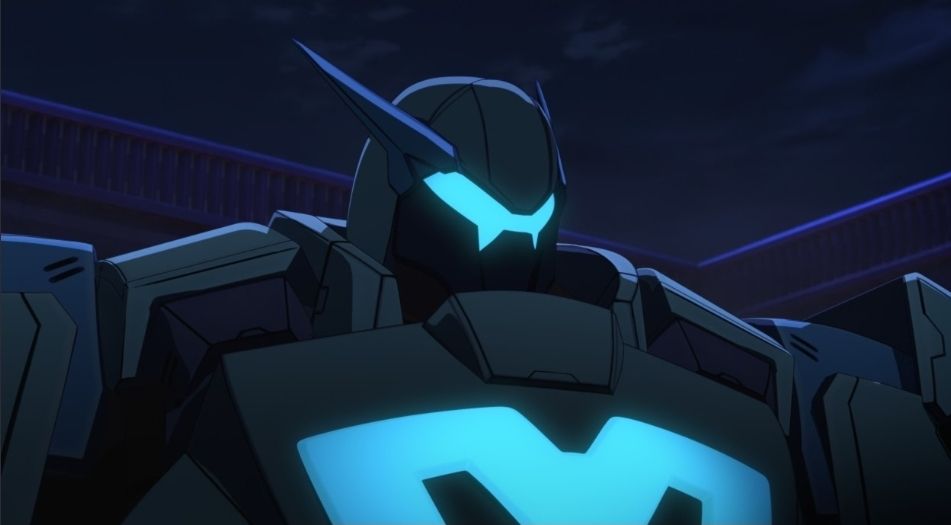
Another strength of Dispatch is how every mission ties in with the story really well. Many dispatch sessions will lead directly into big moments in the plot. If someone is acting up, odds are that this will be addressed after the mission. Several of the biggest events in the game take place during a dispatch session or directly after.
The dispatching element of the game is also vital for giving you more direct consequences for different things that happen throughout the story. Like most Telltale games, Dispatch has elements of choice. As you might expect if you’d played past Telltale games, these choices can be pretty hit or miss for actually affecting the plot. They often are just used to add slightly different flavor to certain scenes to make the game more replayable. But unlike past Telltale games, the dispatching aspect of the game allows AdHoc Studios to actually let you feel the weight of a few of your choices.
The game has several instances where you have to make decisions regarding your team, and your choices will have consequences afterward. If you decide to cut a hero, they won’t be around anymore. If a hero is pissed off at you, it will affect their performance. You also get a choice about which hero to recruit for the team in one circumstance, and you’ll end up rolling with that hero over the other one from that point on. As I looked back after I completed the game to see what happens in different scenarios, I was a bit disappointed to see that while there would definitely be changes if I replayed the game, there wouldn’t be as many as I’d like. However, the dispatching portion of the game at least made me understand and feel some of the impacts of my choices directly in the moment.
Can You Pet The Dog? Probably. More Importantly, Will The Game Have An Exposed Nutsack?
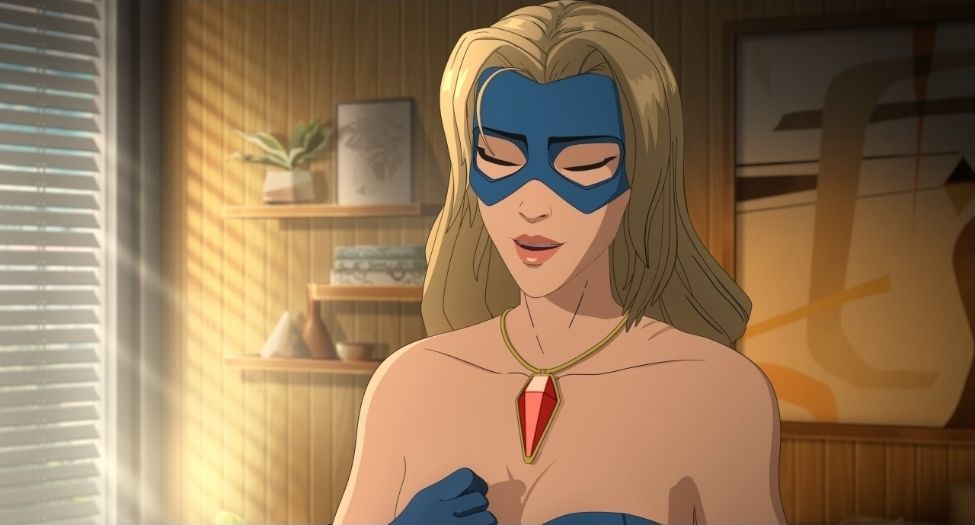
But as vital as the dispatching in the game, the main reason anyone is buying this one is for the story, and I’m glad to say that it delivers and then some. I think Dispatch excels because it has such a fun mix of elements, and they are all executed on extremely well.
Obviously, Dispatch is a superhero story front and center, and sure enough, the superhero stuff in the game hits all the notes you’d expect. There are a lot of over the top heroes and villains, there are fun action sequences, and there are high stakes. The game also does a great job of exploring the characters behind the mask in many regards. Our main character, Robert, has a lot of baggage with his past and his relationship with his father that is explored in compelling ways. A lot of the heroes working under you also have their own little arcs that I enjoyed. Invisigal is easily the biggest highlight of them all, as she plays a major role throughout the story, and has an excellent backstory. Since the entire team you dispatch is former villains, they all have hard edges and events that led them down this path. With only eight episodes, not every single hero is examined quite as much as I’d want, but I’m hopeful that more of them get their moment in a future Season 2.
But as good as Dispatch is as a superhero story, it is even better at its other goal, which is to be a workplace comedy. Obviously, Robert is now spending most of his time in an office instead of on the streets of LA, so he has a lot more interactions with coworkers than before. The humor ends up having a mix of crude jokes (warning, expect to see at least one penis), zingers, and observational comedy about the workplace that always had me guessing about what was going to come next.
I usually find extremely crass humor gets old if it’s overused, but I felt like they reined it in just enough where it hit way harder when it happened. Perhaps just as importantly, even during the most intense moments in the game, Dispatch always managed to work in a joke or two that would surprise me or throw me off guard before getting back into the serious stuff. That isn’t always the easiest thing to pull off, but Dispatch does so expertly.
In general, the writing is incredibly sharp from start to finish. Whether it is a crude joke or a serious heart to heart moment, the execution is always on point. Perhaps I’m just not remembering as well with the passage of time, but it feels like the writing has leveled up from past Telltale games here, and it is great to see.
Of course, it helps that the game’s voice acting is excellent, thanks to its stellar cast. Aaron Paul as Robert Robertson is phenomenal from start to finish. Paul’s dry delivery perfectly fits where the character is in his life. He alters his delivery slightly as the game progresses in ways that fit how Robert grows as a character through his new job. His comedic timing is also on point. It’s perfect, and he could very well deserve at least a nomination for “Best Performance” at year’s end. Former Game Awards winner Laura Bailey is as good as you’d expect as Invisigal, and Jeffrey Wright is absolutely hilarious as Chase. Dispatch brought in a pretty big name cast, and they all delivered in the way that you’d hope.
Dispatch is also equally well served by its production values as a whole. The art style and animation would fit in well with a big budget animated series on Netflix or any other large platform. I think anyone playing the game will be in awe of the art immediately. I love all the various character designs and the general art direction as well. My only issue with the art is that I couldn’t always see everything that is going on during action sequences (which are tremendous animation-wise) because of some very mediocre and clunky QTEs that force you to look away from the action.
Dispatch is equally excellent with its music. The licensed music choices are consistently strong, with intense battle themes and fun party songs mixed in well. Between the great voice acting, the weekly releases, and the art and music, I really felt like I was participating in something that could have been one of the biggest shows on TV if it had gone that route.
Imagine Not Experiencing One Of The Best Television Shows Of 2025 Because It’s Actually A Video Game

And in the end, that is what Dispatch provided me that no other game really has in the past decade. Every single week of new episodes from this game felt like an event. My own anticipation would build and then get heightened by friends talking about how hyped they were. And then each episode would consistently deliver, all the way up to the last three episodes, which all ended up being the best episodes in the game. Even the weakest episode in the game is a lot of fun and has one of the funniest moments in the entire game.
Simply, Dispatch delivers in every way, and while this might sound like a weird compliment for a game, it almost made me want to try and watch TV more often. I loved damn near everything about this game and the event that it became. I kind of want that feeling a bit more often in life. I’m not sure if I can handle waiting for the next game from AdHoc to feel this way again. If you like the narrative genre at all, this is one you desperately need to look at.
Score: 9.5/10
If you enjoyed this post, please consider following me on social media, or checking out The Big Nerd Gaming Podcast!
The Big Nerd Gaming Podcast on Youtube
 Big Nerd Gaming
Leave a comment