
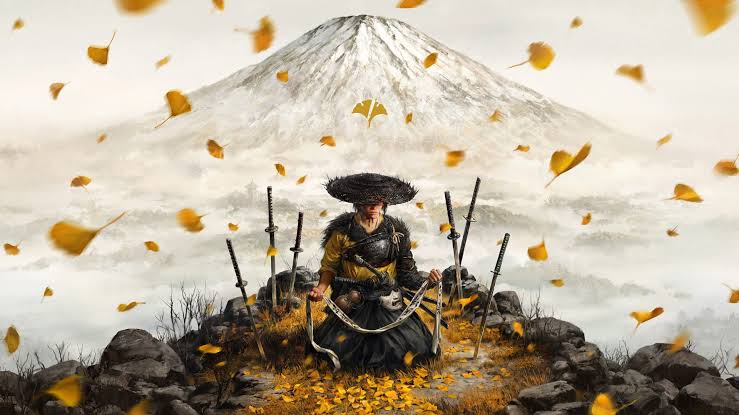
I think for many gamers, open world side quests probably look similar to how a fresh pack of cigarettes does for a smoker. You have a couple of them for fun, and then soon enough, you can’t stop. You know that these things are actively making your life worse, yet you continue. As a gamer, when you see that icon on the screen, you just have to clear it.
Also, similarly to how hard it is for a smoker to give up cigarettes, it is probably just as hard for many gamers to throw away those side quests. The ability to walk past an icon and simply ignore it is a genuine skill. It’s not one I always had. In the past, I would quit a staggering number of open world games because I just couldn’t get away from those god damn icons.
After I became a parent, I slowly acquired the discipline to finally ignore more of those quests, despite how often they’d look at me with lustful eyes. And I have to say, my newfound discipline has paid off with me enjoying and finishing games in this genre at a rate I never came close to before.
My latest “post smoking” success story came recently with Ghost of Yotei. Early on, I was enamored with the world and exploration in this game. I was loving stumbling upon side quests and bounties as I also made my way through the main story. But I reached a breaking point. It was the kind of moment where I usually would have tossed the game aside in the past as I fruitlessly tried to tackle every icon. This time, I managed to throw those cigarettes in the trash. In turn, while I still had some issues with the game, I was able to enjoy a fantastic story of revenge, with a cast that is considerably better than Ghost of Tsushima.
If you enjoyed Ghost of Tsushima at all, and if you have the ability to set aside your cigarettes, I think you are in for one heck of a ride with Ghost of Yotei.
It’s Like Kill Bill But I Actually Give A Shit About The Characters
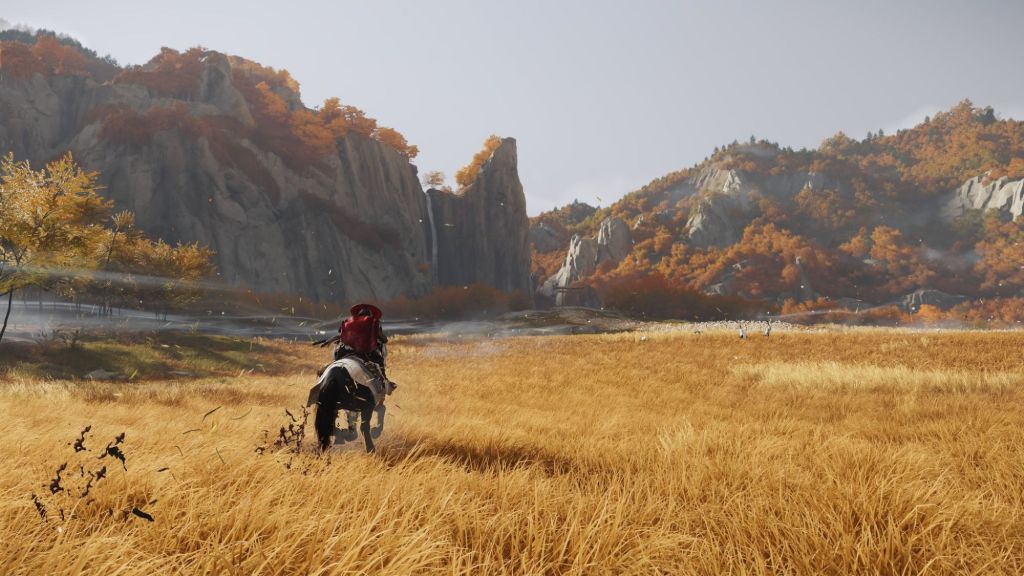
My love for the story in Ghost of Yotei surprised even me, as I went into the game with somewhat low expectations for it. I thought Ghost of Tsushima had a few interesting hooks and some incredible highs, but I found most of the story outside of those big moments to be pretty dull. I also thought the main character was pretty uninspiring. Knowing that Yotei would attempt to tell one of hundreds of revenge stories that tend to play out the same way did not particularly excite me.
While I was enjoying Atsu, the new lead character this time, I found my suspicions mostly accurate in the early going of the game. Atsu tragically loses her family to a group called the “Yotei Six” as a child and soon after devotes her entire life to revenge. It’s the only thing she cares about, and it’s tearing her apart in ways that she doesn’t always realize. Meanwhile, the Yotei Six seemed about as generically evil as I’d expect. Literally every element of the formula seemed lined up to play out exactly as I would have expected from moment one. Cutting down a new member of the Yotei Six barely even moved me early on. The game tries to establish how awful they are, but I had seen it all one too many times.
But then, the game slowly starts to shift. A few new characters are introduced, and several members of the Yotei Six become significantly more interesting than I first assumed. These new characters and the unexpected depth of some of the villains suddenly put the story in a completely new light for me. First off, the allies that Atsu gains over the course of the story end up greatly enhancing her as a character. They make her significantly more interesting, as they all end up making her think about her life and her motivations in new ways. I really enjoyed watching Atsu grow as she continued to interact with the characters around her. The surprising depth of some members of the Yotei Six also put Atsu in situations that forced her to evaluate herself in compelling ways as well.
In the end, Atsu and those she surrounds herself with ended up making this more than just a standard revenge tale. While I wouldn’t say that Yotei gets close to a few of the unbelievable highs that Tsushima has, I also found myself consistently more engaged with Yotei’s story throughout, especially from around the halfway point on. And I will gladly take a story that I’m more consistently into over one that I feel disengaged with outside of a few great moments.
Atsu also has depth because of the performance from Erika Ishii, who delivers one of my favorite performances this year. Ishii is gruff in much of her delivery, as you’d expect from a hardened woman whose main purpose in life is to kill. But she also can be tender in a way that doesn’t totally break from her overall tough demeanor, which I enjoyed. She also has perfect delivery for Atsu’s dry humor, which made me chuckle even in some serious situations from time to time. I thought Atsu was cast perfectly, and that was important, because her character is the main reason why this story succeeds.
Imagine If Platinum Trophy Pursuers Had A Nicotine Patch Of Sorts To Wean Them Off Their Sick Addiction
The way Atsu’s character develops throughout the game made me feel like Sucker Punch really took a look at the criticism from Tsushima and wanted to be better. Similarly, it feels like they really took the feedback from their gameplay in similar ways.
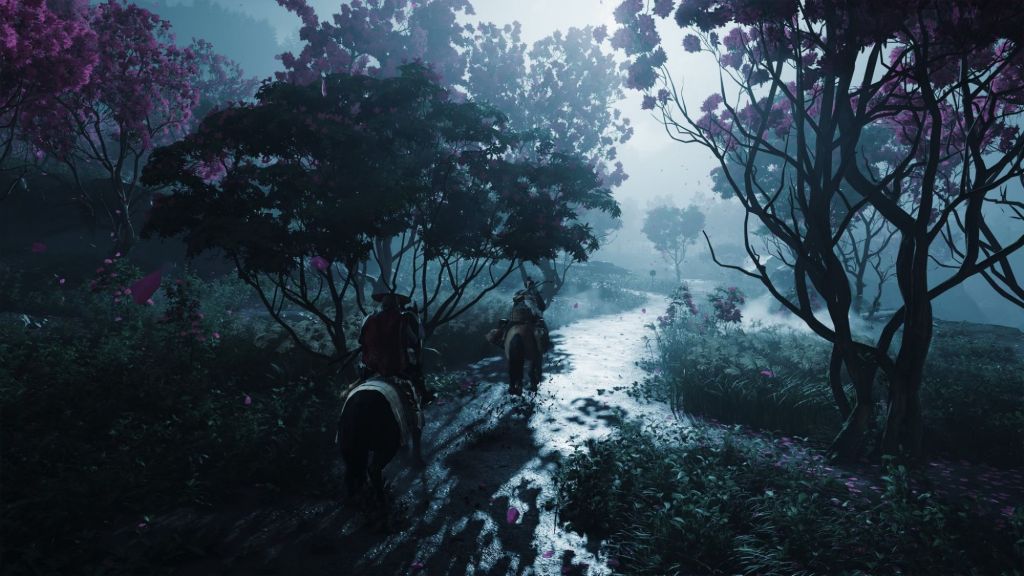
First off, the very standard open-world design from the last game has been set aside for one that feels much more organic this time around. I never had a situation where I felt overwhelmed with icons because the game doesn’t just award them to you with minimal effort. You can buy “traveler’s maps” that show you where certain activities are and find bounty quests at main hubs, but overall, the game doesn’t drop a lot of icons on your map at once. I discovered most of the side content in the game by heading out to one quest and then noticing visual clues in the environment that led me somewhere else. If you get close to certain activities, a bird will come around that you can follow to the end. You can also see smoke in the air to indicate certain activities and enemy bases. It’s also very easy to just stumble upon quests or camps as you go along. I’m someone who checks the map a lot when I’m playing open world games, and with the way the game is set up, it was kind of crazy how often I felt comfortable just heading to my next destination without checking the map at all.
Of course, part of the appeal of wandering around in Yotei is how amazing the game looks. Much like Tsushima, Yotei has some of the strongest art direction this year, with a diverse array of stunning environments and weather effects throughout. The lack of UI lets you feel truly immersed in this world, and the photo mode at launch means you will likely be forced to pause the game many times to capture an amazing view that you don’t want to forget. I was very happy that the game makes it so easy to play it while rarely looking at a map, because I didn’t want to look away from this world.
As good as the game looks and as strong as the open world design can be, I still fell off the optional content pretty hard by the end. I had a few issues with the side content that slowly wore me down. The biggest issue was how quickly I seemed to run out of things in the game’s skill trees that I cared about unlocking. By the time I was 40% of the way through the game, I already had most of the skills that I wanted, so my motivation to do quests to get stronger waned fast.
I think too many of the skill trees in the game revolve around unlocking special moves for all the various weapons you slowly acquire. As someone playing the game on hard, I rarely used a lot of these special moves because those moves use the same resource that you use to heal. Since it was constantly a battle to have enough “spirit” to be ready to heal when needed, I wasn’t going to waste anything on an offensive move unless I was at my last enemy in a battle. There is a separate skill tree for a wolf companion that you can have in the game, but I similarly had almost every skill I wanted from him by the halfway point in the game. I also had enough money by the halfway point in the game to pay for almost every armor upgrade that I needed. The side stories in the game rarely pulled me in, so I needed way more compelling rewards to spend more time on the side content.
Hot springs, which increase your health, were always useful. And the bamboo cutting minigame also makes a return, which helps you increase your “spirit,” but you have to find several of those to do so. Because of that, it seemed like too much work to pursue once I felt the burnout from everything else. I hope next time around Sucker Punch is able to come up with more interesting upgrades, or at least give players separate ways to use special moves and to heal.
It Could Be Argued That Rock Paper Scissors Is The Greatest Game Ever Invented

While I may have burned out a bit on the exploration and side content of the game, I never burned out on the combat, as it is very solid, with some nice enhancements from the first game. Much like Tsushima, Yotei’s combat is incredibly visceral. The low camera angle, excellent animations, minimal UI elements, and strong sound design all combine to make it so you feel every sword strike in this game. The parries in particular are incredibly satisfying each and every time. While it’s not on the level of something like Rise of the Ronin, I also thought Yotei did a pretty good job of having a diverse array of enemy attack patterns that keep you on your toes from start to finish.
The biggest switch up from the first game is the new weapons that you have to wield. Instead of just switching stances to counter specific enemy types, you now switch your weapon depending on the weapon your enemy is wielding. In rock-paper-scissors fashion, each weapon has its strengths and weaknesses against different enemies. This is probably the weakest element of the combat for me. I really would have liked the freedom to fight in my own way in each battle. Instead, the weapon switching mostly forces you to use the style most effective for each fight. Essentially, I would have liked to look at each situation and pick a weapon based on what I personally thought that scenario called for. Instead, Yotei takes most of the thinking out of the equation, as you’ll simply switch weapons in the same way you’d put a water Pokémon on the field if you saw a fire Pokémon in those video games.
I also didn’t think changing weapons was always as smooth or seamless as I’d hoped. Later in the game, you can come across some pretty big enemy groups that all have different weapons, and there were plenty of times where I thought I had changed my weapon but actually hadn’t. Despite how different the weapons are, I really didn’t change my approach in any given encounter all that much with each weapon either. For the most part, the smart call is to wait for enemy attacks, parry or dodge, and then get a few blows in before doing more. As I mentioned earlier, the skills using the same resource that you use to heal really limited my offensive capabilities at times, especially because I played the game on hard.
My other complaints are relatively minor. The low camera angle, which I think enhances the feeling of combat in some ways, can also occasionally hamper your visibility. On a crowded battlefield, you literally can’t see enemy attacks from certain angles well because Atsu will block your view. I also wish the stealth in the game wasn’t so bare-bones. Yotei is a fair bit behind some of its peers, like Assassin’s Creed: Shadows, in terms of level design, enemy movement patterns, mechanics, and enemy intelligence. It generally feels like the game wants you to fight head to head with opponents over using stealth, which is fine, but I think a few more opportunities to break up the action with stealth would have been nice.
On the positive side, I was very happy that playing Ghost of Yotei on hard was actually difficult this time around. I was stunned at how easy the last game was, even on the harder difficulty setting. Yotei fixes that and has a “hard” difficulty mode that was worthy of the name, but also still didn’t feel overly frustrating. The balancing seemed nice to me, and there’s even a harder difficulty above what I played on. I think no matter how you want to engage with this game, you will be able to find a difficulty setting that meshes with you, and I couldn’t say that about Tsushima.
The Second Best Game With Ghost In The Title That I Have Ever Played (#1 Is Not Tsushima)
I’d also be remiss if I didn’t mention the excellent soundtrack the game has. After not really noticing the music much in Tsushima, I thought we had a clear level up here for Yotei. The stirring soundtrack fits so well with some of the more epic moments in the game, as well as with some of the more somber ones. It’s really well done. These games are known above all else for being incredibly cinematic, and the music now better fits the level of the visuals and overall direction of the game.
It all comes together to form an experience that honestly surprised me a fair bit. I liked Tsushima well enough, but I always thought the praise for it was a bit over the top. I wasn’t going to be shocked if I was even lower on Yotei, as the game wouldn’t have the same “freshness” that the first had. While I still have issues, a smart array of gameplay changes and a story that I found genuinely compelling end up making this a very clear improvement over the original for me.
There’s a world where I don’t have such a high opinion of this game. Another reason I’m thankful that I gave up “smoking.”
Score: 8.5/10
 Big Nerd Gaming
Leave a comment