
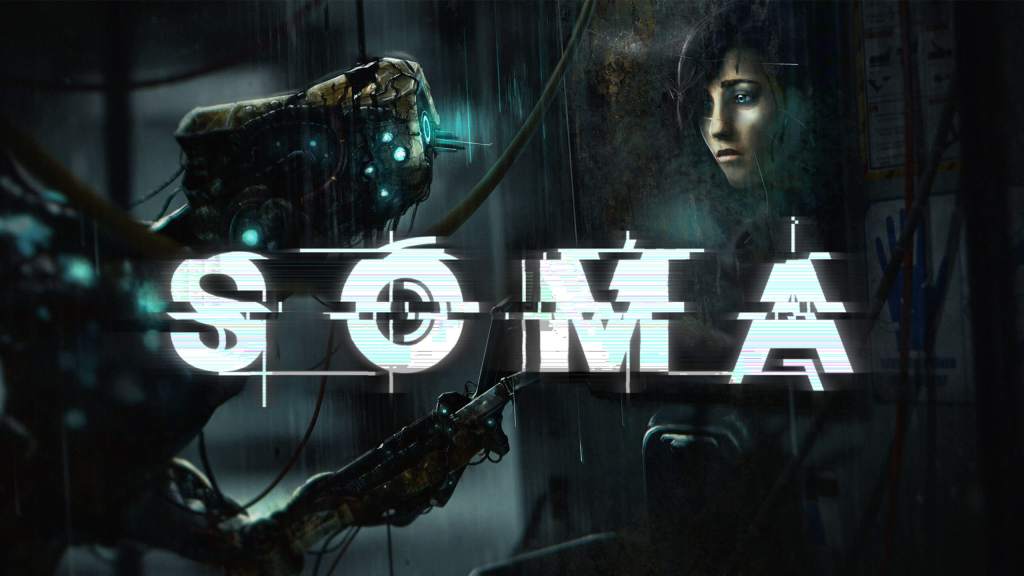
This post contains spoilers… obviously. I kept the main plot summary in one section that is marked. But major events in the game are alluded to throughout the piece. So there’s no fully avoiding spoilers here.
One of the most fascinating aspects of art is how easy it can be to take away completely different messages from the exact same work. Our own life experiences or perhaps our own biases can lead us to interpreting different meanings from the same words and images. Naturally, with how this works, it’s also very possible to take away a message from something that was completely outside of the artist’s intentions.
I feel like I’m generally decent at keying in on what an artist is trying to say with something they make. But every once in a while, a piece of art will make me reflect on something that I’m pretty sure is unrelated to what the artist was trying to convey. This happened recently to me with SOMA, which is a 2015 sci-fi horror game.
SOMA’s main themes center around existence and, simply, what it means to be alive. It asks what your existence means if your consciousness is a copy of another person’s. It also examines existence in a robot body and as a digital entity.
I’ve seen elements of these conversations many times. Funnily enough, I actually think that SOMA can be a bit hamfisted when touching on these topics. I prefer a work of art to guide me into a thought process and let me take it from there. There are times when SOMA just outright has the “what do you think about the nature of our lives” conversation directly between the lead characters. Despite this, I still enjoyed thinking about some of the scenarios that the game presents.
But after the credits rolled, I couldn’t help but reflect more on something entirely different and much simpler. Instead of the nature of existence, I started thinking a lot about how we view and treat the people we meet and interact with on the internet.
*Plot Summary And Direct Spoilers Are In This Section*
SOMA starts out with our lead character, Simon, heading into an office for a brain scan in an attempt to get treated for cranial bleeding and brain damage suffered from a car accident he was in. It’s very clear that there is something very off with this procedure. The clinic he goes to has no receptionist or anyone else there. A quick search of the computer in the office also shows that something shady is going on. Despite this, the simple minded Simon goes through with the scan without much of a question. Soon after, he wakes up in a post apocalyptic hellhole underwater about 100 years later, and he is now in a robot’s body. A copy of his brain scan from that day was put into this robot by someone. Soon after, he meets Catherine, who is a digital copy of someone who used to work on this station and can only talk to him through various computers.
Midway through the game, Simon is forced to change the robot body he is in to go deeper into the station. Catherine copies his mind and puts it into the new body. At this point, Simon should already know that he is a copy of sorts. He discovered through an audio recording that the Simon who had the brain scan in the past kept on living for a short time in his hometown and later died from his brain injuries. Despite that, he is shocked to realize that there is now an additional Simon after the copy occurs (your perspective shifts to the new Simon, and the old Simon is shut down temporarily). Simon seems to still believe that his mind would get “transferred” rather than “copied” into this new robot. Simon lashes out at Catherine and calls her disgusting. They continue on, but Simon never apologizes for saying some pretty awful things to Catherine.
So now, at this point, Simon has encountered two scenarios where this “mind copy” happens. Catherine has also explained how it works at certain points (though admittedly, I disagree with certain ways she describes this copy process, but that’s a different conversation). Now he should definitely understand how it works if he didn’t before.
Finally, at the end of the game, Simon and Catherine reach their goal, which is to copy their minds onto an “ARK” and send it into space. Because Earth is completely doomed, this is the only possible way to preserve humanity. Several other brain scans are already uploaded onto that “ARK,” and when activated, it’s a place where people can “live” digitally. It’s kind of like The Matrix, except without the physical bodies also needing to be there.
When the big moment happens, Simon is stunned to see that he is still on the station and that he wasn’t transferred into the “ARK.” He still hasn’t realized that they are making copies and not transferring consciousness from one machine into another. From there, in his anger, he lashes out at Catherine, and the stress of the situation causes her to short-circuit. So, in his anger, Simon puts himself in an even worse situation, as now he is stuck on this station completely alone. It’s an awesome twist, as while I inherently understood how the “copying” worked, I expected the perspective to shift to the “new” Simon on the “ARK,” as had happened every other time that Simon’s mind was copied. All of those other moments set up for an ending that subverted our expectations a bit and led to what is widely considered one of the best video game endings of all time.
*End of Plot Summary*
As much as that ending gave me to chew on, my mind actually pivoted to something a bit different. I wondered if Simon would have lashed out at Catherine in the same way if she had been more than a digital presence.
In the limited number of less stressful situations in the game, Simon seems incredibly polite (he is Canadian, after all). After his brain scan is done back in Canada, there is an audio recording of Simon’s conversation with the doctor as they tell him that there’s nothing they can do for him. Despite being doomed to die, he seems disappointed, but he certainly isn’t hostile and doesn’t lash out. The only moments where Simon is a real dick throughout the game are in various spots with the digital Catherine.
Also, despite having at least some companionship on this lonely station thanks to Catherine, he notes several times how much he would like to see a “real” person somewhere on this station. Obviously, anyone would want more than just one person to interact with, but he seems consistently dismissive of her as a companion or friend. Catherine was considered a bit of an odd person, even by her peers, when she was “fully” alive, but she’s nice to Simon and she has a very interesting backstory. Despite this, Simon never seems to fully embrace her as a person until the post credits scene where they are both on the “ARK” together and he can “physically” see her (even though they are both digital entities at that point). Given the loneliness of Simon’s situation, it’s surprising that he wouldn’t value Catherine’s presence a bit more than he does at times.
Simply, I think Simon views Catherine differently because she is not physically there. Even though she is literally the only person he has to talk to for most of the game, he can’t help but view her as a “lesser” entity.
The Friends That I’ve Never Seen Once In My Life
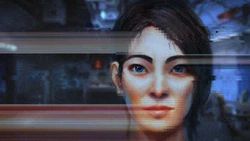
The concept of online friendships is something I’ve probably reflected on more than most. I’ve spent a good portion of my life with some sort of online friendships in one capacity or another. I started posting on GameFAQs from the time I turned 13 and met many people there, including one person that I still text with occasionally. I have played plenty of online video games over the years, and I specifically had a crew of three other people that I played Overwatch with for a solid year straight. I didn’t even know these people’s real names, but I’d say what we did qualified as “hanging out” almost every day. I’ve interacted with literally hundreds of people online since starting this blog, and there are many that I consider genuine friends. I have dozens of people online where I would be legitimately sad if I ever completely lost contact with them.
But the reality of the web is that there’s a decent enough chance that I will eventually lose touch with many of these people over time. In SOMA, Catherine can only communicate with Simon when she is specifically plugged into certain devices around the station. When she is unplugged, she disappears without a trace. Her existence simply ceases to be until she is plugged in all over again.
Similarly, it’s much easier for an online friend to disappear without notice. Unless we directly “plug them in,” our online friends also completely disappear in most cases. We have the power to very quickly “unplug” anyone we wish online. You can technically do this in real life as well, but it’s often not as easy and much messier. There’s real work involved in unfriending someone in real life, as there are generally mutual friends that bind you or just close proximity in general. This is not the case with online people.
Perhaps this almost inevitable parting of ways makes it difficult for people to view their online friends in the same way as they might view a “real life” friend. Almost anyone we talk to can decide to disappear at any time that they wish. And as much as we might know someone, we also might not know them as much as we think. The web makes it so easy for someone to be completely different from who they really are. As much as I embrace my online friendships, you also have to be guarded in some capacities.
All of this makes it really easy for many to forget that the people you talk to online are still, you know, real people.
The Perspectives I Never Would Have Heard, And The Connections That Are Almost Impossible In “Real Life”
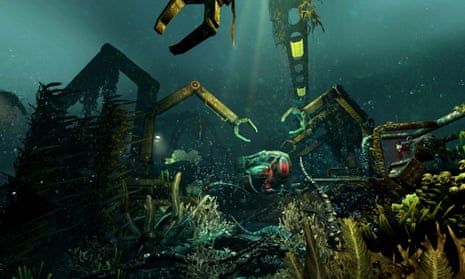
But much like Simon, I think sometimes people underestimate how important and meaningful these relationships can be. With the nature of the internet, you spend a lot of time around people who have lived completely different lives than your own, which naturally can provide them with very different perspectives than what you might hear in your hometown or with your group of friends.
I grew up in a somewhat conservative city and was a regular at church. I think I only knew one person in my life who wasn’t particularly religious before I turned 14. The thought of religion not being real was almost inconceivable for a while. Thanks to GameFAQs, I was suddenly interacting with atheists and thinking about ideas that I had never considered before. I pushed back at first, but these perspectives at least started my journey to feel the way I do today about religion. Without the internet, I barely would have interacted with people who considered themselves atheist (or agnostic, which generally means “I’m an atheist but want to say it more politely”) until I left for college.
I think it was inevitable that I would have gone on this journey eventually. Games like Xenogears also exposed me to some of this thought, but I feel grateful that I was able to go through this challenging process and come down where I did before getting to college and parts of high school. Knowing where I stood helped me to choose friends that aligned with me more, which has created many lifelong friendships that may not have existed otherwise. Internet friends have also helped me hear different and valuable perspectives on many other issues, which I think has really helped align my moral compass in a way that I am proud of.
The number of people on the internet also makes it somewhat easy to connect with others who share your interests, no matter how niche. I especially enjoy the conversations I’m able to have with people online about the things that I love. If you meet someone online because of a certain hobby, the odds are that they are engaging with that hobby in a much deeper way than your average friend. It’s rare for a friend to play any of the same games that I do, but when it does happen, I’m always struck by how little people tend to have to say about the art they experience. They might have a few bullet points and a quote or two that they like, but that’s usually about it. This isn’t necessarily because they are dumb (though, it could be, who knows?). It’s often just due to a lack of passion for the subject. Internet friends greatly enhance the games that I experience because they allow me to engage in much deeper discussion about whatever I just played.
I can safely say that internet friends have often improved my life in ways that are almost impossible for my real life friends. Even though there is incredible distance, these relationships mean something. Simon is in a position where he can only have an “online friend.” This online friend is also almost 100 years into the future he knew, so she likely has many fascinating stories to tell and perspectives to share. Yet, Simon still doesn’t fully understand the value of the relationship until it is too late.
If You Read All This, We Might Be Online Friends Now
I think at one point in my life, I probably would have felt like Simon. I know that as a teen in particular, I was much more likely to blow an online friend off. I have let many online friendships that were pretty dang close fade away.
And sometimes, that’s just how life goes. “Real life” friendships can fade away too. But I’ve reached the point where I never want to just allow a friendship to die because it’s online and means less. Because the older I get, the more I realize how important all of those friendships were to me, even if I didn’t always realize it at the time. SOMA made me think about a lot of deep and powerful themes, but intentionally or not, the most important part about it for me is when it made me think about the people who I only talk to through screens.
If you enjoyed this post, please consider following me on social media, or checking out The Big Nerd Gaming Podcast!
The Big Nerd Gaming Podcast on Youtube
 Big Nerd Gaming
Leave a comment