
I don’t know if I’ve ever felt like I needed a “break” from gaming. I love the medium more than any other, and I’m down to play a game pretty much whenever I have the free time.
But sometimes, I do need a “break” from the games I’m actively playing. I have played several tremendous video games in 2026, but almost all of them have been the kind of games you really have to devote yourself to. MIO: Memories in Orbit, Cairn, Nioh 3, and Mewgenics are all games that are either long, difficult, or both. Almost every time I’ve turned a video game console on this year, I’ve been battling for my life. None of these are the kinds of games that you can turn on for 15-20 minutes and feel good about what you did in that time.
I desperately needed a “break,” except it needed to be a break that still involved me playing video games. Thank goodness for Lovish. Lovish is what I would probably call my platonic ideal for a 7/10. It’s a game that is easy to get in and out of, it’s nice to play for short stretches, and most importantly, it is pretty fun!
Does Anyone Ever Just Save A Princess Out Of The Goodness Of Their Hearts? Or Is It Always About Getting Laid?
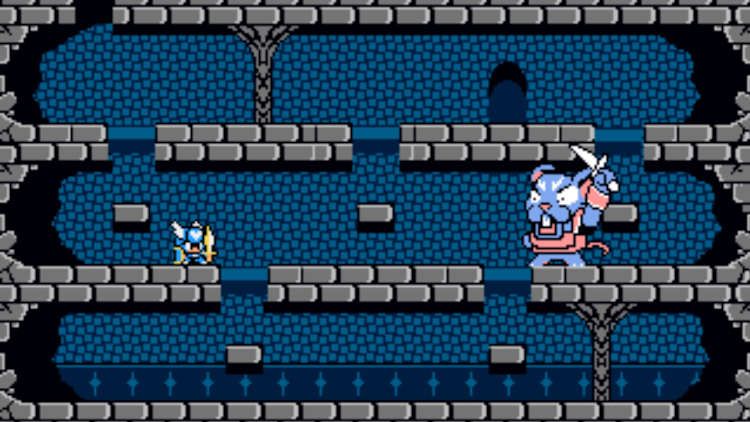
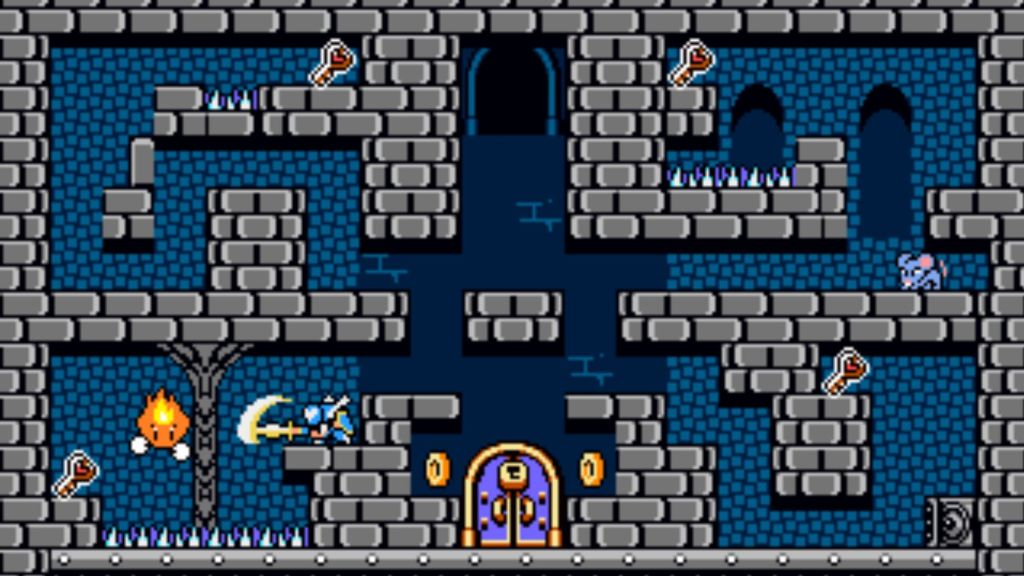
Lovish is basically a series of 50+ short 8-bit platforming levels that each take place on one screen with no camera movement. Think about something like the original Donkey Kong games, but obviously far more modern and complex. You jump around, avoid spikes and enemies, and try to reach the end of each level. Your final goal is to save a princess who has been taken by a demon lord. The opening cutscene also shows the hero ditching his friends in his quest to save the princess, as he wants her all to himself, showing off some of the surprising personality that the game has as well.
As I said before, Lovish’s strength is its ability to be about as easy to pick up and play as it gets. There isn’t much in the way of fluff or filler here. There’s pretty much always something going on. You die in one hit (until you can afford a specific upgrade), so you will likely have to attempt most of the levels multiple times in order to beat them, but it’s rare for a level to take much more than 40 seconds or so to complete once you know how to go about beating it. If I had 10-20 free minutes, which is often how gaming can go as a parent, Lovish was an easy choice to play, as it let me actually feel like I could accomplish something in that short amount of time (though, also as a parent, the lack of in-game pause is an egregious miss).
The game goes from feeling pretty casual to actually somewhat difficult as you get deeper into it. Lovish slowly ramps up its difficulty pretty smoothly. You’ll go from breezing through levels early in the game, to dying once or twice on most levels midway through the game, to a few levels that took me a dozen or more tries by the end. Lovish slowly puts more spikes and other obstacles in your way the further in you get. You increasingly have to be more precise and be able to time out as much as 3 different things before making certain jumps. Combat is always a bit more difficult, even from the early going, as enemies generally take at least three hits to take out, while you die instantly. So there’s a lot of hitting enemies, then jumping to the other side of them, and then hitting them again. Certain enemies are almost impossible to take out if you don’t wait until their backs are turned before attacking them, as enemies don’t generally counterattack when they aren’t facing you. It can feel a bit clunky, but it mostly works. Luckily, even the more difficult levels in the game don’t get overly frustrating because of how short they are.
But I will say that, while I’m someone who usually enjoys tricky 2D platforming a lot, I didn’t always love the difficulty spikes here. The general platforming physics in the game are very floaty. Your jumps are long and slow, and this makes it very difficult to adjust on the fly when something unexpected happens. There are many times in Lovish when something will happen that throws you off guard, and you are pretty much screwed if that happens mid-jump. There are also a few moments in Lovish where it demands a fair bit of precision from you, and I don’t think the game’s physics are always structured in a way to make those challenges feel fair and fun.
Everything in the game is more than doable, but plenty of deaths pissed me off more than motivating me to try again and get better on the next one. I felt like I had the skills, but luck and happenstance could get in the way at times. These frustrations mostly occurred with enemies in the game in the later stages. Enemies generally have a rhythm for their attacks, but ranged attacks can have very long breaks in between them from certain foes, which make them almost impossible to perfectly time out. Some other enemies with ranged attacks will sometimes shoot straight and sometimes shoot diagonally, so you have to be incredibly cautious about approaching them. This slowed things down a lot, and at times, my patience felt like it was being tested far more than my skill. With certain genres, challenging patience can make sense, but I didn’t think it was super logical within the general mindset of this genre.
Luckily, that challenge always felt much better balanced during the half-dozen or so boss fights that the game features. These bosses mostly have a very old-school design, and only have one “attack pattern” that you have to avoid. But even though they are simple, they still end up being fun to fight. They can be tricky, but generally won’t trip you up for too long. The last boss ramps things up quite a bit, with two phases and a few different attack types. This boss kind of made me wish they had flexed their creative muscles more on some of the earlier bosses, but I still enjoyed all of these fights.
While the boss fights do a good job of mixing things up, I think there were missed opportunities to utilize another platforming ability to continue to keep the level design fresh throughout the experience. From early on in the game, you can unlock a “dash” skill, which zips you quite far and fast across the screen. Given how long and slow the normal jump in the game is, the dash skill can be a bit jarring to figure out. I often felt like using this skill was more trouble than it was worth. A lot of jumps require precision, as we discussed earlier, so the dash being very fast and going so far can easily put you in bad situations way more often than good ones. Weirdly, this mechanic is optional for most of the game. Only a few levels later on seemed to require it. I don’t think I had to use it in much more than 3-4 levels. I think I would have enjoyed the dash more if they had designed more levels specifically around it. I thought everything about the dash was a missed opportunity.
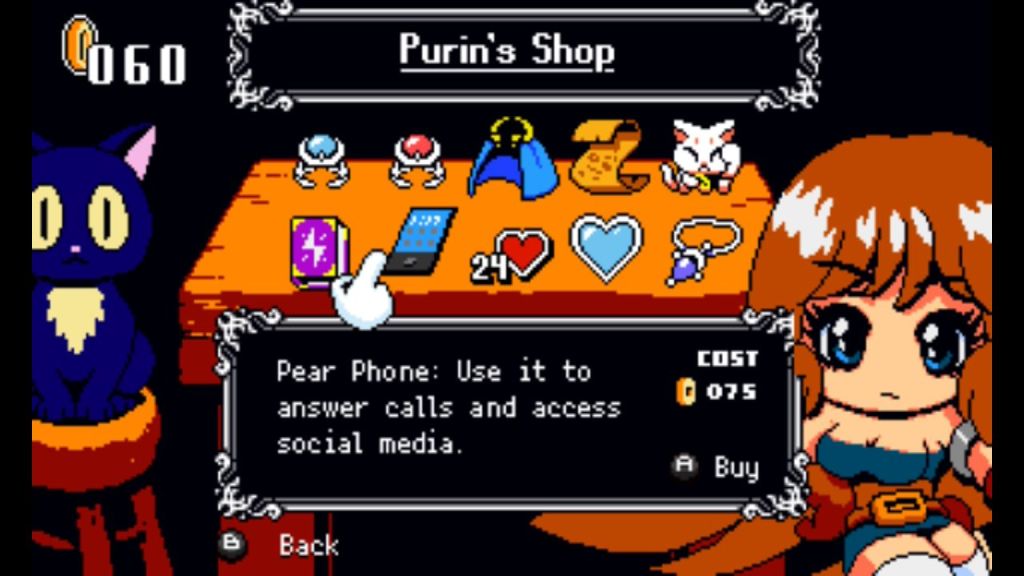
The way the dash is implemented also showcases some of my issues with the upgrade system in the game. As you play each level, there are coins that you can collect that might require a little bit of extra work. These coins can be used at a shop to buy different items. Some of these items are actual platforming and combat upgrades. For example, you can’t thrust your sword up or down until you buy an upgrade to do so. The aforementioned dash is also in this shop. My assumption is that if you don’t buy these skills, the game will give them to you before you get to the rare levels that require you to have them, but I’m not sure. It is definitely odd that they threw important skills like this in a shop that you could just ignore for most of the game. Most of the upgrades in the shop are not well explained, so it’s easy to buy something and instantly regret it afterward, too. I think Lovish should have pretty much completely reworked how its upgrade system worked.
Not The First Time I’ve Enjoyed The “In And Out” Nature Of Things LMAOOO MIRITE
While I did have some issues with the gameplay, Lovish still manages to always be pretty enjoyable. The “in and out” nature of the game made it hard to ever get too upset with any one particular element of it. But also, everything outside of the gameplay is so extremely well done that it helps make up for some of the gameplay sins here and there.
As I talked about in the intro, Lovish has a surprising amount of personality. After each level, there is a little cutscene where random events happen to our hero, Sir Solomon. Sometimes there is a random turn-based battle against a foe. Sometimes he simply finds a potion, and you can drink it for more lives (the game gives you around 200 “lives” at the very start of the game. I’m not sure what the punishment is if you run out). There are also awesome cutscenes after every boss fight where Solomon wins enemies over with a “love beam” of sorts that he has on his helmet. Some of these segments are strange and a bit underwhelming, but they kept me on my toes, and I always looked forward to them after every level completion.
I also really looked forward to whenever I could unlock one of the minigames that Lovish features. These minigames are clear tributes to other games, and I really enjoyed the two that I experienced. This could be considered a spoiler to some, so stop reading this paragraph if you are worried about that, but Lovish has a 5-minute 8-bit Zelda game in the middle of it, and I also found their own version of a Vampire Survivors type of game. I have to imagine that there are more that I didn’t get a chance to unlock, but those two are so well done that I thought it was a shame that I didn’t end up finding more throughout the game. Once again, Lovish will find a lot of ways to surprise you outside of its actual platforming levels. There may be no better example of this than the ending, which is wildly entertaining and satisfying.
A 7/10 Is So Good When You Don’t Have A Bitch In Your Ear Telling You It’s Nasty
There’s one other secret ingredient in Lovish that I haven’t talked about yet, and that is its music. This is genuinely one of the best 8-bit styled soundtracks that I have ever heard. It’s incredibly catchy, upbeat, and varied throughout. Outside of Mario games, it’s rare for music like this to get stuck in my head, but I can literally hear the soundtrack in my brain while I write this right now. This will likely stand as one of my favorite soundtracks of 2026, which was completely unexpected from a game like this. Never underestimate how much great music can enhance a game that you are spending hours and hours with.
It all comes together to deliver a retro package that I enjoyed pretty well for what it does. While I think Lovish has plenty of missteps, it also has tons of charm and just enough good platforming where I was willing to keep going back to it for the roughly 4 hours it took me to complete. If I wanted to really explore every inch of the game and find all the secrets and complete all of the levels in the quickest possible time, this easily could be a 10-12 hour experience, but I worried that diving in too deep would ruin what made Lovish enjoyable for me.
And in my view, there is absolutely nothing wrong with that. I didn’t enjoy Lovish enough to deeply engage with every element of it, but I loved playing it for short stretches. It made me smile many times, and the soundtrack will stick with me all year. In a crowded video game landscape, it can be very easy to overlook a 7/10. I’m certainly guilty of it myself. I can say that 7/10s are good all day long, but when dozens and dozens of games are “great” instead of “good,” something being good can lose its value. But there are some cases when a 7/10 can really hit exactly what you are looking for, and for me, Lovish was exactly that.
Score: 7.0/10
If you enjoyed this post, please consider following me on social media, or checking out The Big Nerd Gaming Podcast!
The Big Nerd Gaming Podcast on Youtube
 Big Nerd Gaming
Leave a comment