
2026 has been off to a weird start for me.
We are two months into the year, and while I’ve completed five games total so far, I’ve only beaten two games that were released in this calendar year. This isn’t for lack of playing new games, but almost every game I’ve played this year has been something long, difficult, or both, and progress doesn’t come easily. Because of this, I’ve been forced to mostly come up with various lists to keep my writing quota going, as I haven’t had many reviews to write. However, I actually completed a non-2026 game last week, and I have some other games I haven’t written about yet, so it’s finally time for my first “gaming roundup” of the year.
Currently, I’m actively playing Mewgenics, Nioh 3, and Resident Evil Requiem. I am saving my Requiem thoughts, as I imagine I’ll beat that game this week. I’ve already written my Nioh 3 impressions, and my views haven’t changed much after several dozen more hours with that game. However, I haven’t said anything about Mewgenics on the blog yet, and after 20+ hours, I feel ready to share some thoughts, even though I’m only at roughly 20% completion.
From there, I also have a mini-review of Planet of Lana, which I completed in anticipation of Planet of Lana‘s imminent release. I also have some brief thoughts on Cairn, which I put on hiatus and am hoping to restart at some point later this year. Let’s get to it!
Mewgenics
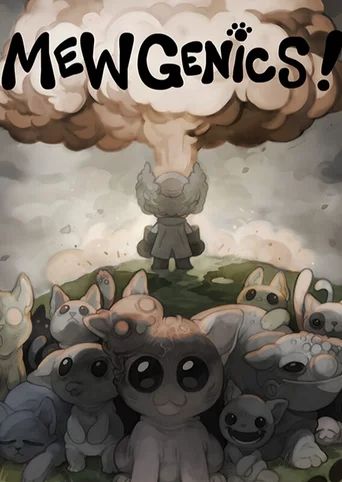
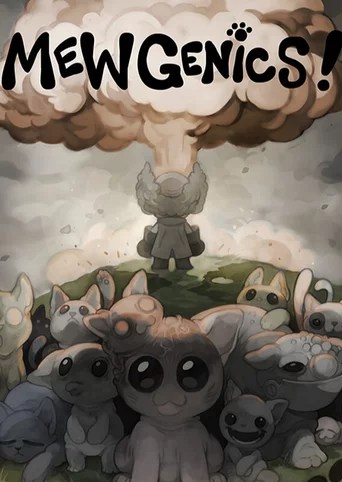
Mewgenics has to be the most interesting video game that I’ve played in 2026 so far. I’d describe it as a cat-breeding SRPG roguelike. In general, I’d say an SRPG roguelike is a pretty rare thing in and of itself, but when you add in everything else this game has going on, it’s pretty wild.
It’s also a very interesting game to talk about because I feel like the game shines and falters in equally strong ways in spots. Luckily, I’d say it mostly shines.
The biggest strength of Mewgenics is the core tactical combat. I’m not exaggerating when I say that this might be my favorite turn-based SRPG combat ever. There are several reasons for that.
First off, I love the structure of each encounter so much. Being a roguelike, pretty much every encounter has to be relatively quick, as you get into a lot of battles in each run, so the pacing in the game is very brisk. Maps are all pretty small grids, and most encounters don’t last much more than 3 or 4 turns. So there isn’t a lot of dicking around or slow build-up before the actual fighting starts. In most battles, I’m fighting multiple foes on the first turn.
I also enjoy the relatively small team sizes. You can go into fights with a maximum of four cats. This could be boring in some cases, but it’s not in Mewgenics because there’s so much depth with each individual cat that you bring along. You have to decide their class (which you’ll generally want to try and assign based on their base stats and whatever genetic ability they’ve inherited). You can equip them with several items that you find on each run. Also, as each run goes along, you will decide what other abilities, passives, and stat increases they get as they level up. So essentially, you’ll be putting together five “builds” in each run: one for each of your cats, and then the “build” for your team as a whole, as you will obviously want all of your cats to play off of each other well in battle. It’s a total blast, and being a roguelike, it changes every single run, so the game doesn’t just let you get overpowered and complacent the way that many other SRPGs eventually do.
Each map also has plenty of environmental hazards, and pretty much every enemy in the game has little gimmicks that you need to be on the lookout for. The game also has plenty of boss fights, and they are all really creative. The difficulty balancing is mostly very fair as well. Once again, Mewgenics truly nails everything about its combat.
Unfortunately, when the runs ends, I tend to be a lot less enthused about Mewgenics, as I’m not a fan of how it handles its cat breeding or its progression systems.
Between each run, your goal is to put a new squad of cats together so that you can go on another mission, as you can’t re-use cats that have gone out once. You can put a male and a female cat together in the same room at your home base, and hope that they have unprotected cat sex and then spawn a kitten. Random strays will also show up that you can add into your house and take into battle. With money you can increase your house stats so that cats are more likely to breed and so higher quality stray cats show up.
Unfortunately, as you might be able to tell from that description, it’s all a bit too vague and luck based for my liking. There’s definitely an art to breeding, but there is only so much you can do in spots, especially early on. I’m usually holding onto 9-10 cats at once for reasons other than just breeding (which I’ll get into in a moment), so it’s not easy to try and make two specific cats breed all of the time. If I put too many cats in one room to try and keep two other cats alone, the stats for that room go down significantly, and breeding becomes far less likely in the crowded room. There’s also a lot of important information that the game doesn’t tell you until later on. For example, there are some cats that always seem to refuse sex no matter what during the breeding process. As I’ve continued through the game, I now see that I can unlock a “gaydar” upgrade with a bit more work. I don’t have that upgrade yet, but I think I have a good guess that this upgrade will tell me which cats are gay and not willing to breed. This is kind of a rough thing to have withheld from someone for 20+ hours of gameplay.
This ties into my other issue with the game, and that is how slow the progression systems are. You can advance in the game by winning runs, and then by winning runs in the “hard” mode that each area has. But the path to upgrading yourself in the game is insanely slow. While money is certainly helpful, most of your progression comes from donating cats to various people in the town. Each person you can donate to is looking for different types of cats. For example, the “gaydar” upgrade I talked about earlier specifically comes from donating kittens to one specific guy. So whenever my cats breed, if I don’t care for my kitten’s stats or abilities, I’ll donate them. Certain people need you to donate cats that have already been in battle, and others need you to donate cats that are over a certain age. Essentially, winning runs in Mewgenics doesn’t always get you all that much closer to getting “stronger” or gaining more knowledge. It’s just a matter of donating cats, which is mostly just raw attrition. Most of these people need anywhere from 10-25 cats before they give you an upgrade. I remember at one point, I won a run, and realized after that I might have been better off just ending that run early so I could have donated my cats sooner, as the prizes for winning didn’t seem to justify the time investment.
But despite those occasional frustrations, I keep going back to Mewgenics, because the combat is seriously that good. I think the breeding and other management between runs will also improve as I continue to get more upgrades, but it’s just a brutally slow process to get there sometimes. But I still will continue to press on, because even though Mewgenics is a 70+ hour game by many estimations that I’ve seen, I’d say it deserves that level of time investment. This is a cool game, even if it pisses me off occasionally. I’d currently give it an 8.5/10, but I could see myself going as high as a 9 and as low as an 8.
Planet of Lana
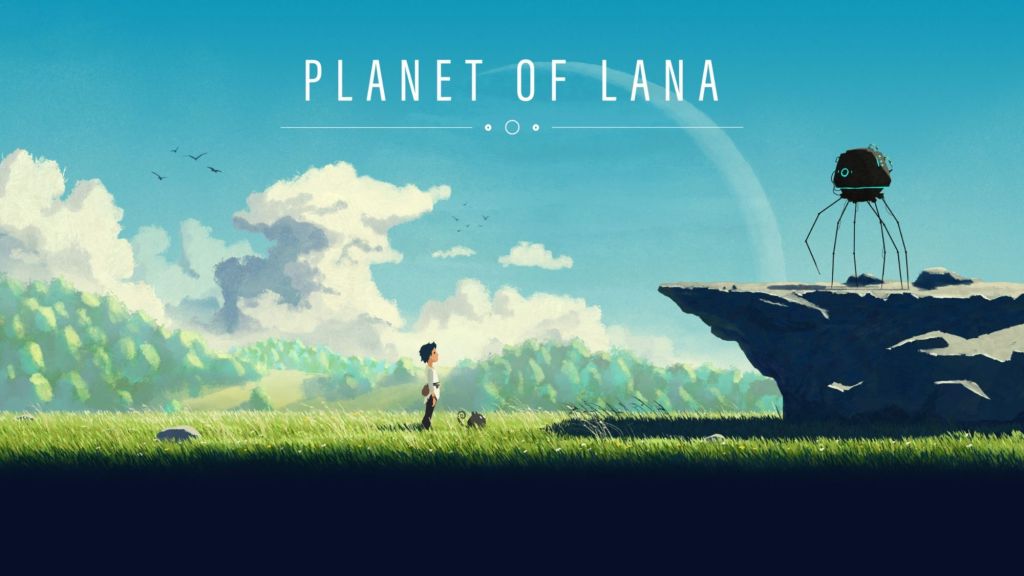
This is my mini-review of Planet of Lana. I considered doing a standalone blog post for it, as I customarily do with game reviews, but the timing of it would have been really odd since Planet of Lana 2 is coming out tomorrow, so it gets the “mini-review” treatment instead.
I first attempted Planet of Lana back when it launched in 2023. According to my Xbox timer, I abandoned it after about 30 minutes. I didn’t remember why, but I wanted to give the game one more fair shot, as I was seeing a fair bit of hype for the sequel.
Planet of Lana is a 2D cinematic puzzle platformer with no dialogue. Think Neva or GRIS, but this has more of a Studio Ghibli art style. You play as Lana, a young girl who lives in a peaceful small village. After a brief introduction, a bunch of robots come and start abducting villagers in the town, and you go on a quest to rescue them with a monkey companion that you find early on.
Essentially, the game is a series of levels where you have to jump or solve puzzles to get from point A to point B in each area. Unfortunately, I found both the puzzle solving and the platforming to be pretty mediocre throughout the game.
Most of the puzzles involve trying to get around various robots without being spotted while using various objects and your monkey friend to navigate through obstacles. While there are certainly a few puzzles that had interesting elements, most of them are incredibly straightforward. There is a lot of commanding your monkey to grab a rope, and then going from one set of bushes to another while a robot isn’t looking. I certainly don’t want puzzles that are overly complex in a game like this, as it can kill the general flow of it. But Lana constantly reuses the same tricks to a point where I rarely had to think at all to get through each section. Ideally, I want these games to make me think for a second, and to constantly get those “Eureka!” type of feelings as I keep progressing. I rarely got those feelings here, because there was not nearly enough challenge to warrant it.
The controls and platforming in the game are also kind of mediocre. I do enjoy Lana’s slow jumping and climbing, as it makes running away from robots incredibly exciting. Seeing her barely lift herself onto a ledge right before a robot comes is always tense in a good way, but that’s the only good thing I have to say about it. The game never does anything interesting with its platforming. It’s all pretty basic jumps, and even the occasional set piece moment is pretty boring. Commanding your monkey to do various tasks is a bit more cumbersome than I would like as well. Also, while I enjoy Lana’s slow movement for the most part, there are some things, like turning around, that are way slower and clunkier than they need to be. I also found it disappointing how the game settles on using QTEs for some of its bigger moments near the end.
But Lana was still pleasant enough to play in spots. Even if the gameplay is unexceptional, it’s an absolute audiovisual feast. The art style is fabulous, and the music has several bangers. If you’ve played the game, you can probably remember one specific moment that uses both of these elements to incredible effect. Lana definitely has some magical moments. It also has some interesting story elements, though I think it’s the kind of story that would have worked a lot better with a bit more dialogue to flesh it out.
I certainly didn’t hate playing Lana, but I can’t say that it left me riveted all that often either. After playing this one, I came away somewhat pessimistic about the sequel that comes out tomorrow, but I’m sure it’ll be a delight to look at and listen to, at least.
Score: 6.5/10
Cairn

As I said at the top, I put Cairn on hiatus a few days after starting it, so I haven’t written about it to this point, despite it being on my most anticipated games of the year list.
Cairn was mostly a classic “it’s not you, it’s me, though it probably is a little bit you” situation.
Right from the start, I was sucked into this game. The rock climbing in Cairn is simply amazing. While I’ve never done any real rock climbing, the way the game allows you to control all four of your limbs and the way you have to actually “read” the rock wall to try and find climbing paths feels incredibly authentic. While Cairn obviously can’t test your physical endurance the way that real rock climbing does, it at least gives you a glimpse into the mental elements of the sport. It takes real patience and planning in equal measure to get through each test put in front of you.
As hard as it can be, the sense of accomplishment when climbing any wall is pretty close to the feeling of taking down a boss in a Soulslike. However, instead of getting “souls” or “exp” with each wall that you climb, you are rewarded with an incredible view and the knowledge that you are a little closer to the top now. I love the art style and the environments in Cairn, and the climbing wouldn’t feel quite as good as it does without such fantastic visuals to complement the gameplay.
Whenever I restart Cairn, my plan is to go back to the very beginning. A lot of my issues with the game came with its incredibly poor onboarding. I should have known I was in for a bit of a rough ride when I was told that I completely missed half of the tutorial (which is optional) because the game doesn’t clearly tell you that it’s there. I’m not the only person I know of that missed this.
In addition to climbing, Cairn also has survival elements. You have to drink and eat occasionally to keep your meters up, and if you don’t, you’ll start taking damage when you climb. I didn’t realize when I first began the game that the key to keeping these meters up is to actually walk around and explore when you have the opportunities to. Silly me, I thought rock climbers actually planned things out and stocked enough fucking food and water for climbs where their lives will constantly be in danger! These survival elements also introduce a risk/reward element to the climbing. There are generally easier paths up certain parts of the mountain, but supplies are often hidden off more difficult paths. If you keep steamrolling up the mountain, you’ll likely find yourself hungry and thirsty before too long. Unfortunately, this is essentially what happened to me. By the time I understood how the game wanted me to handle its survival elements, I felt incredibly behind the 8-ball, and it seemed like it was going to be almost impossible to climb out of the hole I was in (lol).
The good news is that you can turn off the survival elements if you wish. I was very tempted to do this, but they feel so ingrained into the risk/reward portions of the climbing that it felt wrong doing so. On my replay, I think I’ll enjoy these elements a lot more now that I’ll know what I’m doing from moment one.
Also, as cool as the climbing in the game is, I still had some issues with it. While you can always choose which limb you want to move next when climbing, the game functions best when it selects the next limb for you. This allows the climbing in the game to flow much better. The game selects your next limb based on which one has the least amount of grip at any given moment, but there are a lot of times when that choice makes no sense for what you are trying to accomplish, and you have to select your own limb anyway. Once again, you can play the entire game this way if you want, but I think it’s a much less enjoyable way to climb. I’m not hopeful about this, but I hope that the game has a smarter system in place for this when I pick it up again.
I’m not sure when I will restart Cairn. It might be pretty soon, or it might be in the summer. I really hope it clicks better for me on my second go around, as I see the potential for this game to at least be one of my honorable mentions at year-end if everything starts working better for me.
If you enjoyed this post, please consider following me on social media, or checking out The Big Nerd Gaming Podcast!
The Big Nerd Gaming Podcast on Youtube
 Big Nerd Gaming
Leave a comment