

There are some games, even some I absolutely loved, where the credits hit, and I immediately skip them and move on to something else.
And then there are the games where the credits roll, and I end up sitting there and just taking it all in. I become lost in thought, reflecting about what just happened. As the credits rolled on Harold Halibut, I found myself thinking about the powerful ending and the journey that Harold went on to get there. I thought about some of the characters I met along the way.
And then I thought about something that I don’t often think about at this point, and that is the developers. You see, Harold Halibut is a narrative adventure game that was handcrafted with a claymation design, and it took 14 years to make. It is also one of the more emotionally vulnerable games I have ever played, as it explores the depths of human loneliness and sadness in particular. Perhaps the game made me introspective in a weird way, but I suddenly wondered how the developers felt as this game was finally released after all that time. I can’t imagine the nerves they must have felt as the first reviews came down, and later on, as more players started to give their own reactions.
After playing Harold Halibut, part of me wants to sit the developers down the way the affable postman Buddy would, and tell them that while this game hasn’t hit with every single person who has played it, they put their hearts out there in a unique way, and those that they touched will remember playing this for a long time to come. And that is something worth celebrating.
Get To The Good Stuff
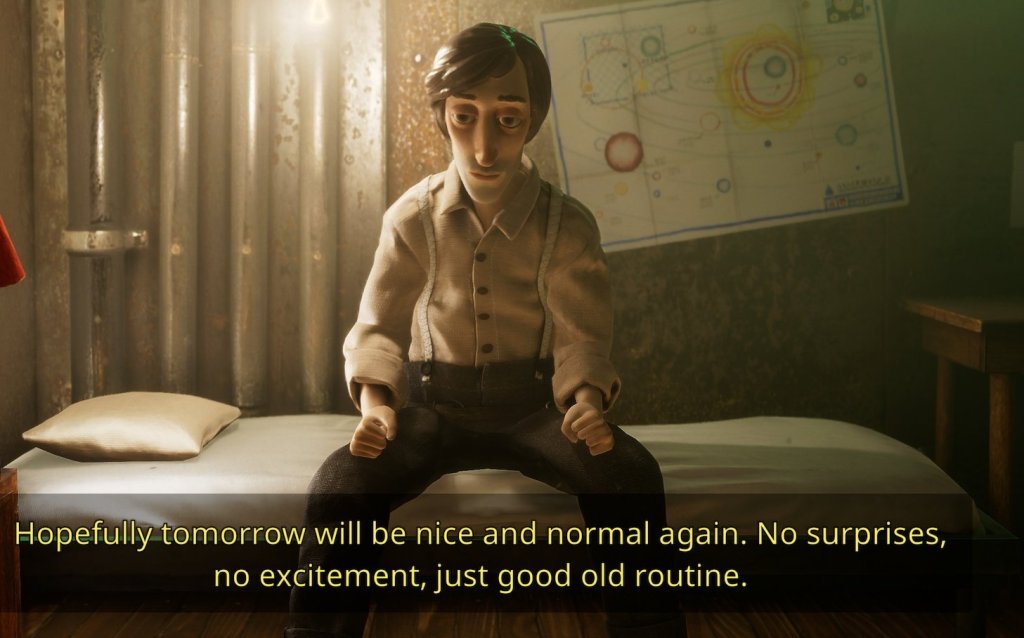
At first, I can’t say I felt that way, though. Harold Halibut is a game that contains six chapters, and the first two in particular are a real slog. These chapters mostly have Harold running back and forth doing various messenger and fetch quests for other people. Many of these tasks end up not mattering much. Harold’s relative uselessness is important to the plot, but this could have been accomplished in far less boring ways.
The game does throw in hints at bigger things afoot, and these events would pique my interest, but then it would usually pivot right back to something more tedious. It gets frustrating, and perhaps because of my slight irritation, the character development and the world building weren’t hitting on the level I hoped for either. After four hours with the game, I already felt close to wanting to take at least a few days off from it. There is a funny scene after a hectic day where Harold hopes things go back to his normal “good old routine”, but as a player, I found myself desperately hoping that would not be the case, as I was absolutely sick of Harold’s life and routine.
Best Art Direction Of The Year
There is one thing that kept me somewhat engaged even as I struggled with the early game, and that was the art. While the environments aboard the Fedora are mostly pretty bland as you would expect from the inside of a spaceship, the character models consistently left me in awe. They created so many unique and detailed looking characters, and even seeing characters move around leaves you impressed when you know how difficult the whole process had to have been.
Admittedly, some of the luster from the art started to wear off as I trudged through the same sections of the ship over and over in the early game. Without spoiling too much, things shift drastically starting in chapter 3, and from there, they truly let their creativity shine, and the environments in particular go to another level. There are several scenes that I couldn’t help but stop and take multiple screenshots as I played because I wanted to be able to look back on some of these moments later on.
From there, I started to appreciate other elements involving the production values as well. The soundtrack is a perfect mix of beautiful and strange and blends in wonderfully with many of the big moments in the game. The voice acting is also consistently strong, with Andrew Nolen in particular delivering an excellent performance as Harold.
And We’re Off
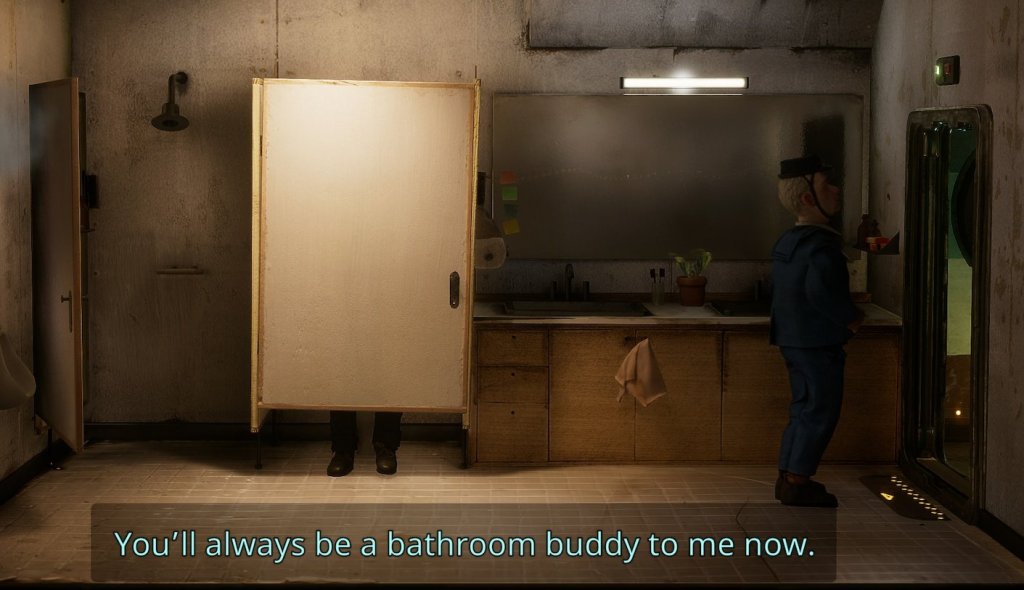
That shift in chapter 3 didn’t just make me appreciate the art more. From that point on, everything got better for me. The plot felt more focused and engaging, and some real heavy moments started happening. I really enjoyed how the game tackles so many different elements of both human society and human emotion (though, it can feel a bit ham-handed at times in the way it constantly tries to point out how silly humans are). The game ends up really diving deeply into the way Harold thinks as well, which ended up making me reflect on how I felt about certain aspects of life.
I also started feeling a lot more connected to most of the cast in the second half of the game. After a lot of introductions that didn’t grab me, I ended up finding almost the entire cast to be quite engaging by the end. I was impressed by how many characters went through a fair bit of evolution in a relatively short amount of time in ways that felt completely natural and not forced. Harold, in particular, goes on a pretty remarkable journey of growth and went from a character that I didn’t really care about to someone I was truly rooting for.
It’s difficult to talk too much about the story without doling out spoilers, and I absolutely do not want to do that with this game. So I’ll just say that almost every story thread outside of one big one ended up landing really well for me. The game gave me at least four story moments that I will have in consideration for my top moments list at the end of the year, and the ending is something that I have not been able to stop thinking about since I beat the game. The game does a decent job of mixing in humor on occasion to break up all the heaviness as well, with one moment in particular really making me laugh out loud while I was in the middle of being legitimately depressed about a sad event.
Remember The Good Times
There is a must play series of side quests in the game where you go back and read letters that were never delivered from decades ago. One of these letters reveals that a declaration of love from one character was rejected by another one long in the past. These characters are together and (mostly) happily in love now. The original rejection is a somewhat forgotten memory.
Having just played Harold Halibut, my journey with the game can obviously be recalled easily. As the years pass by though, I imagine I will think less and less about the few hours that I didn’t enjoy it, and the one plot thread that I think ended poorly, and a lot more about the journey it took me on. I’ll think about the ways it made me feel, and I’ll think one more time about how it ended. I imagine I will carry Harold Halibut with me for a long time to come. That is why, despite some early pitfalls, if you have any interest in this genre at all, you should give it a real chance to win you over, too.
Score: 8.5/10


 Big Nerd Gaming
Leave a reply to Westen Cancel reply