
Folks, I am pleased to announce that I have been eating good. As usual, I have been game hopping, and I feel like it’s about time to do a big update.
It’s been a weird month-ish of gaming for me. Pretty much all year, I’ve been playing at least one game that was an 8.5 or higher for me. This number is important because any game that reaches that score at least gets on my honorable mention list at years end.
After I beat the fantastic Dungeons of Hinterberg last month, I have been playing almost nothing but games that I’d give somewhere between a 7.0 and an 8.0. And look, those are all good or even really good games. But nothing that I considered true greatness. I’ve been spoiled! Luckily, the spell is breaking a bit, and I have finally found a game that breaks that barrier. While I don’t necessarily have any other game that high, almost everything I am about to talk about at least has the potential to make my prestigious honorable mention list. And that excites me a lot. Here is a gaming round up. From this point of the year on through November, it seems like a AAA or indie banger will be coming out just about weekly. Buckle up!
Star Wars Outlaws
Star Wars Outlaws has been one of my most anticipated games this year. While I’m not a huge Star Wars fan, I enjoyed the idea of a true open world Star Wars games, and mixing it up from the lightsaber battles that we’ve seen with recent Star Wars games like Fallen Order and Jedi Survivor was appealing to me as well. While critics like the game overall, seeing an OpenCritic score around 77 was a bit disheartening, as I was expecting an absolute banger here. Those review scores didn’t stop me from jumping on the game day one, as I still had faith that it would appeal to me personally.
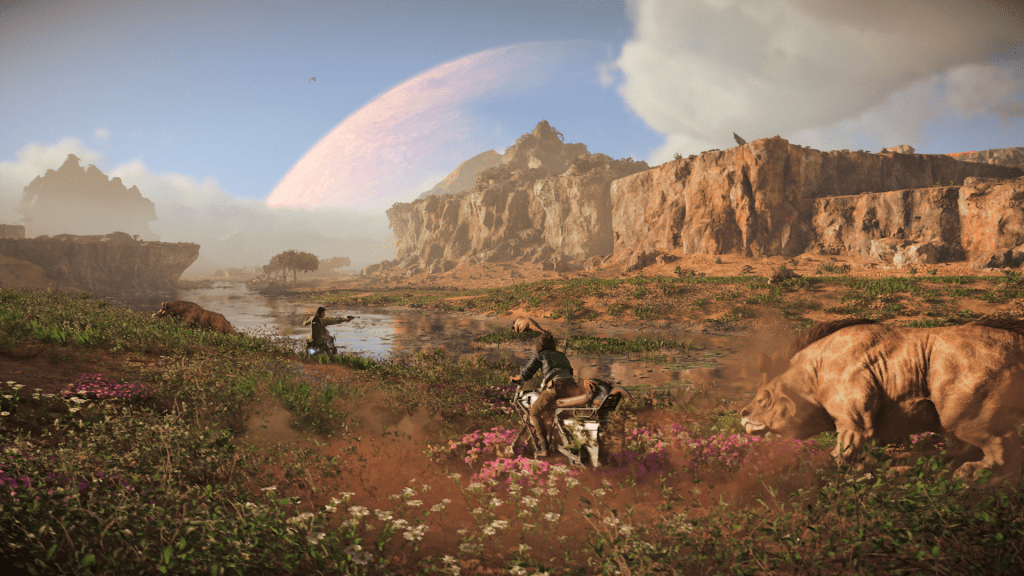
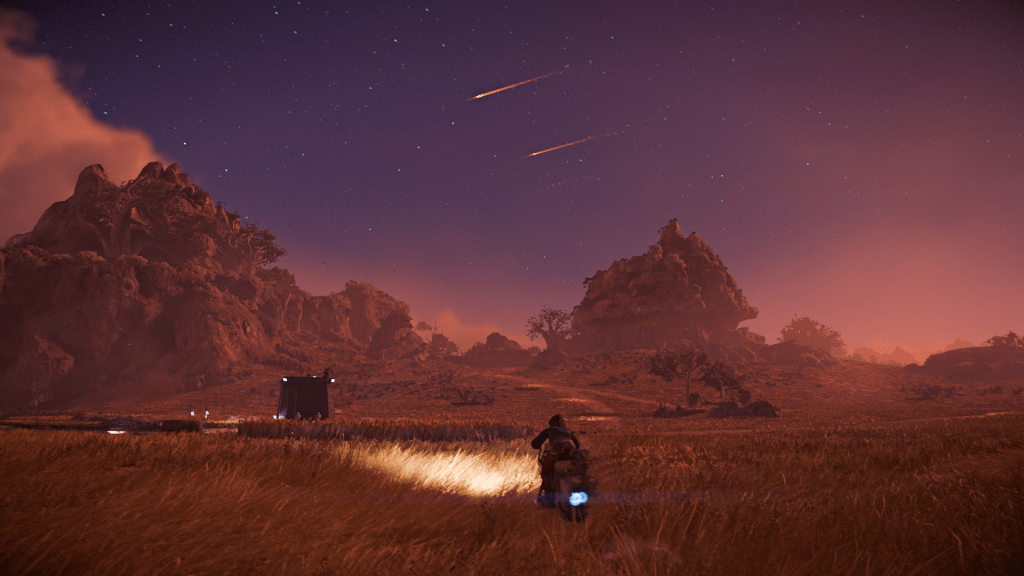
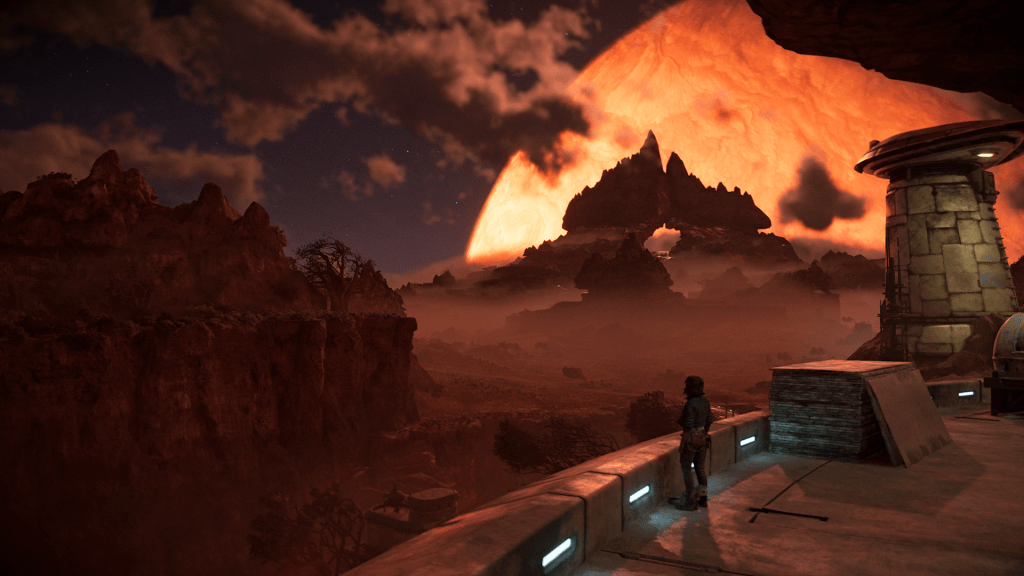
And sure enough, I think I’ve seen enough to say that I would rate this game solidly higher than the critic consensus. Star Wars Outlaws wants to be a lot of different things, and I would say that it does almost all of these things well. More than anything, I feel like Star Wars Outlaws is a response to the rampant criticism of Ubisoft open world games. Gamers have slowly started to rebel against games that have a million objective markers on the screen that all unlock at once. Star Wars Outlaws seems to be hyperaware of this, and it features some of the most organic open world gameplay I’ve seen from Ubisoft. While there are objective markers on the screen, you will find most of your optional tasks in the game by talking to informants, listening in on conversations, finding datapads, and just exploring when you see something on the horizon. Because of this, I’ve had an absolute blast exploring the several worlds that Star Wars Outlaws puts you on (including the intro planet, I’ve been on four of the five planets so far). I’m constantly finding new things to do organically, and I have not ever felt overwhelmed with what is on my task list so far. It also helps that this game is drop-dead gorgeous. Each planet outside of one has some absolutely stunning landscapes, and I love the game’s photo mode so far. The music is also as beautiful, tense, and soaring as you’d expect from Star Wars.
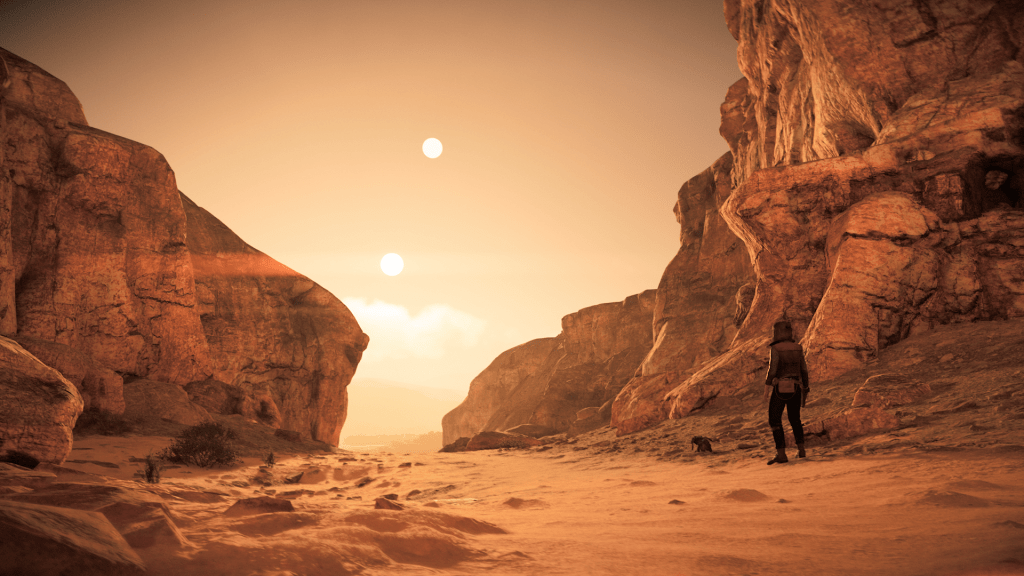
I’ve also stayed engaged because of an excellent story and some strong characters. The lead character Kay Vess and her pet Nix are both very charming, and some of the side characters I’m starting to meet are very entertaining as well. All of this adds up to a feeling of adventure that I’m not sure any Star Wars game has ever captured for me before, including some games I really like.
The game isn’t perfect, of course, and I do understand some of the critic complaints. I didn’t love the stealth at first, but I am starting to enjoy it a fair bit. Early on, I didn’t feel like I had enough options in the stealth sections. But I’ve slowly learned to use the stun blaster more often, and my pet Nix as a distraction, which really opened things up for me. You don’t have the mobility of Assassin’s Creed, or the fun tech from Cyberpunk, so I don’t think the stealth options are up there with the best of the genre, but there is enough here for me to say that it is a good time. I have the game on hard, which adds a lot of tension to the stealth segments, as I don’t have the firepower to take down endless waves of stormtroopers if I alert them to my presence.
The combat is a little weaker. The sound design with your blaster is excellent, which adds some weight to the shooting, but you just don’t have a lot of options. Taking cover is kind of awkward, and using grenades or secondary weapons is a bit unwieldly. But you can switch between three types of blaster shots depending on the situation, which is fun to do and at least gives you some decision making to do in each fight. You also don’t spend tons of time in combat, so I believe it ends up being good enough for what it is, but it obviously could have been better.
The combat fares a bit better in space, which I have found to be pretty fun despite not being a big fan of space dogfights usually. I was kind of down on the space fighting in Starfield, but I really like it here. The controls are easy to pick up, and it truly captures that intense and frantic feeling that comes from watching the space segments in the movies.
As you can see, there are a lot of different games meshed into one here, and I haven’t even discussed the Fallout: New Vegas-esque faction system or the Uncharted-esque set pieces and platforming. I have way more to say, but I’ve already written more than I wanted to here. Right now I’m somewhere between an 8.5 and a 9 for my score. And honestly, I’ll be stunned if I ended up any lower than an 8.5. If the reviews scared you, it might be worth waiting a little bit. There are definitely some annoying bugs, and apparently, there was a gamebreaking bug on the PS5 in particular. But you can also play this game for $17 a month on Ubisoft+, and I’d say it is easily more than worth that. This has a real shot of being in my top 10 at years end from what I’ve played so far.
Until Then

Until Then is a narrative game that follows Mark, a high schooler in the Phillipines whose parents are overseas for work. He must navigate teenage love, teenage emotions, and teenage life without that parental support. This is a coming of age story for Mark and his friends, and it also has some supernatural elements attached to it as well. According to a friend, I am roughly halfway through the game to this point.
Until Then is a beautiful game in many ways. There is some very touching writing here. Polychroma Games has crafted some excellent and nuanced characters, and I really cared about what would happen to them. I’m trying to be as vague as possible here, but the lead character Mark has a lot going on in his life, and when he feels hurt, I often feel it too.
The game is also quite stunning visually. It has gorgeous pixel art graphics and surprisingly excellent animations as well. During more pivotal scenes, the game will zoom in on different characters’ faces, and a lot of great storytelling is done with these facial expressions. I don’t play tons of narrative games, but I’m not sure I’ve ever seen a game with pixel art graphics tell a story so well with its facial animations.
The game has some other really clever ways that it tells its story. This game takes place in 2014, when smartphones were truly out in force, and it uses that dynamic extremely well. Mark has several sections of the game where he decides to text with friends. Sometimes, he starts typing, stops, and then re-types, much like many of us do when we are talking to a girl we like or are in a tense conversation. Sometimes you’ll see his friends typing, then stop, then start again, then stop. These little quirks add a lot to each conversation and also help make them feel more real. There is also a really neat Facebook element, where you can see friends’ statuses, react to stuff, and read articles from the local newspaper that help with worldbuilding.
Until Then also tries to mix things up with some minigames, which does not go as well as I would have hoped. Almost every mini game in Until Then is fucking terrible. I like to be more nuanced with my criticism, but the design on almost all of them is bad. Controls can be unresponsive, they can be very confusing, and the piano rhythm game in particular is super awkward and overly long. Luckily, these don’t usually take up tons of time, but this game would be a bit better without them.
The more serious issue with the game is that every single scene just seems to be a bit too long. Over and over again, I’ll feel like a scene has conveyed everything that it wants to, but then, it just keeps going. It hammers some of these points home in a way that made me very impatient at times. Until Then wants to be a sad game, but sometimes, the sad scenes go on so long, and they are so desperate to make you cry that it borders on melodrama.
Despite this, Until Then does a lot of things really well. And to be honest, I’m not much of a crier, so some of those scenes were always going to have an uphill battle getting those tears out of me (just to clarify, I honestly respect those who cry. I really should cry more often. It’s an annoying pride thing deep down that stops me, even though it doesn’t make sense when I’m by myself!). But I do think that those nagging issues hold the game back from where it could have been for me. I’d probably give the game an 8/10 so far. There is a bit of room for it to go to an 8.5, and if it doesn’t land the ending, I could also see it being around a 7.5/10.
The Legend of Heroes: Trails Through Daybreak
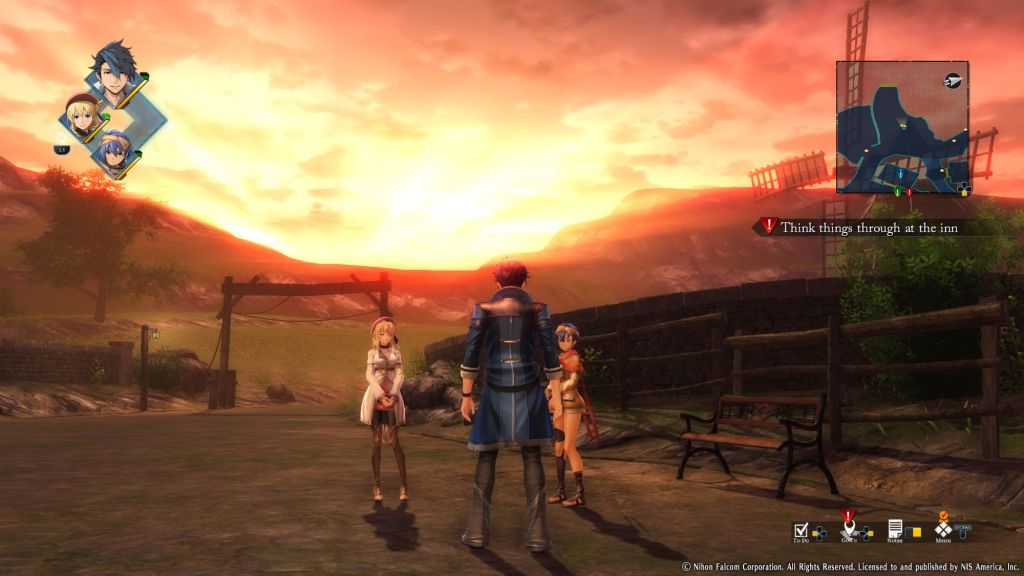
Trails is a very long-running JRPG series with something like a dozen games and an incredibly hardcore fanbase. While Daybreak takes place in the same world as past games, it is also a new arc in the series, which makes it something newcomers could more easily jump into. Watching a friend of mine play on stream and the strong reviews made me ready to finally give it a shot. And for the most part, I’m happy I did. Though with a very loaded release schedule ahead, I’m also a bit afraid that I’m going to end up not making it to the finish line.
Daybreak fits into a very interesting mold within the JRPG space. First and foremost, it is a JRPG ass JRPG. There are tons of anime tropes here and a lot of characters that lean hard into one particular gimmick or personality trait. Much like a good anime, it actually does this to strong effect, though. I have found myself really enjoying all the characters here, with Van Arkride being the most entertaining of all of them. He is the classic asshole with a heart of gold, and it’s always fun to see which side he is going to lean more into in any given interaction. His partners and allies that I’ve met so far are a bit more one- note but still likable.
Daybreak is also a JRPG ass JRPG with its pacing, which is a clear throwback to how most stories in this genre used to be told. There are long stretches and even cutscenes where nothing of note happens, outside of maybe some slight character development. But the game establishes the characters so well that a lot of these character development scenes aren’t all that useful for me. Near the start of chapter 2, I watched something like 30 minutes of cutscenes as Van and crew made their way to a new city, and about all that really mattered was the introduction of two characters. The characters are good enough where I’ve been able to hang on and stay engaged, but it has been tough sometimes.
Daybreak is the complete opposite with its battle system, though. Despite kind of clinging to the past with many of its storytelling conventions, this game is constantly trying to innovate with its battle system. You can kick off most battles with some very basic action combat and then transition into turn based combat whenever you want. This creates an awesome flow, where you can quickly dispatch weaker foes with the action elements and then go into the more strategic turn based system for tougher enemies. There are elements of movement, area of effect, and even teamwork with allies that all blend together to make an excellent turn based system here. As a newcomer to this series, it reminds me of Infinite Wealth, but it’s actually way deeper. Despite every dungeon I’ve played so far having incredibly generic design, I have felt pretty happy whenever I’m fighting in this game. And that is the main thing keeping me hooked. I’ve also really enjoyed the games moral alignment system, but I’ll talk more about that another day.
If the story finally hooks me in, I might really fall in love with this game, as there is a lot I like here. Until that happens though, I would put Daybreak firmly at a 7.5. I feel like I’d have a tough time scoring it any lower than that because the combat and characters are so good. If the story picks up for me, I could see myself going as high as an 8.5, but I’m kind of pessimistic that I’ll get that engaged since I’m not after something like 15 hours already. Hopefully I find the time to get to the point where this gets really good.
Kunitsu-Gami: Path of the Goddess
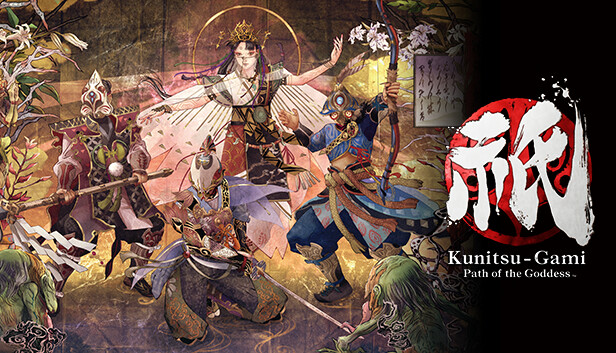
Kunitsu-Gami is one of the most unique games I’ve played in quite a while. This is a reverse tower defense game with action elements that is steeped in Japanese culture. Essentially, rather than defending a point at the end of the map, your goal is to escort a character to the “start” of the map where enemies spawn from. As you can imagine, this makes things increasingly hard as you get closer to the finish. Luckily, you have different NPCs you can use (essentially, your “towers”), to help you with each mission, And you can use the main character to fight enemies as well, with some pretty basic but fun action elements.
Kunitsu-Gami impresses me in so many ways. After some early levels that were a bit too long and easy, the difficulty started to ramp up considerably. I’ve been impressed by how often the game has found ways to mix it up early on. There are boss fights. There is one level where you aren’t allowed to use the main character, so that level becomes purely a strategy level. One level has you lighting lanterns in order to help fight enemies. On another level, toxic sludge makes your traversal extremely limited. I was really afraid that this formula would get old, but Kunitsu-Gami seems very devoted to making sure you stay on your toes.
When the game starts getting harder, it gets pretty intense. You have to be very alert managing your allies while also finding opportunities to get into the fray yourself. There is a truly excellent flow here. The game also has this amazing sense of joy that emanates throughout. Your characters purify areas with a special dance that ends up causing fireworks and a satisfying cutscene of gunk and darkness disappearing. The way that your main character fights also looks like a dance as much as combat. It’s really cool.
Most of my issues with Kunitsu-Gami come after the missions. Whenever you purify an area, you can then stop in after each level to rebuild it with a base building mechanic. This mechanic also helps give you the currency that lets you upgrade yourself and your allies, so it is important. Unfortunately, this mechanic is extremely boring. There’s next to no strategy to the base building. There’s no real hard decisions about what you should repair next. It’s all busy work. When you build a base back up, there is no reason to ever go back to it, so you don’t get any rewarding feeling from seeing a town restored either. Despite how much I dislike this element of the game, it’s really important, as you will need those extra resources for upgrades, as the game gets pretty tough.
The game getting tough is also what put a serious halt to my progress. I reached one level with a toxic sludge element, and I just have not been able to beat it. Because of this, my thought process was that I should play previous levels, as there are challenges you can complete to get more upgrade resources. Unfortunately, it’s a real pain in the ass to play past levels. Once again, they are quite long, and the rewards for doing so can be pretty minimal. I think once I get through this level that has me stuck, I’ll go back to mostly enjoying the flow, but I wish there was a better way to get upgrade materials from both the core levels, and from the base building.
My one complaint for the actual missions is that the strategy interface is kind of annoying. I wish there was a classic RTS super zoom out that let me select characters and decide where to move them. You are mostly stuck selecting allies by either going up to them individually or with a really awkward menu system. Luckily, once I’m set up for a level, it’s rare that I move my allies outside of specific circumstances, but it is definitely more unwieldly than I’d like.
In the end, my biggest issue from the game is more an element of me not being good enough and getting stuck on a level. “Grinding” in this game is not fun at all. But if you can keep a flow going, there is some really cool stuff here. I’m leaning at either a 7.5/10 or an 8/10 right now. I was more at an 8 before I got stuck, so that’s probably the correct score. I’m really hoping to jump back in soon and hopefully get through this damn toxic sludge level.
Cat Quest 3

When I see a cat on the cover of a video game, my first thought is that the game’s goal is to be quirky and cute. Because of this, I also generally assume that the game is going to be pretty easy and casual. Recent cat games like Stray and Little Kitty Big City both fit into all of those buckets quite nicely.
This is my first attempt at a Cat Quest game, so I was absolutely stunned to discover that, while this is a cute and quirky game, it’s also a fairly hardcore RPG. And I find that absolutely delightful.
Cat Quest 3 puts you into its open world and, from just about the first seconds, allows you to go wherever you want to. You can explore by sea and land in search of the North Star treasure, but there’s tons of optional islands and dungeons where you can pick up better gear and money as well. There also appears to be no level scaling, so if you happen to sail to an island with way stronger foes, they will kick your ass with no questions asked. I absolutely love systems like this because there is no better feeling than coming back to that same island 30 minutes later with a higher level and better loot, and just whooping some ass.
Cat Quest 3 throws tons of that loot at you, too. You can use all of the money you find to upgrade your weapons and equipment, which is very important. You can find new equipment as well, and if you find equipment you already have, that causes your equipment to level up automatically. Basically, not only is there a lot of organic exploration in this game, but that exploration is extremely rewarding in many different ways.
The only flaw with the game is that combat is pretty one-note. There’s some cool sound design and some nice animations, but it’s all pretty basic. You don’t have any real options outside of button mashing the melee or the gun, and then you have some magic options, too. You’ll spend a bit too much time landing a few shots, mashing the roll button a few times, and then doing it all over again. The ship combat is similarly simple, but it’s still passable. The RPG and exploration elements are so good that I haven’t minded that the combat isn’t setting the world on fire. Right now I’m somewhere around an 8 on this game, which is absolutely stunning to me. I was convinced this would be a 7/10 going in. Cat Quest 3 is not supposed to be super long, so hopefully, I have a review coming for this one within the next few weeks. If you’ve been on a fence, though, I think just about anyone can have fun with this one.


 Big Nerd Gaming
Leave a reply to Westen Cancel reply