

This post contains spoilers from the ending of Clair Obscur: Expedition 33… obviously.
No matter what happened at the end of Clair Obscur: Expedition 33, I was going to consider the game an all timer. The game had delivered in every way that I had hoped for and then some. But, I guess it should be no surprise that with the storytelling excellence that the game had shown throughout, they delivered one of my favorite video game endings of all time. This is up there with The Last Of Us, Ghost of Tsushima, Death Stranding, and a few others for an ending that I had to sit with for hours after it ended. And like all of the best endings, I haven’t been able to stop thinking about it in the days since I beat the game.
This is exactly why I have a gaming website. Having a place to jot all these thoughts down is a godsend when a game throws everything that Expedition 33 just did at me. Here are a few thoughts I had on what the “good” ending is for the game, as well as some speculation on what comes next. Also, if you want some thoughts I had from the end of Act 1, you can read them here.
I Get To Make A Choice?
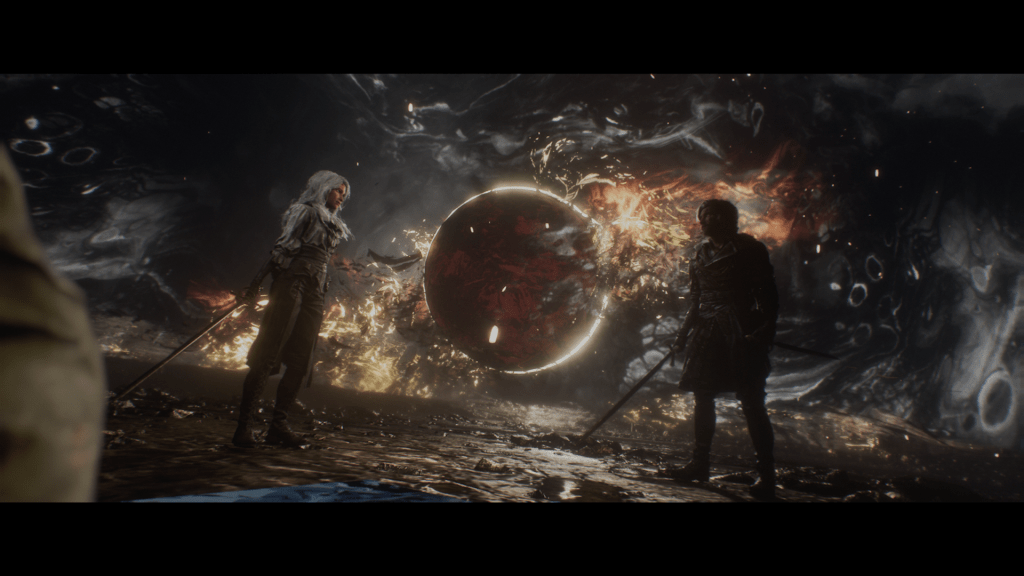
One of the most stunning parts of the ending is that the game gives you a choice. There’s something I really love about when a game that had next to no player choice up to that point decides to finally give you one choice at the end of the game. The choice being presented in and of itself is a shocking and awesome moment, as you haven’t had those kinds of opportunities to this point. That is why this ending reminds me of Ghost of Tsushima in some ways, which is another game where you are given a very interesting decision after no real player choice up to that point.
The one big difference is that when Ghost of Tsushima’s big choice popped up, I sat with it for a bit. I still remember watching the screen for a minute and struggling with what to do before I ultimately made what I believed was the correct decision.
That was not the case with Expedition 33. I had next to no hesitation with what I decided. When the choice was given for me to fight as Maelle and preserve the canvas, or to fight as Verso and end the canvas, I immediately sided with Maelle, for reasons I’ll talk about in a bit. From there, I was presented with one of the most haunting endings I can recall in a video game. First, after winning with Maelle, Verso begs for death. Verso pretty consistently keeps his cool through almost everything in the game, so this is jarring and hits hard (the more I played this game, the more I truly adored Ben Starr’s subtle performance. I loved him as Clive, but he shows a depth here that I didn’t quite anticipate).
From there, we see that Maelle has repainted Lumiere, as well as those who gommaged over the years. Gustave is back after his devastating death in Act 1, and you can see the joy on so many people’s faces as they go to attend a performance of some sort. After that bit of happiness, the scene turns black and white. We see a repainted version of Verso, who stares at Maelle with a look of extreme pain and concern. Maelle appears happy but has a few odd face twitches that show either regret or guilt. Her face then becomes contorted with paint. Yes, we’ve brought back many people and allowed some of our favorite characters to live, but the cost is clearly going to be Maelle’s life and sanity, as well as Verso living in complete anguish.
Similarly, the Verso ending is not necessarily happy but has been presented as and generally discussed as the “good” ending. When Verso ends the canvas, it allows the true Verso’s soul to finally rest. We then get an emotional goodbye between Verso, Esquie, and Monoco. Esquie and Monoco seem content with Verso’s decision, as they likely understand what Verso has gone through more than anyone else. Our other party members, Sciel and Lune, do not appear to be so forgiving. They don’t say a word but stare daggers into Verso as they fade away. This ending returns Alicia (I consider her Maelle while in the canvas, and Alicia when outside of it) to the “real world”, where she and her family finally mourn the death of Verso, and seem to start the process of moving forward.
While a funeral seems like an odd way for a “good” ending to go, it fits the general themes of the game very well. The entire game is about grief, and in the case of Alicia’s family, it’s really about breaking a cycle of grief that has kept all of them paralyzed for an extremely long time. By ending Verso’s canvas, Verso himself is able to finally pass on fully, and the family is able to come together once again. Also, while this ending has some massive gut punches, those big gut punches are early on in the scene. You are able to move on from Lune, Sciel, Esquie, Monoco, and Verso, and see how Alicia’s family is now on a healthier path. In a sharp contrast, the Maelle ending has some good moments but ends with those massive gut punches. It’s easy to see why the Verso ending is considered the proper ending. It’s almost assuredly the “canon” ending if Sandfall wishes to do more with this world down the road as well.
But, after I watched both endings and seeing that consensus online, I couldn’t help but mentally push back a little. I’m not sold on the Verso ending being the “good” ending. Each ending contains someone sacrificing themselves for others, and I think a lot of how you perceive these endings will boil down to how you view the very nature of existence.
Is The Verso Ending The “Good” Ending?
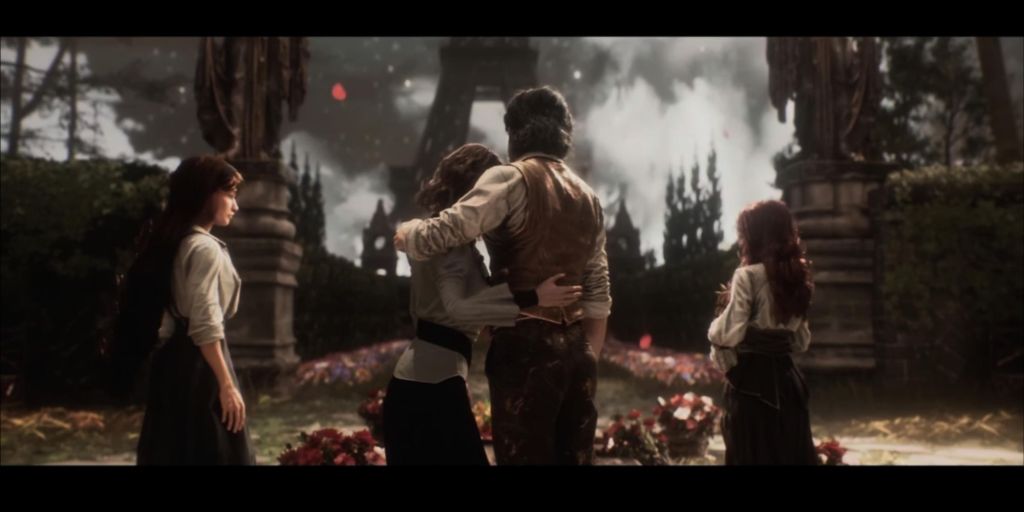
There is one giant implication made throughout both endings. It is heavily implied and almost outright stated that Alicia’s life is worth more than anyone else’s in the canvas. When Verso sets out to end his (and others) lives in the Verso ending, he tells Alicia that she has an incredible power to paint and that she will never have to suffer a life that she doesn’t want. The Maelle ending briefly shows the happiness of those who are alive in Lumiere but quickly refocuses on Maelle, and her seeming regrets at living this “fake” life as she slowly deteriorates.
Is a god’s life more valuable than the creations of that god? Is their “soul” worth more? Perhaps an argument can be made that, yes, it is. If that god can create life, preserving that god could be viewed as more valuable, even if others are lost in the process. But how valuable is that ability to create life if those lives can be taken back away at a whim?
Yes, Alicia can no doubt live a more incredible life than anyone else in Verso’s canvas. She can create just about any world that she desires. But that doesn’t take away the value and validity of the lives in that canvas either.
If you did every campfire bond as I did, you understand the depth of feelings and emotions that the “painted” characters carry with them. They aren’t just facades. They exist. They feel. They live. Sciel’s backstory is as tragic as humanly possible. She carries that pain with her wherever she goes. She also carries a true love for her lost husband. Lune carries a fire and determination with her that is unlike anyone else. Her motivation is almost palpable throughout the game. The love and empathy that Esquie has for others is consistently touching.
Their lives matter too.
Are they living in a “painting”? Yes. But whatever your basis is for what a true life entails, it seems impossible to say that they don’t meet those qualifications. They can create life (yes, new life is, of course “painted”, but I don’t see how this is any different from how religious people view how new babies are born. I was told my whole life that “God” made me, not my parents), they can love, they can feel, they have complicated emotions and motivations.
Imagine if tomorrow you were told that our current lives and universe are not “real.” Imagine if we found out that we actually live in a computer simulation. Our god is not some ethereal being, but actually a sweaty programmer. This would obviously be a very startling revelation that would shake my world for a moment. But then, I think I would pretty much go back to my life after that. I certainly wouldn’t view my life as fake or not worthwhile anymore. I am not religious and do not live my life in hopes of something greater after death as it is, so I must be content with making the most out of my current existence. My world not being “real” wouldn’t change that my existence is still real. If that programmer decided to end the world, I would view it as cruel, even if maintaining the world was hurting him in some way.
From a purely utilitarian viewpoint, the Verso ending causes the most harm. An entire world dies, along with the many dreams, hopes, and desires that came with it. It’s especially tragic because the lives that these people lived were horrible in too many ways to count because of the Gommage in the first place. The Maelle ending allows thousands of people to live a full and meaningful life for the first time after living a life that almost completely centered around death.
Yes, the Maelle ending causes incredible harm to both Maelle and Verso. It will also cause more grieving for Alicia’s family. But that appears to be the extent of the damage. Don’t get me wrong. This is still terribly tragic. The Maelle ending is devastating in so many ways. Either way, no one is walking away from this story unscathed. There is no good ending here, but I do view Maelle’s ending as the better outcome. Even if it doesn’t neatly fit every theme of the game, and even if the game doesn’t quite portray it that way.
What’s Next?
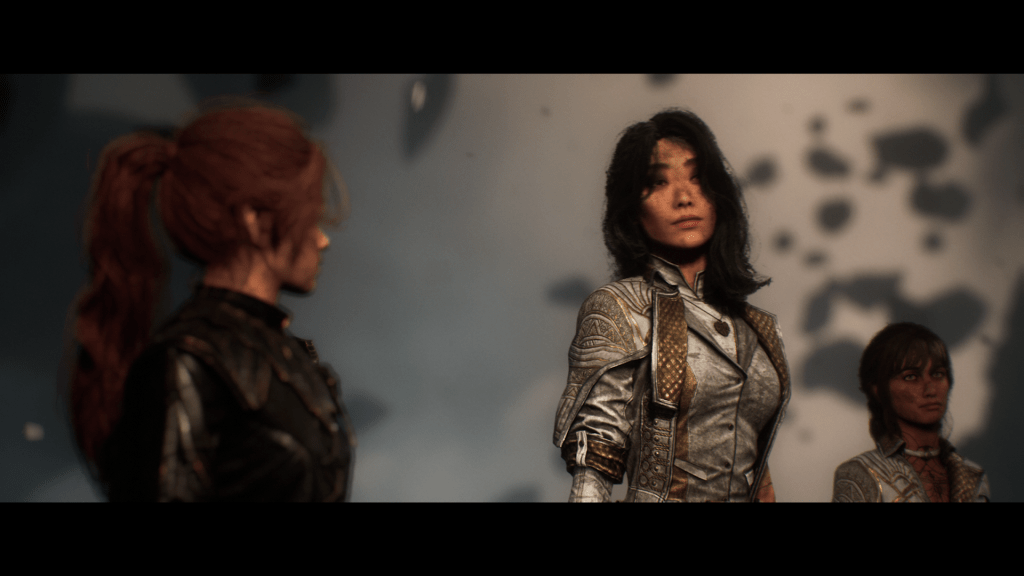
While I haven’t seen as much discussion about this, the other reason why the Verso ending feels more canon is because it sets things up perfectly for another game in the series. Clair Obscur: The Painters’ War or something like that.
A war with a faction called “the writers” is referenced throughout the game but never expanded on in any way. We can assume that the writers have similar powers to the painters, but more through the written word. The painters’ ability also allows the creation of almost any world imaginable. Both of these aspects of the game seem like they will give Sandfall the ability to take the story literally anywhere they want to with a sequel.
On one hand, that is super exciting. Expedition 33 has one of the best stories I have ever experienced in a video game. If anyone can expand on this world and take things to another level, it might be them.
But on the other hand, this experience was so perfect to me that I like how the Maelle ending seems to kind of wrap things up, even if it’s not the happiest ending. It seems like the vast majority of the time, when there is an incredible standalone story that writers try to expand on for a sequel, things quickly become convoluted and messy. After experiencing this masterpiece, I really don’t want it to become diminished by a sequel that takes a big swing and misses badly. As exciting as another game in this world could be, the weight of the expectations could absolutely crush Sandfall.
Within the scope of this universe, I don’t think that sacrificing Lune, Sciel, and the others was the morally correct way to do things. But perhaps my utilitarian viewpoint can be changed if we get another game that moves me and many others the way that this game did. All we can do is wait and see. Until then, I’ll still be thinking about this ending for years to come, and perhaps, for the rest of my potentially computer simulated life.
You can read my review of Expedition 33 here.
If you enjoyed this post, please consider following me on social media, or checking out The Big Nerd Gaming Podcast!
The Big Nerd Gaming Podcast on Youtube


Leave a Reply