
I’ve said this many times, but for anyone who loves video games, we might genuinely be in the best era of all time right now. There are quality games coming out damn near every week these days, and the increasing number of talented indie developers add hundreds of awesome new games to the mix that we didn’t have 20 years ago.
But another reason this era is so replete with great games is that developers are just so damn good at making sequels these days. I think that because it’s so much easier to obtain a lot of data than it was years ago, developers are able to take all of the feedback from a game, and address the issues for their next game. Whenever I play a sequel these days, I tend to have a lot of confidence that it will improve a lot from the first game.
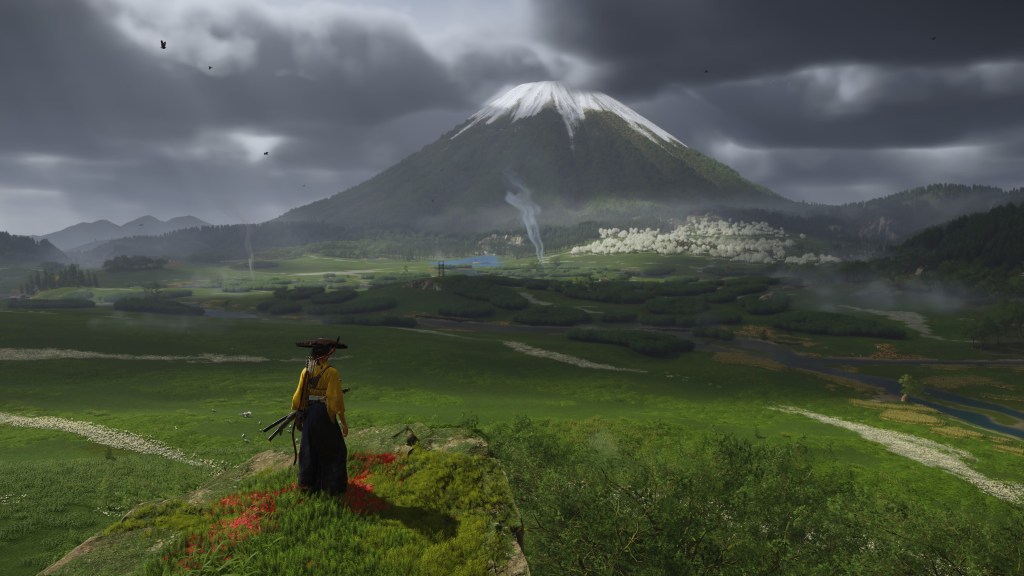
I am currently playing two sequels that have pretty good odds of being Game of the Year nominees at The Game Awards this year. Both games clearly put a lot of work in trying to address the critiques of the first game. These games are Hades 2 and Ghost of Yotei. Were these improvements enough to make these games significantly better than their originals? Read on to find out!
Hades 2
If you’ve been following the blog, you might know that I really love the original Hades. I called it my #3 best indie game of the 2020s and my #8 best overall game of the 2020s. Hades was awesome for a few reasons. First off, the gameplay was pitch perfect for this genre. Plenty of roguelites will give you options to use different weapons for each run, but it’s rare for me to actually enjoy using all of them. Every weapon in Hades was so distinct and so fun, and there were tons of ways to modify your build in each run to make each foray into danger extremely different. Just as importantly, Hades was the first roguelite I had ever played with a fantastic story and top-tier characters. Roguelites are not games that easily lead into great stories, so this was a true accomplishment in every way.
So, of course, I was excited for Hades 2. Little did I know that this game would completely blow away the original in almost every way. That didn’t seem possible at all to me.
First off, Hades 2 goes above and beyond what the first game did with its build variety. In the first game, you had a basic attack, a special attack, and a “cast” move that you could use with each weapon. Hades 2 adds in a charged attack, a charged special attack, and a new moon hex move. The game also modifies its cast move a bit, which makes it a bit more interesting move in my view. As I said, in the first Hades, every run could feel dramatically different. Now, that feeling is on another level. I have built runs around almost every single move in the game with eazh of the weapons. I’ve had runs where I was spamming my charged special like crazy. I’ve had many where I focused hard on my normal attack. While it’s rarer, I have had runs where my moon hex was vital to everything I was doing. The game has so many cool ways to upgrade your weapons, between basic boons that add elements and damage upgrades, to Daedalus hammers, which can drastically alter how your entire weapon works. With six weapons (I’ve unlocked 5 so far) and all these different possibilities, each run in Hades 2 has a massive amount of potential. I’ve done a lot of runs already (I want to say somewhere in the 35-40 range), and there have only been a few runs that I absolutely hated and almost wanted to lose on so that I could reset. In most roguelites, that happens all of the time.
Facing the same bosses and running across the same levels over and over can always be a pitfall in these games, but Hades 2 also finds a way around that by having two different types of runs that you can do. The runs themselves also have areas that mix things up a bit. In one of the “levels,” there’s an area that is much more open and that actually has elements of exploration rather than just being a linear path each time. This is a great way to keep things fresh.
The game enhances the amount of upgrades that you can do in between runs as well. I’ll get into more details when I eventually do a review, but there’s a new card system that helps upgrade your character. You can also upgrade your weapons and create concoctions that help make things easier in various ways. Every run in Hades 2 feels meaningful because there’s always a new resource you can get that will help make your life easier next time around.
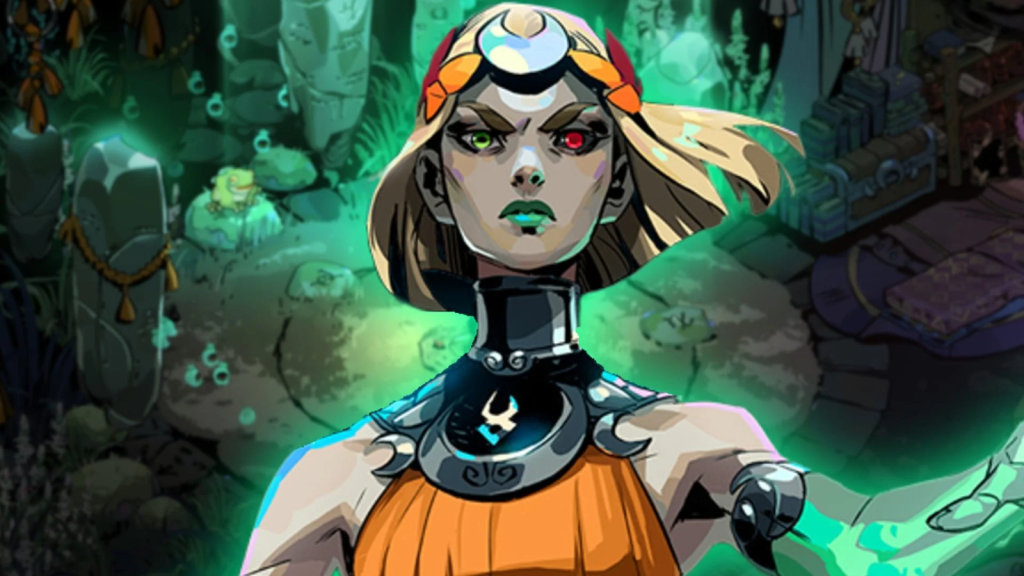
The “in-between” sections of the game are also great, much like the first game, thanks to stellar characters and writing. There are a lot of fun interactions with all of Melinoe’s allies (and even some enemies and frenemies) to be had after every success or defeat. The voice acting is excellent, and I just adore every single character model in this game. There’s so much style and so much detail put into all of the art in this game that it’s hard not to fall in love with it.
The one way where Hades 2 doesn’t match up to the original game is with its story. The original Hades had a very personal story, and Hades 2 just doesn’t have close to the same emotional resonance. Melinoe has essentially been in isolation most of her life, so the relationships and interactions don’t always have the same level of backstory as the original either. This is the first Supergiant sequel. I have to imagine they made the original Hades without any intention of making a second game. That game ended perfectly in my view, and it was always going to be tough to follow up on it. Luckily, there’s still some good stuff here, but the main plot isn’t driving me forward like last time.
Despite that, this genuinely might be one of the most impressive sequels I have ever played. Hades 2 expands the formula in one tremendous way after another, and I have been in love from the first run. I’m heavily considering a 10/10 for it. At the very least, I can’t see it going below a 9.5/10.
Ghost of Yotei
I’m not a Ghost of Tshushima hater, but I certainly feel like one sometimes. I gave that game an 8/10. I loved the general style of the game, but I thought the combat got way too simple and way too easy (even on hard). The story and characters were also pretty dull, although the game delivered some incredible moments, and easily one of the better video game ending choices ever. My 8/10 was pretty close to the critic consensus (which was an 8.4), but so many people consider the game one of their favorites of all time, so I feel sheepish when I levy my criticisms sometimes.
I wasn’t in a huge rush to play Ghost of Yotei, but I saw several people who viewed Tsushima similarly to me say that they liked Yotei way more, which made me decide that I needed to jump in.
After roughly 11 hours, I definitely see plenty of those improvements. I’m enjoying myself, but I also wouldn’t say I’m way more into it than I was Tsushima.
So far, I’d say that the biggest improvement with the game is the new protagonist, Atsu. I always thought Tsuhshima’s hero Jin Sakai was pretty dull. I didn’t think his voice actor was bad, but I also didn’t think Sakai was consistently given enough material for that voice actor to show off his talent. That is not the case at all with Atsu and Erika Ishii. Ishii is so perfect in this role. She gives Atsu an appropriately rougher voice than you might expect from a lot of standard female protagonists. Atsu has a hard edge to her, and Ishii nails that. However, she’s much deeper than just being that. There’s also a constant hint of sadness with Atsu. She is also quite kind and very devoted to being honorable. Obviously, she is also incredibly driven by vengeance, so there’s some bottled up rage as well. I feel like I have a decent sense of who Atsu is, but there’s also still a good bit of mystery surrounding her that I’m pretty interested in untangling. The story isn’t perfect so far. There are a lot of flashbacks in the game that are already a bit too frequent and pretty uninspiring. I also still have a lot more to learn about the “Yotei Six” so that I feel more driven to defeat them, but I’m still very early in the main story (my PlayStation says I’m about 13% into the game). I’m somewhat optimistic that the story will drag me im at least a bit based on what I’ve seen. At the very least, the fact that I want to know more about Atsu is a big step up from the first game.
I’ve made so little progress on the main story because it’s so easy to get sucked into the side activities in Yotei. While this obviously isn’t Elden Ring, Yotei has a much more interesting open world than Tsushima did. Its structure reminds me a lot of Star Wars Outlaws, which I view as a very good thing. Simply, the game actually makes you work and explore a bit to find a lot of its activities. You can find locations by simply exploring and picking up on visual cues in the world (like smoke in the air or a bird that will guide you to certain activities). You can also find tasks by talking to people, finding certain items in the world, or buying clues from a certain merchant. It all feels significantly more organic than last time around, which I appreciate. I also think some of the side quest design is a bit better than Tsushima. There have been a few bounty quests in particular that had moments that felt like they could have easily been in the main story. The game also does a great job of dishing out rewards for your exploration, between health upgrades, and several different skill trees with useful abilities.
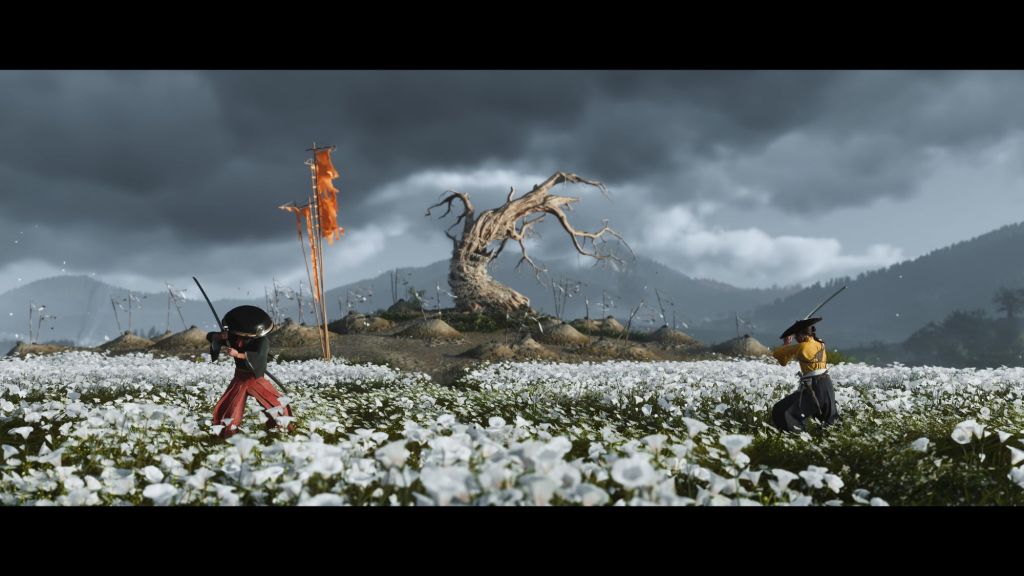
Despite all of those improvements, I still can’t say I currently view the game as way more enjoyable than Tsushima, at least so far. For all my problems with Tsushima, the game still felt extremely fresh and cool. Its cinematic qualities and all-around style made it stand out despite a weak open world and core combat mechanics that did not shine in my view. Yotei is still extremely cinematic in ways that few games are, and its art direction is still stunning, but those elements don’t hit quite as hard after experiencing this five years ago. So, the fact that I still am not completely in love with Yotei’s combat hurts a bit more than it might have last time.
First off, while Yotei still has stealth mechanics and a stealth skill tree, everything about the stealth remains pretty damn boring. Level design is about as standard as it gets, with tons of tall grass, spaced out enemies, and obvious walking patterns. After playing lots of Assassin’s Creed: Shadows this year, it’s also a little jarring to be able to be above enemies and essentially be invisible. I guess that’s how most games with stealth are, but it stands out after recently playing that game.
The actual combat still has some of the same appeals and some of the same pitfalls as the first game for me. Once again, it is extremely stylish. The animations and sound design are awesome and very satisfying. And I love how you can kick off combat with the “standoff” mechanic, where you can stare down a foe, and get rewarded with an instant kill if you are able to react as soon as they move to attack you. The perfect parry mechanic also feels excellent when it you pull it off. But the actual core design of the combat still feels unexceptional to me. Enemy attack patterns are very basic, and I really haven’t seen tons of variety in them. Even a lot of the foes that I would call “bosses” have pretty plain attacks that I’ve seen from the common foes. This is no Rise of the Ronin when it comes to enemies having interesting attacks. I’m rarely seeing anything different when I face off with a new enemy.
Most of the challenge in combat comes from when the game sends hordes of enemies at you, and you have to fight them off at once. Perhaps it’s a personal taste thing, but I find a lot more appeal in difficulty that is designed around interesting and varied enemy attacks over just raw numbers. After taking a few beatings early on as I re-adjusted to the controls of the game, I’ve mostly been cruising through, even on hard. Unlike Tsushima, Yotei has a difficulty over hard that you can switch to right away. I’m starting to heavily consider doing it, but I’m going to wait a bit longer before making that call.
I’m also very early and only have two weapons, but I’m currently pretty unimpressed by the ability to weapon swap. There’s a good chance that I will feel differently about this as the game goes on, but right now I have a “wolf sword” and “dual katanas”, and they don’t feel significantly different from each other. I don’t actually adjust the way I fight when I’m using dual katanas. They are faster, but I’m still approaching each encounter the exact same way. Because of this, I really wouldn’t ever swap between my weapons, but the game has a rock-paper-scissors type system in order to encourage it. Each weapon is stronger against certain weapons. Dual katanas are stronger against spears, so I do switch to them in these situations. But when I’m using them, it doesn’t actually feel this way, outside of the katanas seeming to break the enemy guard a bit quicker. I just wish that there were more tactical and interesting reasons to switch weapons over the game just buffing certain weapons against other weapons. Based on clips I’ve seen, I’m hopeful that future weapons will be a bit more interesting.
Once again, I think the style of the combat is enough to still make it fun overall. It definitely has its moments, and perhaps the bigger story duels will wow me a bit more. I’d say the cinematic qualities of the combat put it a bit above Assassin’s Creed: Shadows in terms of quality, but Shadows has significantly better stealth to compensate for that.
With all that, I currently have Yotei at an 8/10, much like its predecessor. But the charisma of Atsu and the open world design has me hopeful that my score will rise as the story sucks me in, and as the combat hopefully gets a bit deeper with more weapons. If you liked Tsushima, this feels like a no-brainer. If you had issues with Tsushima, I think it’ll depend on what those issues specifically were for if this one will be way better for you.
If you enjoyed this post, please consider following me on social media, or checking out The Big Nerd Gaming Podcast!
The Big Nerd Gaming Podcast on Youtube
 Big Nerd Gaming
Leave a comment