
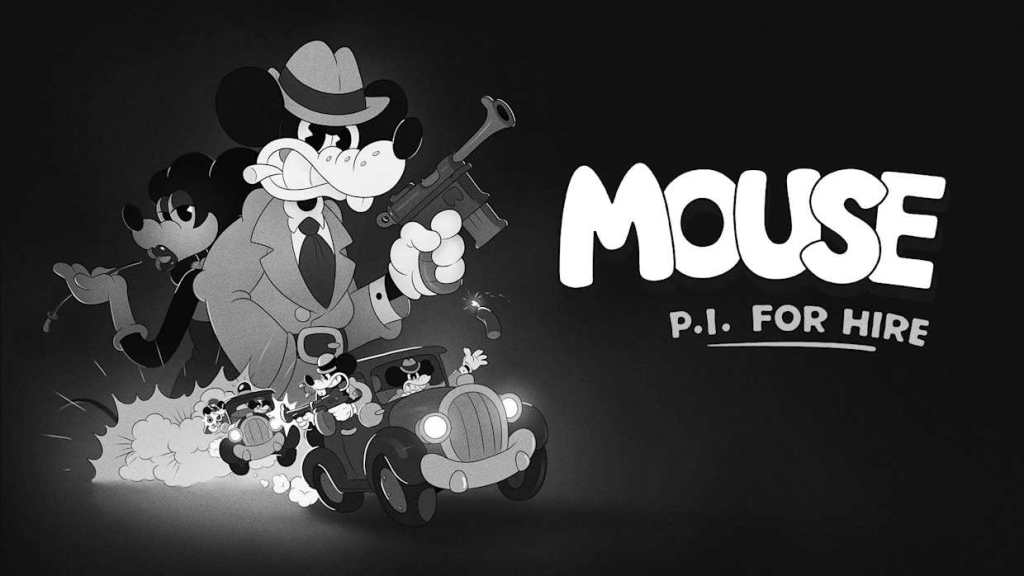
2026 continues to be a weird gaming year for me. We are through four months, and I still only sit at six game completions for the year (and four game abandonments).
Meanwhile, I am currently juggling SIX different games (though I haven’t played several of them for over a week).
Essentially, I’m playing a lot of indies, and then I’ve been very sucked into Saros. I am probably within five or six hours of finishing several of the games I’m playing now, so there might be a domino stack of completions coming very soon. Honestly, this needs to happen, as there are tons of games in May that I’m interested in. But in the meantime, it felt like a good time for a few little updates on how things are going. Here are my thoughts on MOUSE: PI For Hire, Tombwater, and Vampire Crawlers.
Tombwater
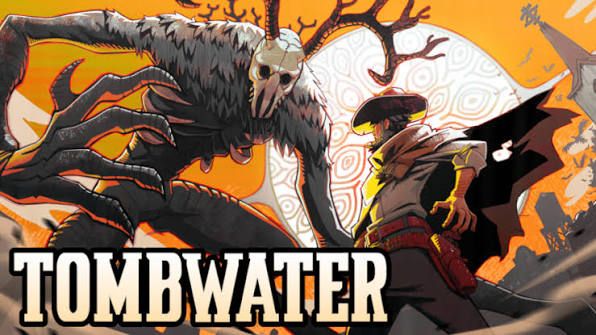
There was an era not that long ago when it felt like developers had suddenly realized how popular roguelikes were, so there was a mad dash to implement roguelikes into all sorts of other genres. I feel like we are now reaching this point with Soulslikes. I am now seeing Soulslike elements being implemented into every different format possible. I’m not hating on this at all. I actually think that combining two popular genres is one of the smartest ways to create a new game concept right now.
I know there are some other games like this out there, but Tombwater is the first top-down Soulslike game that I’ve personally played. It also adds a sort of dark Western theme. I’ve come away interested in seeing more games like this. I’m having fun with Tombwater, though I definitely have a few issues with it.
Given that this is a Western, your main weapon in Tombwater is a gun. However, you have pretty limited bullets. You can only carry six bullets (I’m a few hours in, so this could potentially get upgraded later, but I’m not sure), and from there you have to get in close and use melee attacks to regenerate them. So you will likely end up using melee attacks a bit more than the gun, though it’s pretty close to a 50-50 split.
I really enjoy the gunplay in the game. You need to use the left trigger to aim your gun, then you use the joystick to aim more precisely, and then you shoot with the right trigger. It’s kind of like how a more traditional 3D shooter would have you aim, except in a top-down format. It feels mildly clunky at first, but you get used to it. Most top-down games with guns have quick shooting, but between the aiming and the limited bullets, the shooting ends up being a bit slower-paced here, almost more like a survival-horror game. I liked the decision to do this, as it fits the general pacing of this genre better, and it makes every shot count.
Unfortunately, I’m a bit less into melee combat. It’s serviceable, but a bit limited. You can’t dodge through attacks or enemies, so there’s a lot of “hit one attack and then dash away” combat that almost feels like I’m cheesing through encounters. It’s not easy to really put together combos, and I only have one special attack for my main weapon to mix in (which you are only able to use in a limited capacity). Once again, it’s not terrible or anything, but it’s not quite as strong as the gunplay.
My biggest problem with Tombwater comes from its navigation. The game gives you an extremely bare-bones map, tells you the general direction you need to go, and then sends you on your way. However, this has Soulslike map design, so it’s rarely as simple as “going southeast” to find an objective. To go southeast, you probably have to go north for a while, find shortcuts, and eventually work your way down. Unfortunately, even after exploring an area, the map doesn’t update or really do you any favors. So picking the game back up after putting it down for the night can often lead to an obnoxious reorientation period. The game doesn’t even tell you where the campfires are and doesn’t seem to allow fast travel, at least early on. I have become adept at placing markers on the map to help me find campfires I’ve already discovered and to help me find some shortcuts I’ve unlocked, but it’s still only so helpful.
I have a few other small complaints. The boss fights in particular have been pretty mediocre so far, but there is time for those to improve. Tombwater is a cool little stab at an interesting concept, and I like it well enough, but I also think there’s plenty of room for refinement. I’d give it a 7.5/10 so far.
MOUSE: PI For Hire
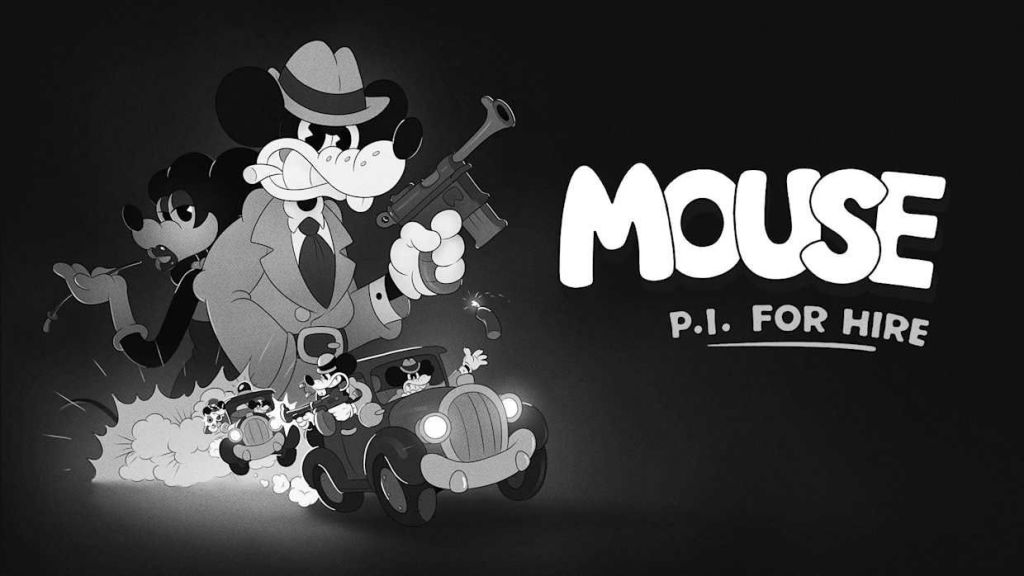
As I talked about with Tombwater, one of the best ways to innovate in the gaming space now is to just combine two different things that people haven’t thought of yet. With Tombwater, the game just combines two genres in a way I haven’t personally seen yet. With MOUSE PI for Hire, it gives the FPS genre a unique look that has never been done before. MOUSE PI is basically DOOM but with a 1930s cartoon aesthetic and a noir story to match it.
Because I have a review code, MOUSE is my main focus outside of Saros. So I expect to complete MOUSE within the next week or so. I was originally going to write more detailed thoughts on the game here, but I will likely have a review coming pretty quickly anyway. So instead, I’m going to use this space to comment more on the now infamous 6/10 review of the game from IGN. I think something like 10,000 people have commented on this, so I doubt I’m bringing anything new to the table here, but sometimes you have to treat yourself.
It’s funny to me because many of us often criticize gamers for focusing too much on scores over the content of a review, but I actually think the score has mostly only been something that has highlighted how insane the content of the review was. Only 4 of the reviewer’s 12 paragraphs on the game talk about the gameplay at all, for a review of a “boomer shooter.”
Essentially, the review complains that MOUSE’s foray into the noir genre does not make any sense within the boomer shooter framework. The amount of killing that our hero Jack Pepper does is illogical and doesn’t fit in with how noir is supposed to work. The reviewer argues that this causes “ludonarrative dissonance,” which ruins the experience.
My general problem with this take is that the reviewer has so much reverence for the noir genre that he completely discounts the gaming genre that MOUSE is based on. The reviewer is so obsessed with the genre conventions of noir that he seems to forget about the genre conventions of boomer shooters. Perhaps all of the shooting would not make sense within the noir genre, but a slower-burn game with heavy detective elements would make even less sense for a game reminiscent of DOOM. Why exactly is noir the genre that is taking precedence here?
It’s an especially silly critique from a review standpoint when you obviously do not have to play the game to reach this conclusion. If you have such strong takes on what noir is supposed to be, I think just one of the many trailers that the developers put out with all its goofy violence would be enough for the 15 gamers who feel this way to decide that it is not for them. The reviewer essentially played a game that seemingly had next to no chance to win him over, considering almost all of the criticism boils down to the very concept of the game being flawed.
Within other entertainment mediums, people tend to have stronger preferences when it comes to the narrative setting. With video games, the focus is much more on the “gaming genre” over the narrative genre. I don’t know of many people that consider themselves “fantasy RPG” fans or “sci-fi RPG” fans. We just have a lot of RPG fans. We have FPS fans. We have open world fans. Gamers care much more about the gaming genre on the whole than anything else, which makes a lot of sense. This is especially the case within games that don’t have a heavy story emphasis. While MOUSE certainly tries to tell a story, it is very much in the background and extremely skippable, much like they are in the DOOM games. DOOM: The Dark Ages tried a little harder to tell a story than past DOOM games last year, and it fell flat. I can only imagine how dumb a review that only spent 1/3rd of its time talking about the gameplay of that game would be. Similarly, doing so for MOUSE is completely asinine.
The funny thing is that I think the review’s thoughts on the gameplay mirror mine in a lot of ways. I think the gameplay is mostly fun, but it definitely has holes. There’s some weak sound design with several guns, and quite a few of them aren’t as fun to use as I’d hoped. The game gets better as it opens up its arsenal and gives you a lot more options, but I think it’s way too slow to do so. Even at roughly the halfway mark, I still need to unlock several more guns, and I really think the game should have given them to me by now. But the shooting is still fun on the whole, especially if you up the difficulty to hard. My score currently sits between a 7.5 and an 8. I do think that someone could make the case for a 6/10 for this game, and I wouldn’t be morally opposed, but the way this reviewer goes about it is mildly ridiculous.
I actually think that the review is an interesting enough read on its own. If you aren’t some massive noir fan like myself, it teaches you a fair bit about the genre. It makes some good points about why this might be an odd fit for a game in some ways. But it’s absolutely useless as a video game review. Nothing here is helpful to someone trying to make a decision on if the game is going to be worthwhile for them. This clearly should have been a standalone essay instead of a review.
I genuinely hate the lazy anti-IGN takes on gaming social media. There are tons of people who write for that website, so trying to paint the site with a broad brush is silly. But man, something like this is certainly not helpful to people like me who often fight those battles.
Vampire Crawlers
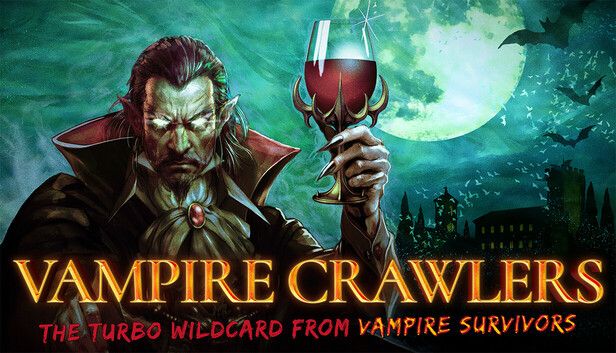
I’ve spent something like six hours with Vampire Crawlers, and my opinions on it have shifted rapidly multiple times in that span.
This is a new game, in part made by the creator of Vampire Survivors, that seeks to essentially put the Vampire Survivors formula into a deckbuilder. It’s almost amazing how much it succeeds at this task. Even though the gameplay is vastly different from Survivors, this truly feels like a crazy sequel to that game. The vibes, the progression, the aesthetic, and even the feel of the game evoke Vampire Survivors in amazing ways.
My biggest concern coming into this was how a developer of a game that was pretty fun but simple would translate the experience into a dungeon crawling deckbuilder, which is a genre that generally needs a lot more depth to succeed. Sure enough, that has been my biggest issue with Vampire Crawlers so far.
My first few runs in the game felt like biting into cotton candy. I was getting assaulted with the good feelings that Vampire Survivors gives you. I was leveling up constantly within each run and then, in turn, able to give myself plenty of permanent upgrades at my base after the runs. But everything was insanely simple. It was sweet but very empty.
After a few runs, I started to understand how important the “combo” element of the game was. It’s introduced to you right away, but I didn’t realize that it was the essentially what the entire game was built around. Basically, as you play cards, you want to play them in ascending order of mana cost. If you do this, it will power up the cards. Once I got this, I was no longer just trying to play the most powerful cards possible in a given turn. I was trying to strategically play them in an order that would most maximize my combo, especially since there are lots of ways to continue to draw new cards during your turns.
This combo realization also made some of my decisions on what cards to add to my deck during runs more interesting. It was vital to have a really nice mix of different card values and to find ways to continuously draw cards to really make the most of those combos.
All of this made the game a fair bit more enjoyable for me, but after several more hours with it, that fun has slowly started to fade. To me, the fun in these types of games is to constantly swap my deck types and to have multiple ways to win within each deck. In Vampire Crawlers, I feel like I’m always winning in the same ways. It just gets a bit dull. I’m not making a lot of hard decisions in battle or outside of battle. The same magic trick loses some of its luster when you’ve seen it enough times in a row.
Also, the crazy part is I’ve still been able to win most of my runs, even when I don’t do a great job of building combos. I’ve had several runs where the game just does not offer me a balanced array of cards as I level up, so I end up having a hard time building truly powerful combos. I still win these runs, but the game becomes a bit of a slog in the process. I feel like a lot of the fights in this game are already longer than they should be given the nature of this game, and if you don’t have combos, they take even longer.
Vampire Crawlers has some great metaprogression, and it does an excellent job of capturing the essence of the series. I would still like to pick the game back up and give it at least another few hours before quitting on it. I can see some of the appeal, especially as a multitasking game or for something really simple to play on the go. But with all of the great new releases on the way, it is looking less and less likely that I’ll be able to find the time to play it for much more than one or two more sessions. I’d give Vampire Crawlers a 7/10 so far.
If you enjoyed this post, please consider following me on social media, or checking out The Big Nerd Gaming Podcast!
The Big Nerd Gaming Podcast on Youtube

 Big Nerd Gaming
Leave a comment